By clicking Login or Register, you agree that the images of Nazi symbols shown on alexmp.com are not propaganda of fascism, Nazism and are shown solely for historical, cognitive and scientific purposes.
Request a callback
Order a free call and our specialist will contact you shortly!
Ask a question
Contact us and we will get back to you shortly.
Request a Blitz Price
Contact us and we will get back to you shortly.
Request a price
Contact us and we will get back to you shortly.
Offer your blitz price
Contact us and we will get back to you shortly.
Error: Contact form not found.
Request a subscription
We will get back to you shortly.
Subscription
В честь запуска Энциклопедии мы рады предложить вам бесплатный доступ до 01.10.2026. Будем рады вашим комментариям и предложениям!
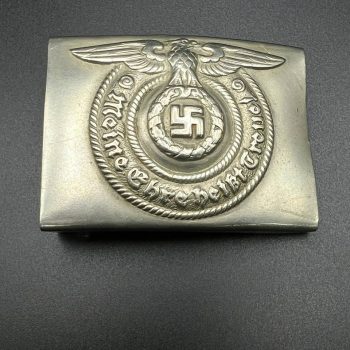
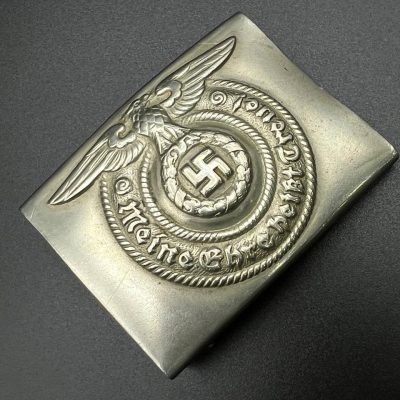
Original early-type SS belt buckle made of nickel silver (Neusilber). The front features a detailed depiction of the SS eagle clutching a wreath with a swastika, surrounded by the motto: “Meine Ehre heißt Treue” – “My honor is loyalty.”
Nickel silver buckles are among the earliest and highest-quality variants, primarily issued to members of the Allgemeine-SS before the outbreak of World War II. They are known for their sharp detail and durability.
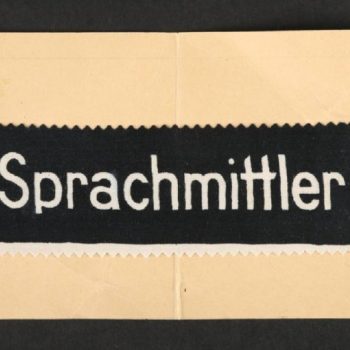
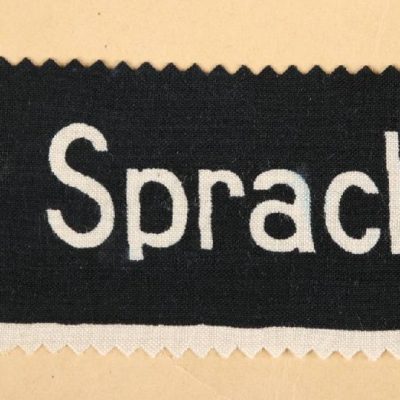
An incredibly rare cuff title “Sprachmittler” Interpreter for the Staff of the RAO, Russian Liberation Army. This is also a manufacturer’s proof by Genzsch & Heyse in Hamburg. The common literature shows only a graphic interpretation of the actual offered cuff title in “Foreign Legion of the Third Reich” Volume 4, by David Littlejohn, 1987, Page 342.
Printed in black on cotton and adhered to the manufacturers proof card.
The Russian Liberation Army (German: Russische Befreiungsarmee; Russian: Русская освободительная армия, Russkaya osvoboditel’naya armiya, abbreviated as РОА or ROA) was a collaborationist military force primarily made up of Russian soldiers that fought alongside Nazi Germany during World War II. It is also known as the Vlasov Army (Власовская армия, Vlasovskaya armiya) after its leader, Andrey Vlasov, a former Red Army general who defected to the German side. The soldiers of this army were often referred to as Vlasovtsy (Власовцы). In 1944, the group became formally known as the Armed Forces of the Committee for the Liberation of the Peoples of Russia (Вооружённые силы Комитета освобождения народов России, Vooruzhonnyye sily Komiteta osvobozhdeniya narodov Rossii, abbreviated as ВС КОНР or VS KONR). From January 1945 onward, the army was commanded by Vlasov himself.
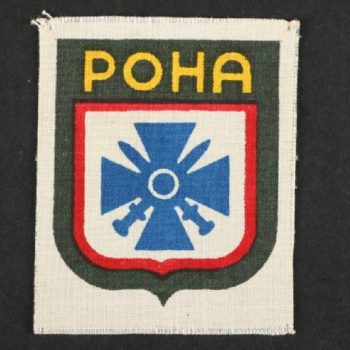
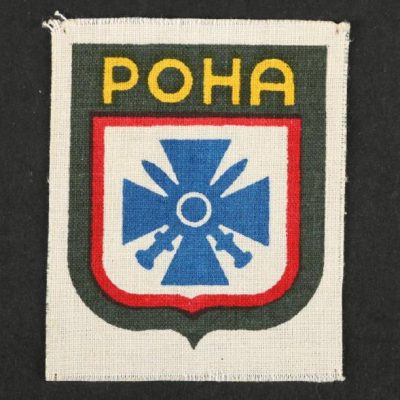
White cotton backing, printed shield of green, red, with the blue cross of St. George with swords and “POHA” in yellow lettering.
Unissued and eceedindly rare.
The Russian Liberation People’s Army (Русская освободительная народная армия, Ruskaya osvoboditelnaya narodnaya armiya, abbreviated as RONA) was established in late 1941 as an auxiliary police force with around 200 personnel. By mid-1943, it had expanded to 10,000–12,000 men, equipped with Soviet tanks and artillery captured by the Germans. Led by Bronislav Kaminski, the unit was initially called the Russian People’s Liberation Army (Русская освободительная народная армия), and it became a semi-independent militia. In 1942, Kaminski enforced a forced mobilization of local civilians into his militia, transforming it into a regular fighting force within the Lokot Autonomy, a self-proclaimed “republic” under Nazi control, and a private army that answered directly to him.
After the German defeat at the Battle of Kursk in August 1943, RONA retreated to the Byelorussian region, particularly around the Lepel area in Vitebsk. There, they participated in security operations alongside German forces, committing numerous atrocities against the local civilian population. In June 1944, RONA was formally incorporated into the Waffen-SS. Following the Soviet counteroffensive in Operation Bagration (June to August 1944), the remnants of the Kaminski unit retreated further west. By the end of July 1944, between 3,000 and 4,000 men (some sources estimate up to 6,000 or 7,000) regrouped at the SS training camp at Neuhammer (now Świętoszów). Using the Kaminski unit as a base, SS leaders planned to form the 29th Waffen Grenadier Division of the SS RONA (1st Russian).
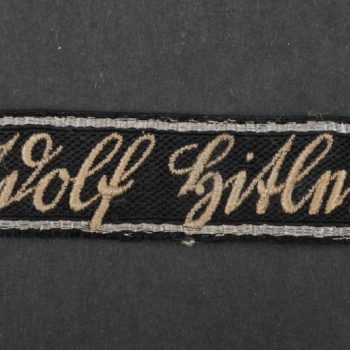
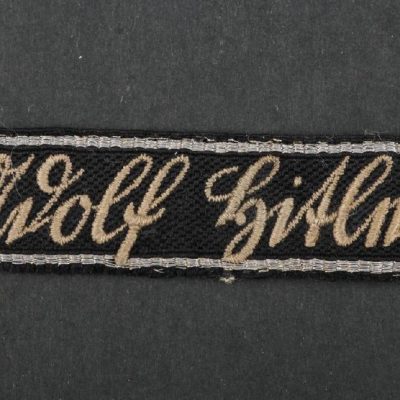
Uniform removed partial cuff title. Enlisted version with aluminum thread edges and light brown, machine woven embroidered Sütterlin script as introduced in 1940.
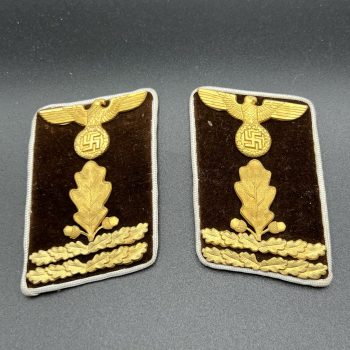
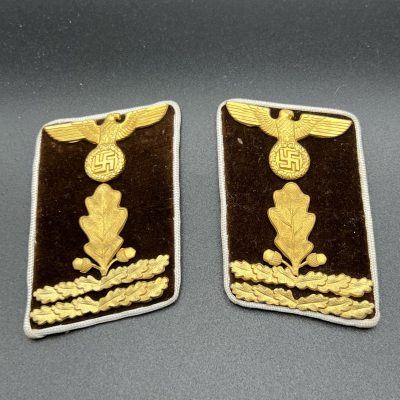
Original collar tabs for a Bereichsleiter — one of the higher ranks within the structure of the National Socialist German Workers’ Party (NSDAP), introduced as part of the 1939 reforms to party ranks and uniforms. The title “Bereichsleiter” (Sector Leader) was held by senior party officials responsible for administrative and organizational functions at the district, regional, and even Reich levels.
The tabs are made of brown velvet with a prominent gold border. The central design features a stylized embroidered oak wreath containing three horizontal chevrons — a symbol denoting the high rank of the wearer. The embroidery is done in gold bullion thread, emphasizing the prestige of the position.
These collar tabs are of particular historical and collectible value as part of the official political insignia of the Third Reich. Especially prized are well-preserved, authenticated examples.
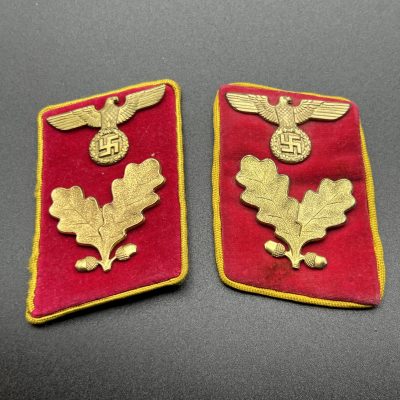
Original collar tabs for a Haupt-Abschnittsleiter — a mid-to-senior rank within the hierarchy of the National Socialist German Workers’ Party (NSDAP), used by officials of the district-level (Kreisleitung) party leadership. These represent the new pattern introduced in 1939 as part of the standardization of NSDAP uniforms.
The tabs are made of brown velvet with a distinctive gold border and embroidered oak leaves and chevrons indicating rank. A notable feature of the new pattern is its simplified design and strict regulation, reflecting efforts to unify party symbolism across all levels.
These tabs hold high historical and collectible value as a rare component of the political uniform system of the Third Reich. Especially sought after in original, undamaged condition.
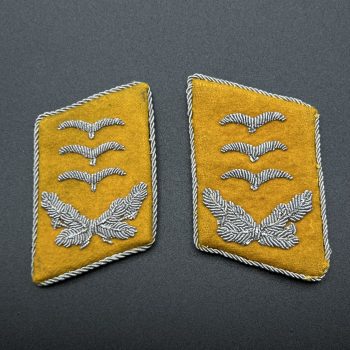
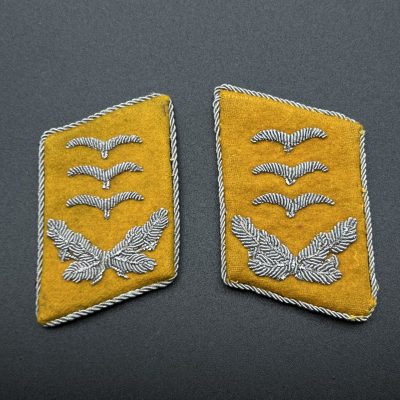
Original collar tabs for a Hauptmann (Captain) of the Luftwaffe — the air force of Nazi Germany during World War II. These insignia were worn on the uniform collar and signified the rank of a mid-level officer.
The tabs are made from dark blue (or gray-blue) wool, featuring the characteristic silver piping and two vertically aligned oak leaves embroidered with metallic thread. The craftsmanship reflects the high standards of Luftwaffe officer uniforms, often produced by hand or in limited quantities.
This uniform element holds significant historical and collector value, especially when well-preserved. It is of particular interest to collectors, reenactors, and researchers of the Third Reich and World War II military history.
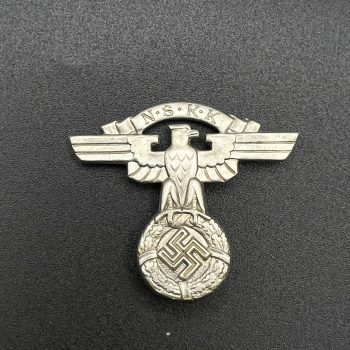
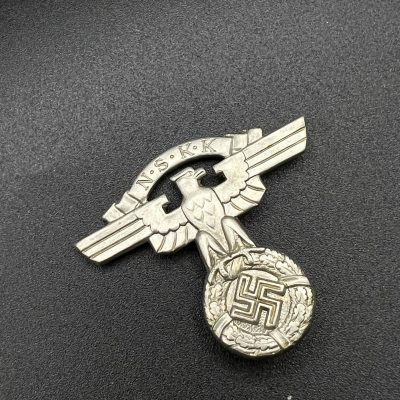
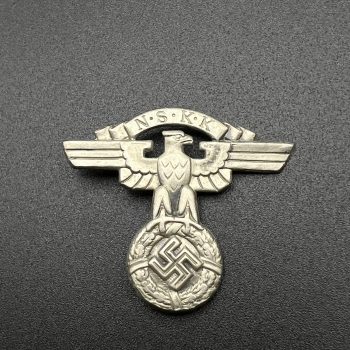
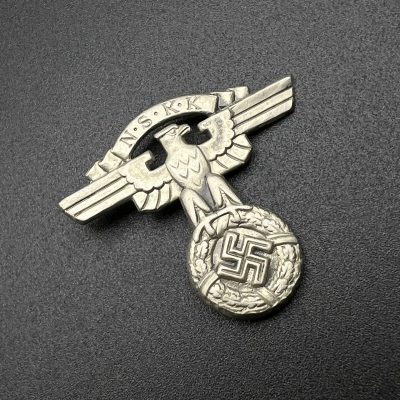
Authentic aluminum cap badge used by members of the NSKK (National Socialist Motor Corps) during the era of the Third Reich. This lightweight, stamped metal insignia was standard issue for wear on NSKK headgear.
Features a finely detailed oak leaf wreath with a swastika at the center—representative of the organization’s distinctive uniform style. The reverse side has its original mounting prongs intact and functional.
The piece shows light wear consistent with age but remains in solid, untouched condition. No repairs or replacements.
A genuine and increasingly hard-to-find item from NSKK uniforms—perfect for WWII militaria collectors or anyone interested in period insignia.
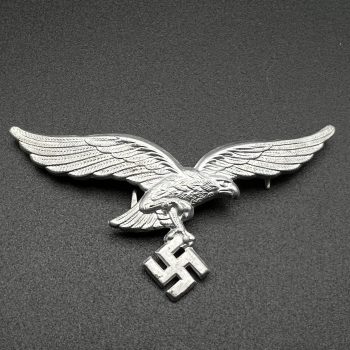
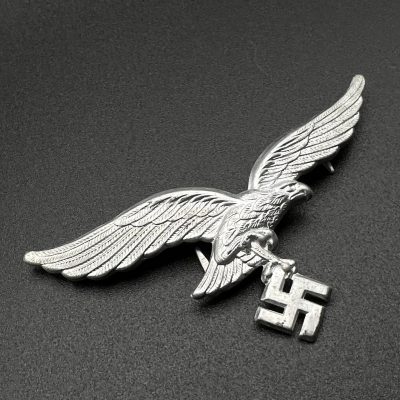
It is an authentic Luftwaffe cockade made of stamped aluminum, originally worn on visor caps and other headgear by personnel of the German Air Force during the Third Reich period.
Classic design featuring an oak leaf wreath with the national tricolor roundel (black-white-red) in the center. Lightweight construction typical of pre-war and wartime production.
The reverse retains its original attachment prongs, undamaged. Well-preserved condition with sharp details and no repairs.
A genuine piece of Luftwaffe uniform insignia—ideal for collectors.
Genuine NSKK (National Socialist Motor Corps) cap cockade, manufactured from lightweight stamped aluminum. This type was worn on the headgear of NSKK personnel during the Third Reich era.
Classic design featuring a detailed wreath with central swastika, typical of paramilitary insignia from the 1930s–1940s. Reverse side retains the original attachment prongs, undamaged and complete.
Well-preserved condition with minor age-related wear, no repairs or replacements. Clean details and solid shape throughout.
A scarce and authentic piece of NSKK uniform insignia—ideal for collectors of WWII German militaria or period headgear accessories.
This is an original aluminum NSDAP cockade, used on peaked caps and headgear worn by members of the National Socialist German Workers’ Party during the Third Reich period.
Made from lightweight aluminum, without enamel, featuring detailed design with a wreath and central swastika. The reverse side retains its original prongs, intact and undamaged.
The piece is in good collectible condition, with light wear consistent with age—no repairs or replacements. A genuine item from the 1930s–40s.
A historical and authentic artifact, ideal for collectors of Third Reich political insignia or uniform components.
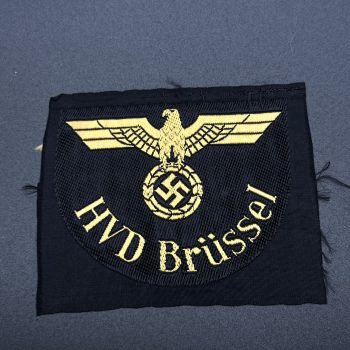
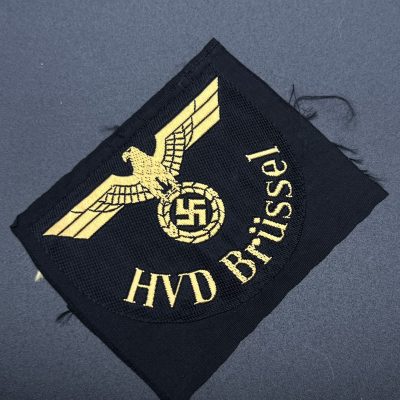
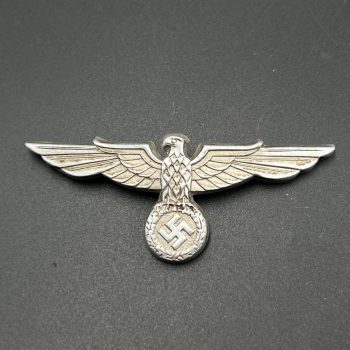
The Deutsche Reichsbahn (German National Railway) was established in 1920 after World War I by merging the previously independent state railways of the former German Empire into a single national organization. Under the Nazi regime in the 1930s, the German railway system was reorganized to better serve the needs of the economy and prepare for war. It later played a crucial logistical role in transporting troops and supplies to the front lines. Tragically, the Reichsbahn also played an infamous role in the Holocaust by transporting Jews and other “undesirables” to concentration and extermination camps.
The Bahnschutzpolizei (Railway Security Police) was created in 1939 through the merger of the Bahnpolizei (Railway Police) and the Reichsbahnschutz (Railway Security Service). The latter consisted of regular railway employees who, in addition to their normal duties, were also tasked with security functions.
As a rail-based organization, the Bahnschutzpolizei was staffed by personnel employed not by the Interior Ministry but by the railway itself. Their responsibilities included maintaining security on the railways and preventing espionage and sabotage targeting railway infrastructure. During the war, many members of this service operated in the occupied territories of Eastern Europe.
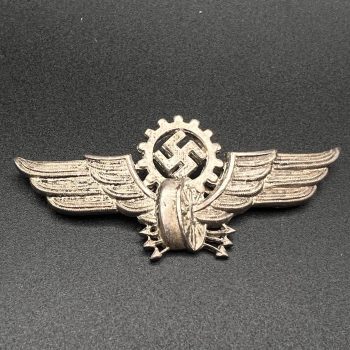
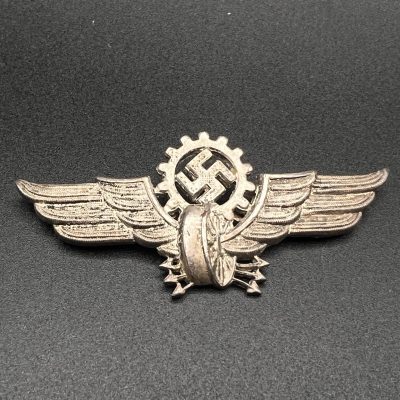
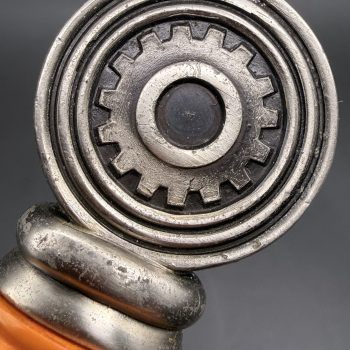
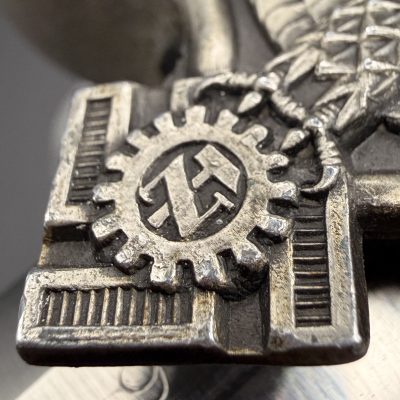
Technically, tram personnel and employees of private railway companies were not part of the Deutsche Reichsbahn. They wore a metal cap badge featuring a winged railway wheel connected to a cogwheel representing the Deutsche Arbeitsfront (German Labor Front), with a swastika inside. When this badge was worn by municipal tramway staff, the lower part of the wheel was further adorned with three lightning bolts on each side.
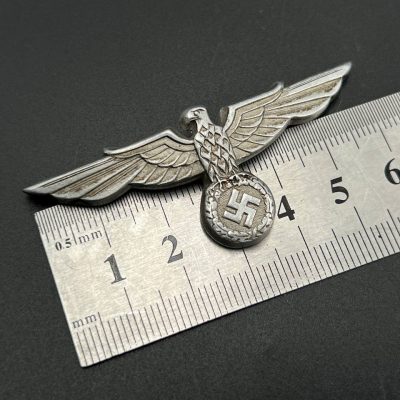
This item is a historical cockade featuring the insignia of Nazi Germany, used on the headgear of military personnel. Such emblems were used by railway personnel during the period of 1933–1945.
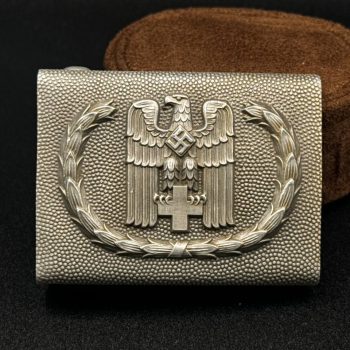
Original Deutsches Rotes Kreuz (DRK) belt buckle from the Third Reich era. The buckle is made of aluminum and is of standard size, intended for wear by enlisted personnel and junior medical staff.
The front features a Third Reich eagle with outstretched wings, clutching a wreath containing a Red Cross and swastika. The background has a characteristic pebbled texture. The detailing is excellent, with deep relief and clearly defined elements.
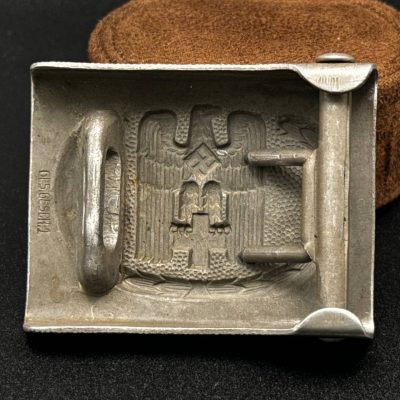
The reverse side retains the original fastening system with the catch and prongs. A maker’s mark is present.
The condition is excellent for its age: minor signs of storage and careful wear, with no damage, deformations, or restorations. A fully authentic piece, ideal for any serious collection of DRK awards, uniforms, or militaria from the World War II period.
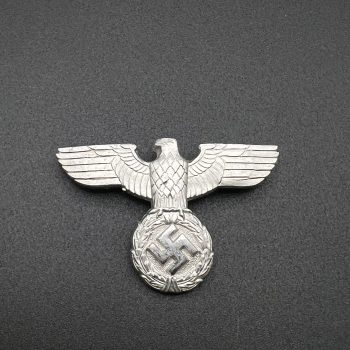
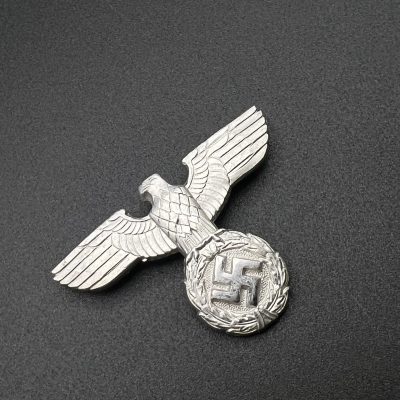
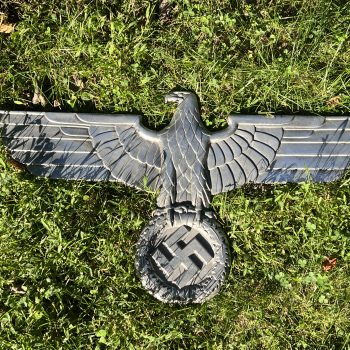
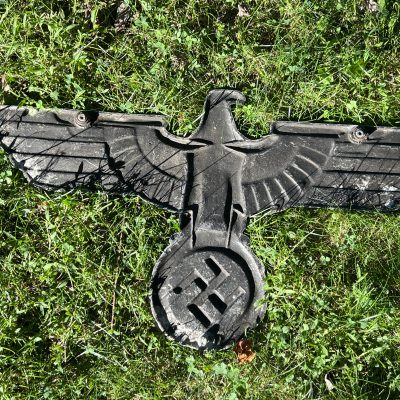
A large original Deutsche Reichsbahn (German State Railways) eagle from the Third Reich period. The eagle is depicted with outstretched wings, clutching a wreath bearing a swastika in its talons. The piece features strong three-dimensional relief, with detailed feathering and wing construction.
The reverse retains stamped/raised manufacturer or production markings, as well as original mounting hardware. The eagle displays an attractive period patina with surface wear, oxidation, scratches, and traces of finish loss consistent with its age and history.
Technical Emergency Corps (TeNo) Leader’s Dagger, Model 1938, manufactured by Carl Eickhorn of Solingen. This example bears the manufacturer’s trademark and retains matching numbers on the blade and scabbard, confirming their factory pairing and attesting to the complete original preservation of the piece.
This dagger model was introduced in November 1938, concurrently with the adoption of new regulation edged weapons for the TeNo organization. It was intended to be worn with dress uniform by commanding officers holding the rank of Stabsscharführer and above. Officers purchased these daggers at their own expense through special organizational outlets.
The history of the Technical Emergency Corps began on September 30, 1919. Throughout the existence of the Weimar Republic, the corps repeatedly distinguished itself, demonstrating efficiency and excellent technical training. Naturally, this organization could not escape the attention of the new leadership, the National Socialist Party. In 1939, to further enhance efficiency, TeNo was transferred to the jurisdiction of the Reich Ministry of Foreign Affairs and subordinated to police structures, allowing for improved operational capacity. Prior to the commencement of the Polish campaign, TeNo was commanded by SS Gruppenführer (SS Lieutenant General) Schmelzer; he was later succeeded in this post by SS Gruppenführer Weinreich.
The Carl Eickhorn company was founded in Solingen in 1865 and became one of the largest manufacturers of edged weapons in Germany. The company’s trademark, featuring a squirrel (Eichhörnchen), served as a guarantee of the highest quality products. During the Third Reich period, the firm produced a wide range of regulation edged weapons, including daggers for all branches of service, SA and SS daggers, NPEA, NSFK, and TeNo daggers, as well as dress daggers, sabers, and swords. Carl Eickhorn products are distinguished by superior steel quality and meticulous finishing, and are highly valued by modern collectors.
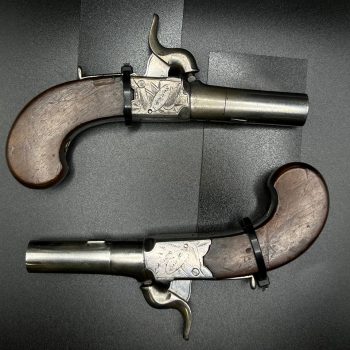
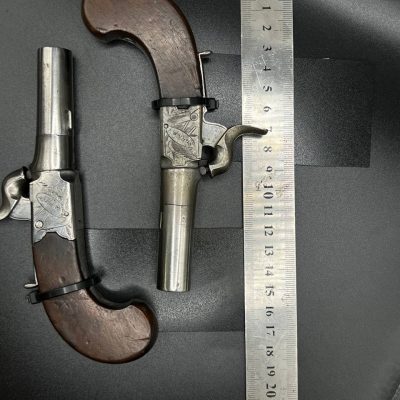
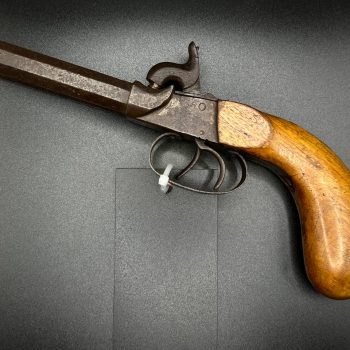
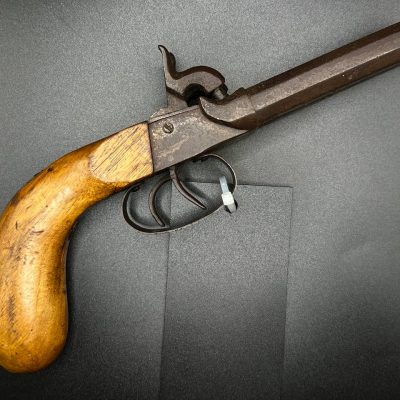
Pair of English Drop Trigger Percussion Pistols Marked H Nock.
Marked with one of England’s premier makers of the period, these guns are likely the fake watches of their day. Both guns are in nice condition with engraved frames and slab butts with vacant silver escutcheons.
Both actions, including push-on safeties, function without problems.
Overall length approximately 5 7/8 inches, with twist off barrels, standard British proofs.