By clicking Login or Register, you agree that the images of Nazi symbols shown on alexmp.com are not propaganda of fascism, Nazism and are shown solely for historical, cognitive and scientific purposes.
Request a callback
Order a free call and our specialist will contact you shortly!
Ask a question
Contact us and we will get back to you shortly.
Request a Blitz Price
Contact us and we will get back to you shortly.
Request a price
Contact us and we will get back to you shortly.
Offer your blitz price
Contact us and we will get back to you shortly.
Error: Contact form not found.
Request a subscription
We will get back to you shortly.
Subscription
В честь запуска Энциклопедии мы рады предложить вам бесплатный доступ до 01.10.2026. Будем рады вашим комментариям и предложениям!
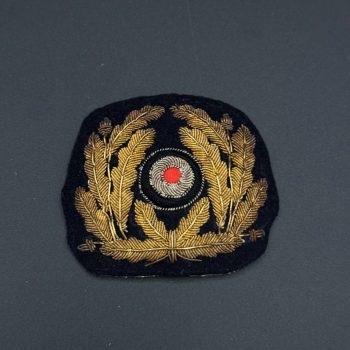
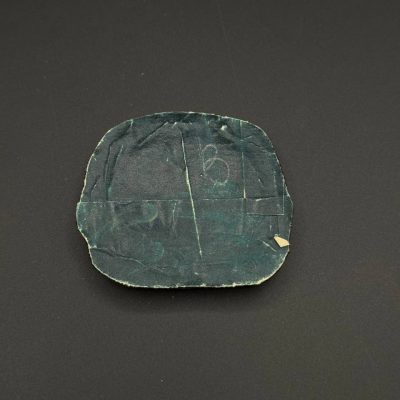
Large bullion-embroidered cap wreath on navy blue wool backing, gold oakleaf wreath surrounding central cockade in national colors (black-white-red). Reverse with original backing material partially worn. Consistent with Kriegsmarine or senior Wehrmacht officer visor cap insignia.
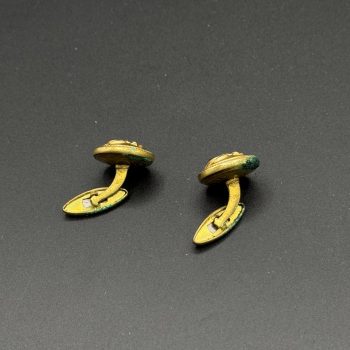
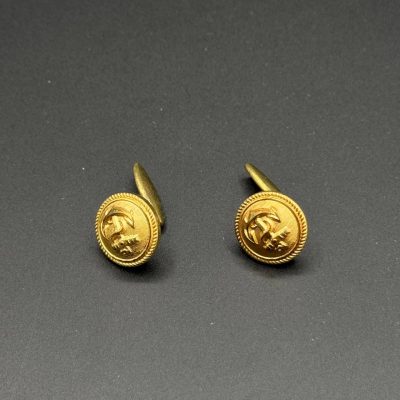
Pair of small gilt brass uniform buttons with anchor-and-rope border motif, Kriegsmarine pattern. Both retain original shank fittings. Showing age-appropriate patina. Desirable matching pair.
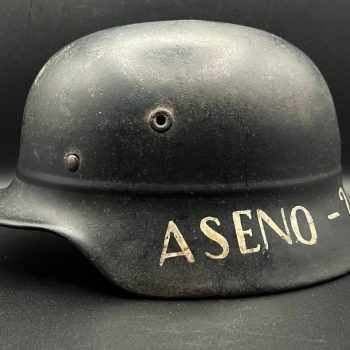
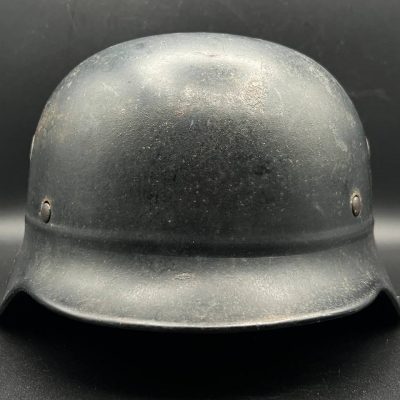
A well-presented example of the M35 Beaded Helmet – ET66, manufactured by ET and stamped ET66, with lot number 5064. This civil defense helmet retains much of its original paint
The steel shell is finished in black paint, a standard color for fire brigades and civil services. White alphanumeric markings (“ASENO-248”, “G.S.”) are painted on the sides and rear, indicating assignment to a specific unit or facility.
The shell is clearly stamped “ET66” (Eisenhüttenwerke Thale, size 66) and “5064” (lot number).
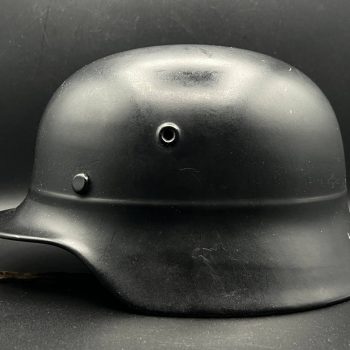
An original German Beaded helmet from the Third Reich period. Manufactured from steel based on the military M34/M35 helmet, it was adapted to meet the needs of civil defence and police.
The shell retains its ventilation holes and rivets, with the manufacturer’s stamp “ET64” indicating production by Eisenhüttenwerke Thale and a size 64 shell. An additional marking “692” is visible inside (batch number). The interior is fitted with the original leather liner with multiple tongues and the chinstrap.
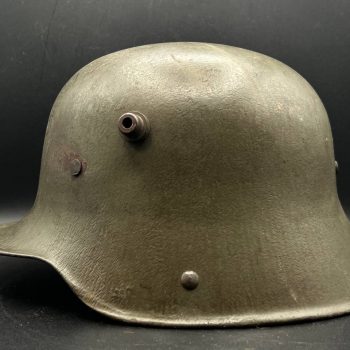
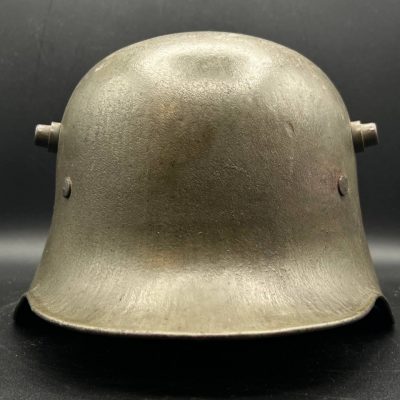
An exceptionally well-preserved German M16 combat helmet from the First World War, in a rare and highly desirable state of originality. This is an early-production example, easily identified by its large external lugs (“ventilation lugs”) designed both for airflow and to accommodate an additional brow plate.
The helmet retains 100% of its original field-gray textured paint, with a beautiful, untouched patina that speaks to its age and authenticity. Unlike later examples with replaced or refurbished interiors, this piece still contains its original leather liner band, complete with the three-pad leather system and remnants of the interior drawstring. The leather shows wear consistent with service use but remains stable and complete.
Maker’s mark and lot number are clearly visible inside the shell (stamped G62), confirming both the size and manufacturer. The split pins remain tight and untouched, further underlining the helmet’s originality.
Helmets of this type and condition are seldom encountered on the market, as most surviving examples were either repainted, reissued in WWII, or have suffered liner replacement. This untouched example represents a textbook collector’s piece.
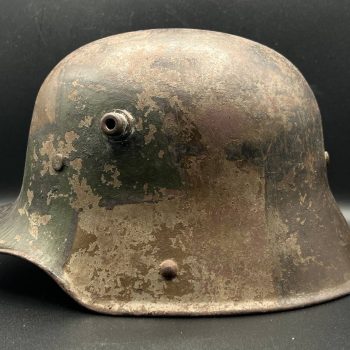
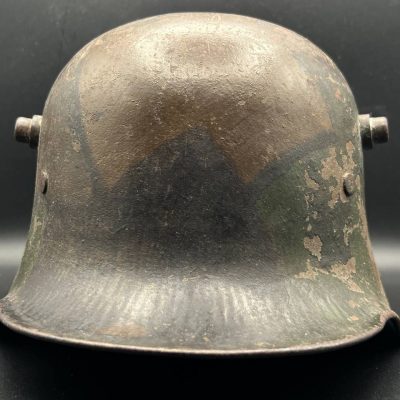
This is an original German M16 steel helmet from the First World War. The shell is made of steel with the characteristic outward vent lugs, which also served as fittings for the additional frontal armor plate (Stirnpanzer). The surface retains traces of the factory finish with an overpainted camouflage in the so-called Buntfarbenanstrich style — the typical multi-color pattern introduced in 1916, featuring green, ochre, and brown segments divided by black lines. The paint shows natural wear, confirming its authenticity.
Inside, the original leather liner, complete with its three leather pads and metal band, is preserved, along with the chinstrap. On the rear skirt of the shell, the stamped marking “G62” is visible, indicating the manufacturer and the shell size (62). Additional factory markings are also present on the interior.
Helmets of this type were introduced to the German Army in 1916, replacing the earlier leather Pickelhaube. Thanks to their strength and protective qualities, the M16 became a symbol of the German soldier of the First World War and served as the foundation for the entire line of steel helmets leading up to the M35 of the Second World War.
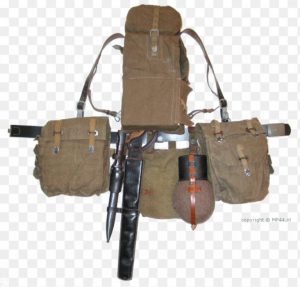
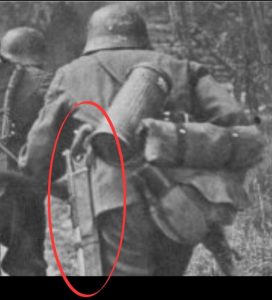
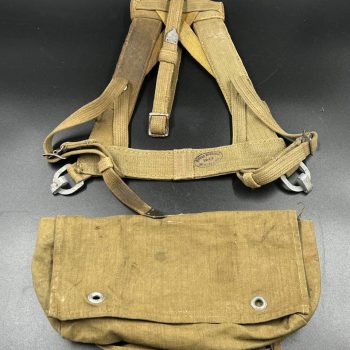
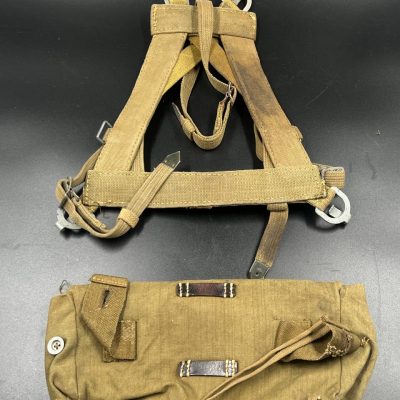
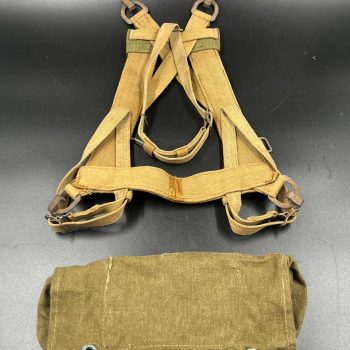
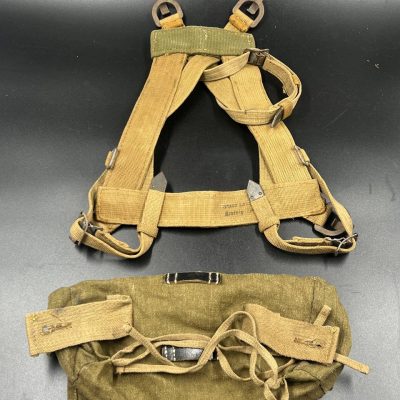
Complete WWII German Wehrmacht Infantry Combat Assault Pack (Sturmgepäck / A-Frame), introduced April 1939. Designed for use with Y-straps by assault infantry.
Set includes:
∙ A-frame (Traggestell) with original riveted leather straps
∙ Y-straps (Koppeltragegestell)
∙ Small items bag (Beutel)
∙ Belt with original steel hardware
Construction: Heavy canvas webbing, double-layered vertical straps with internal metal reinforcement, cross-straps forming characteristic “X” pattern, quick-release D-rings, original matte gray steel fittings.
Condition: Age-appropriate patina. Straps remain supple and functional. Metal shows expected oxidation.
Near mint condition
Complete sets with all components are increasingly difficult to find.
Sold as shown. Please review all photos carefully.
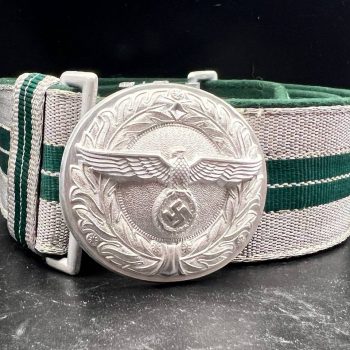
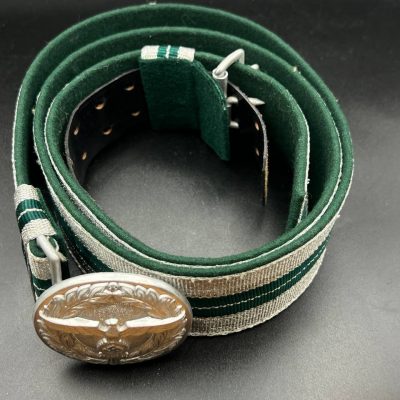
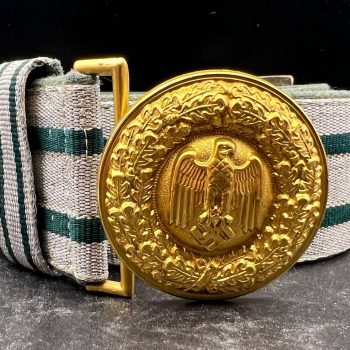
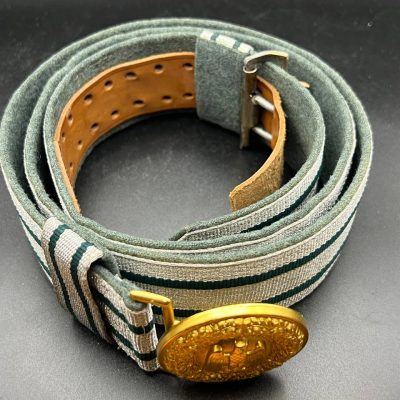
The dress belt buckle manufactured by Friedrich Linden of Lüdenscheid, stamped aluminum, hollow construction with reverse catch, marked FLL ges.gesch 38. On the distinctive dress belt with 2 wide green center stripes, lined in green. Length approximately 105 cm.
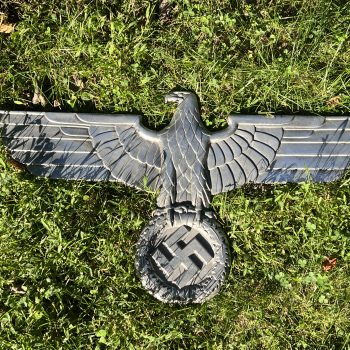
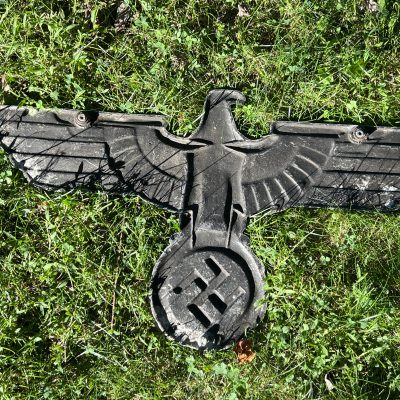
A large original Deutsche Reichsbahn (German State Railways) eagle from the Third Reich period. The eagle is depicted with outstretched wings, clutching a wreath bearing a swastika in its talons. The piece features strong three-dimensional relief, with detailed feathering and wing construction.
The reverse retains stamped/raised manufacturer or production markings, as well as original mounting hardware. The eagle displays an attractive period patina with surface wear, oxidation, scratches, and traces of finish loss consistent with its age and history.
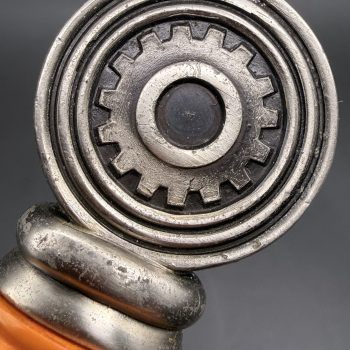
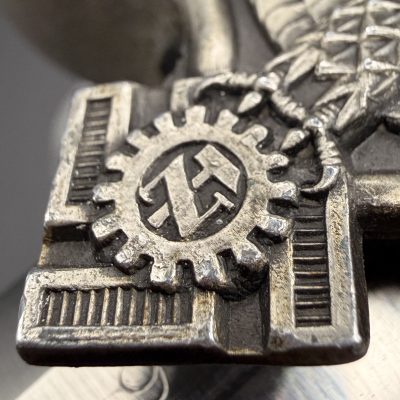
Technical Emergency Corps (TeNo) Leader’s Dagger, Model 1938, manufactured by Carl Eickhorn of Solingen. This example bears the manufacturer’s trademark and retains matching numbers on the blade and scabbard, confirming their factory pairing and attesting to the complete original preservation of the piece.
This dagger model was introduced in November 1938, concurrently with the adoption of new regulation edged weapons for the TeNo organization. It was intended to be worn with dress uniform by commanding officers holding the rank of Stabsscharführer and above. Officers purchased these daggers at their own expense through special organizational outlets.
The history of the Technical Emergency Corps began on September 30, 1919. Throughout the existence of the Weimar Republic, the corps repeatedly distinguished itself, demonstrating efficiency and excellent technical training. Naturally, this organization could not escape the attention of the new leadership, the National Socialist Party. In 1939, to further enhance efficiency, TeNo was transferred to the jurisdiction of the Reich Ministry of Foreign Affairs and subordinated to police structures, allowing for improved operational capacity. Prior to the commencement of the Polish campaign, TeNo was commanded by SS Gruppenführer (SS Lieutenant General) Schmelzer; he was later succeeded in this post by SS Gruppenführer Weinreich.
The Carl Eickhorn company was founded in Solingen in 1865 and became one of the largest manufacturers of edged weapons in Germany. The company’s trademark, featuring a squirrel (Eichhörnchen), served as a guarantee of the highest quality products. During the Third Reich period, the firm produced a wide range of regulation edged weapons, including daggers for all branches of service, SA and SS daggers, NPEA, NSFK, and TeNo daggers, as well as dress daggers, sabers, and swords. Carl Eickhorn products are distinguished by superior steel quality and meticulous finishing, and are highly valued by modern collectors.
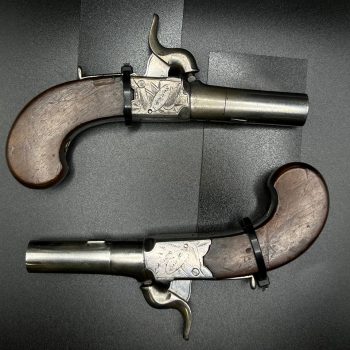
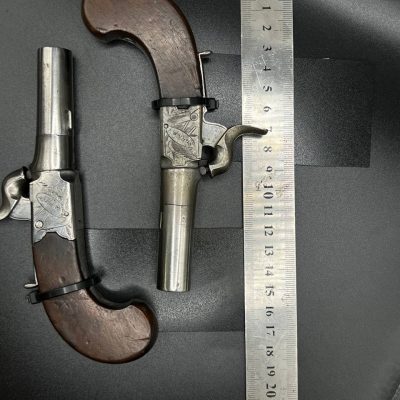
Pair of English Drop Trigger Percussion Pistols Marked H Nock.
Marked with one of England’s premier makers of the period, these guns are likely the fake watches of their day. Both guns are in nice condition with engraved frames and slab butts with vacant silver escutcheons.
Both actions, including push-on safeties, function without problems.
Overall length approximately 5 7/8 inches, with twist off barrels, standard British proofs.