By clicking Login or Register, you agree that the images of Nazi symbols shown on alexmp.com are not propaganda of fascism, Nazism and are shown solely for historical, cognitive and scientific purposes.
Request a callback
Order a free call and our specialist will contact you shortly!
Ask a question
Contact us and we will get back to you shortly.
Request a Blitz Price
Contact us and we will get back to you shortly.
Request a price
Contact us and we will get back to you shortly.
Offer your blitz price
Contact us and we will get back to you shortly.
Error: Contact form not found.
Request a subscription
We will get back to you shortly.
Subscription
В честь запуска Энциклопедии мы рады предложить вам бесплатный доступ до 01.10.2026. Будем рады вашим комментариям и предложениям!
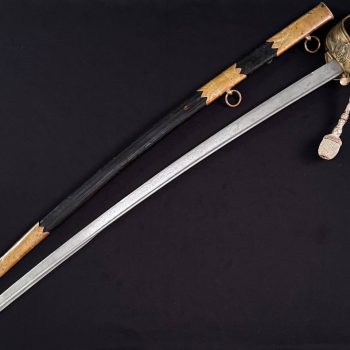
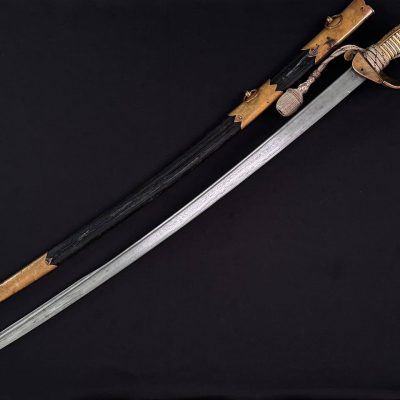
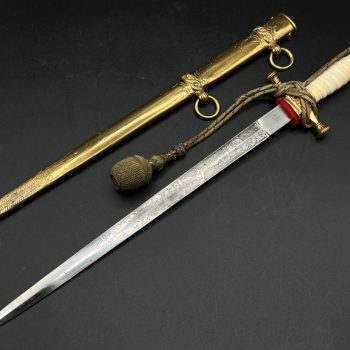
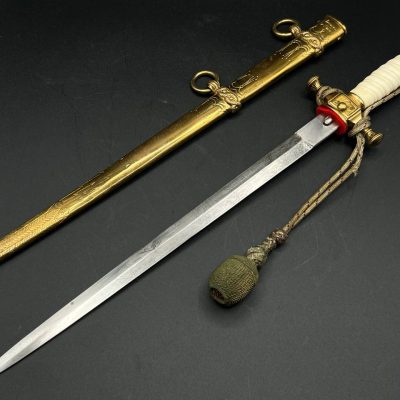
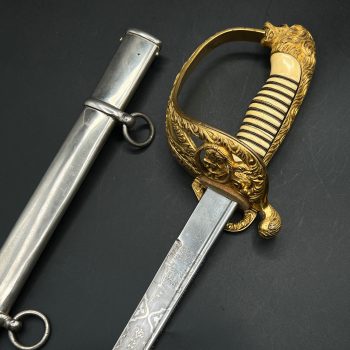
The naval saber was a mandatory attribute of the dress uniform of officers in the Kaiserliche Marine. During the period of Kaiser’s Germany, the imperial anchor beneath the Kaiser’s crown was characteristic in the design of the hilt. The classical variant featured a brass hilt, ivory grip, and a lion’s head with eyes of red and green color. The scabbard was typically made of black leather with brass fittings; steel scabbards are considerably rarer. Sabers were purchased by officers at their own expense, which resulted in numerous variations of execution. Standard and Damascus blades can be found, various hilt designs and decorative scabbard finishes, as well as several sizes ranging from light and elegant to large Grosse Pattern models. It is precisely this diversity of execution that makes naval sabers a particularly interesting independent field of collecting: collections can be built according to manufacturers, sizes, hilt types, blades, and finishing variations. Along with the dirk, the saber remained a symbol of officer status and the continuity of German naval weaponry traditions of the nineteenth century.
E. & F. Hörster, one of the largest Solingen manufacturers of naval edged weapons, operated from the nineteenth century and continued production during the Weimar Republic and the Third Reich. The firm produced high-quality naval sabers and dirks in various execution variants. Already before World War I, Hörster products were supplied not only for the German market but were also exported to other European countries, including the Russian Empire. Thanks to its long operational period, Hörster products allow one to trace the development of naval edged weapons from the Kaiser era to the Kriegsmarine.
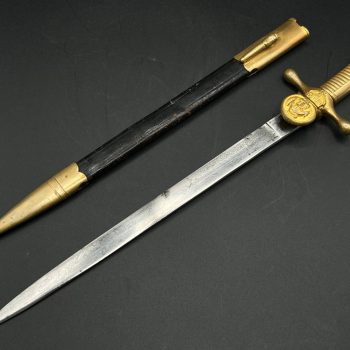
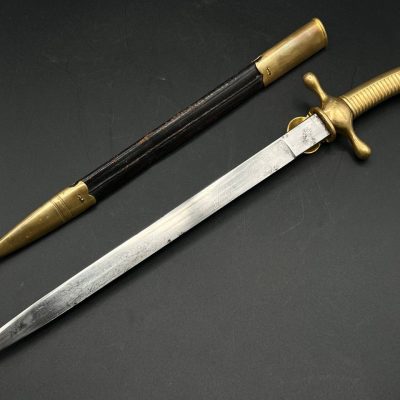
Seebataillone represented naval infantry units of the Kaiserliche Marine. There were several marine battalions, and the custom-made edged weapons associated with them constitute a separate field of collecting German naval weaponry. A characteristic feature of such items is the combination of naval and infantry attributes. For example, an officer’s saber could feature a traditional naval hilt and blade but be equipped with steel infantry-type scabbards. Custom specimens frequently bear personal dedications from one officer to another or from the officer corps to a specific serviceman of a Seebataillon. In addition to officer sabers and other custom edged weapons, this group includes infantry-type bayonets for Mauser system rifles with Seebataillone designations and symbols. Most such items bear unit designations; however, named specimens also occur, representing particular collecting interest.
This saber features a characteristic openwork pierced hilt, presented in the catalogs of several manufacturers; however, it did not correspond to the established standard for Kaiserliche Marine edged weapons and was subsequently prohibited from being worn. It is precisely this unusual feature that makes such sabers particularly desirable among collectors today. Such specimens were predominantly ordered as presentation weapons, for example upon an officer’s transfer to another unit or upon his retirement from service, and served as an object of special pride for the owner. The present specimen is entirely original; the factory riveting of the hilt remains intact, the saber has not been disassembled, and retains its original configuration.
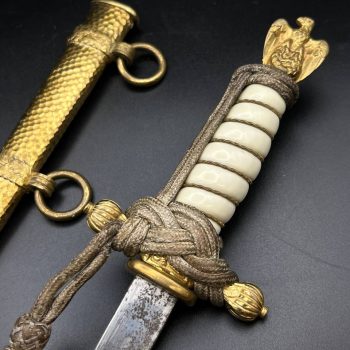
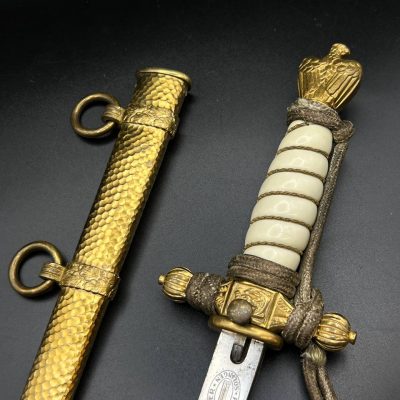
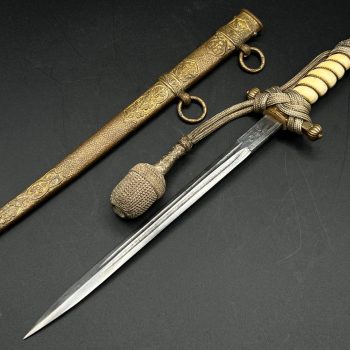
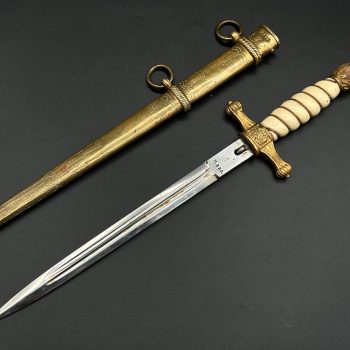
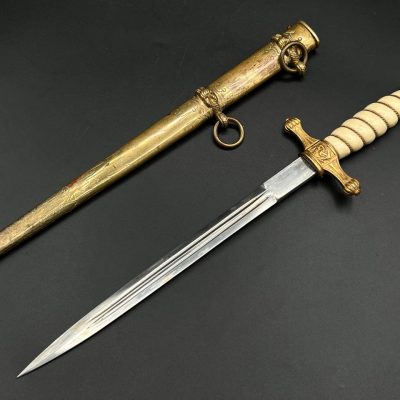
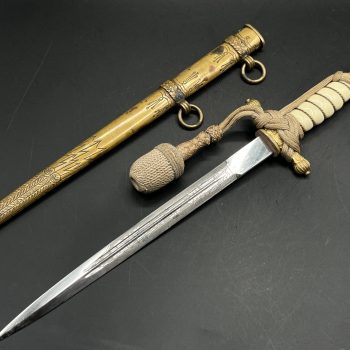
A modernized version of the 1929 pattern dirk issued to the German naval forces, this piece represents a characteristic example of Kriegsmarine regulation edged weaponry. The primary external distinction of the new model was the replacement of the spherical pommel with a pommel in the form of the state eagle, brought into conformity with the symbolism of the Third Reich period. Despite this modification, the dirk retained the overall construction and distinctive design of the 1929 model, remaining an element of the dress uniform for Kriegsmarine officers.
The firm Paul Weyersberg & Co. was a German manufacturer of edged weapons located in Solingen. The enterprise produced a wide range of military and regulation edged weapons, including bayonets, sabers, swords, and daggers. Paul Weyersberg products were used by various military, state, and party organizations in Germany. The firm’s pieces can be found from the German Empire and Weimar Republic periods, as well as from the Third Reich period. During the Third Reich, the firm was assigned RZM code M7/43, while in the military manufacturer code system the designation “crs” was used. The trademark “Paul Weyersberg & Co. Solingen” is also widely encountered on the firm’s pieces.
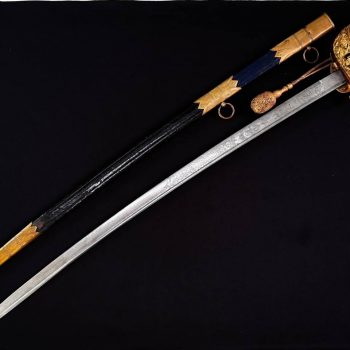
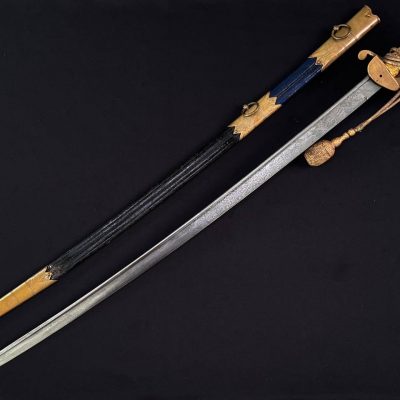
A dress officer’s sword of the Imperial German Navy (Kaiserliche Marine) in an oversized (große Ausführung) variant — the blade is noticeably broader and the grip larger than the standard regulation pattern. This bespoke specification, together with the exceptional quality of the mounts, points to a privately commissioned piece made for an officer of considerable means. complete with a leather scabbard and a gold-colored officer’s sword knot. The hilt is gilt, of openwork design, featuring the characteristic lion’s head pommel and a guard cup adorned with a relief depiction of an anchor surmounted by a crown, floral motifs, and rosettes. The grip is fashioned from ivory with horizontal fluting and wire wrapping. The blade is from multi-layered Damascus steel. The flats feature rich etched ornamentation with floral motifs and the retailer’s inscription “Waarenhaus für Armee & Marine in Berlin.” The scabbard is leather-mounted with gilt brass fittings, comprising a locket with shaped cutout, a middle band with suspension ring, and a chape with foliate ornamentation. An exceptionally rare example of dress naval officer’s weaponry of the highest quality from the German Empire period. 100% original piece.
A parade officer’s saber of the Imperial German Navy from the Kaiserreich period. The hilt is crafted from ivory featuring a characteristic fluted surface, with a pommel in the form of a sculptural lion’s head displaying a finely detailed mane and red eyes. The brass bowl guard is adorned with a relief depiction of the Imperial Crown and anchor. The crossguard bears the owner’s name “Victor Schütze” engraved in Gothic script. The Damascus blade is in excellent condition and features a Damascus pattern with two maker’s marks on the ricasso. Similar examples are known with markings applied to both sides of the ricasso. The blade is notably wide, broader than those typically encountered on this saber pattern, giving the piece a particularly impressive appearance. The hilt fittings are free of any significant defects. The reverse side of the scabbard has a separated seam where the stitching has come undone, but this does not detract from the overall presentation of the piece. Overall, this is a very well-preserved collectible example. The saber is named, adding significant historical interest and desirability for collectors.
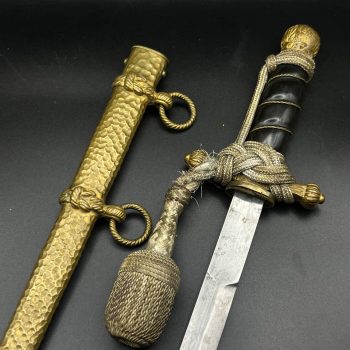
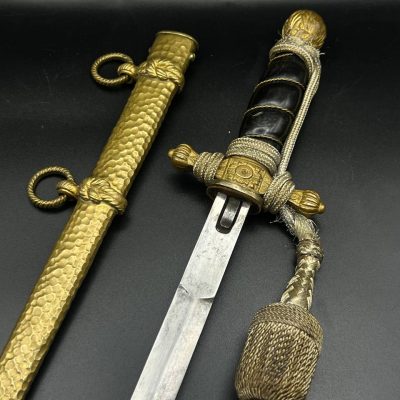
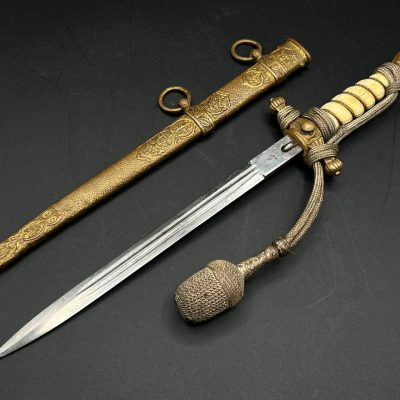
Black horn or synthetic grip with intact wire wrapping, plain rhomboid blade without maker’s mark, pommel and crossguard made of brass, hammered scabbard, the suspension bands in rope form with decorative knots, the rings with rope decoration, complete with knotted portepee sword knot. An honest dagger.
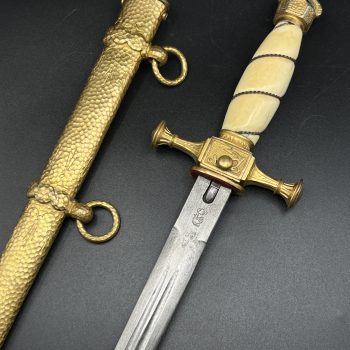
A rare and early example of the German Naval Officer’s Dagger, Model 1921, produced in the late 1920s to early 1930s. This piece is in very good condition, featuring a minty blade with original gilding preserved. Both the scabbard and the blade bear Kriegsmarine proof marks, and the serial numbers are matching.
This is a scarce variant manufactured by WKC, notable for the absence of the push-button release—typical of the earliest production models. A true collector’s piece from the transitional period of the Reichsmarine to Kriegsmarine.
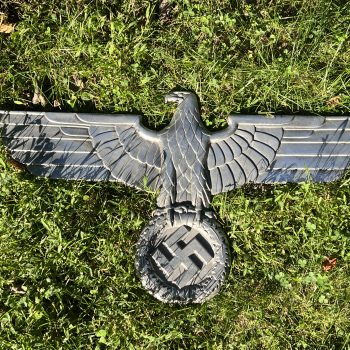
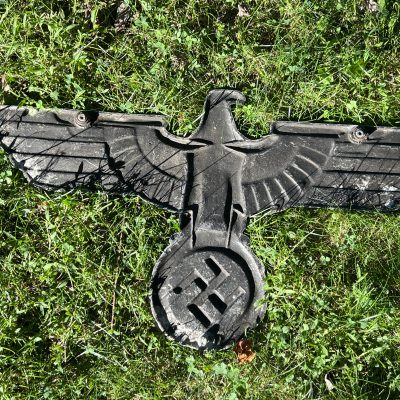
A large original Deutsche Reichsbahn (German State Railways) eagle from the Third Reich period. The eagle is depicted with outstretched wings, clutching a wreath bearing a swastika in its talons. The piece features strong three-dimensional relief, with detailed feathering and wing construction.
The reverse retains stamped/raised manufacturer or production markings, as well as original mounting hardware. The eagle displays an attractive period patina with surface wear, oxidation, scratches, and traces of finish loss consistent with its age and history.
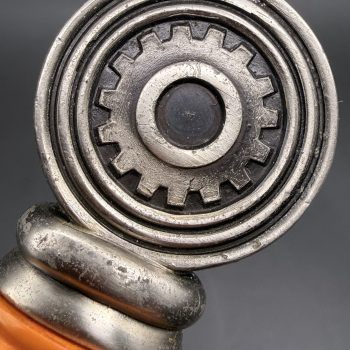
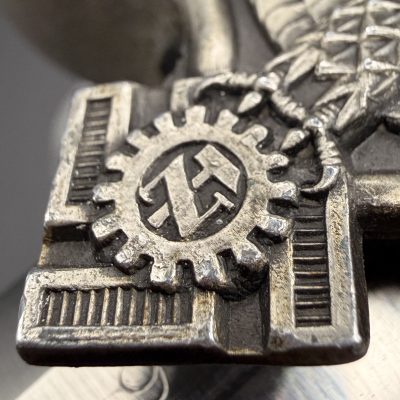
Technical Emergency Corps (TeNo) Leader’s Dagger, Model 1938, manufactured by Carl Eickhorn of Solingen. This example bears the manufacturer’s trademark and retains matching numbers on the blade and scabbard, confirming their factory pairing and attesting to the complete original preservation of the piece.
This dagger model was introduced in November 1938, concurrently with the adoption of new regulation edged weapons for the TeNo organization. It was intended to be worn with dress uniform by commanding officers holding the rank of Stabsscharführer and above. Officers purchased these daggers at their own expense through special organizational outlets.
The history of the Technical Emergency Corps began on September 30, 1919. Throughout the existence of the Weimar Republic, the corps repeatedly distinguished itself, demonstrating efficiency and excellent technical training. Naturally, this organization could not escape the attention of the new leadership, the National Socialist Party. In 1939, to further enhance efficiency, TeNo was transferred to the jurisdiction of the Reich Ministry of Foreign Affairs and subordinated to police structures, allowing for improved operational capacity. Prior to the commencement of the Polish campaign, TeNo was commanded by SS Gruppenführer (SS Lieutenant General) Schmelzer; he was later succeeded in this post by SS Gruppenführer Weinreich.
The Carl Eickhorn company was founded in Solingen in 1865 and became one of the largest manufacturers of edged weapons in Germany. The company’s trademark, featuring a squirrel (Eichhörnchen), served as a guarantee of the highest quality products. During the Third Reich period, the firm produced a wide range of regulation edged weapons, including daggers for all branches of service, SA and SS daggers, NPEA, NSFK, and TeNo daggers, as well as dress daggers, sabers, and swords. Carl Eickhorn products are distinguished by superior steel quality and meticulous finishing, and are highly valued by modern collectors.
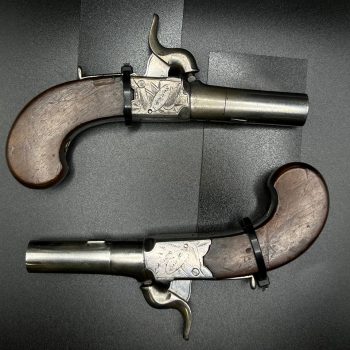
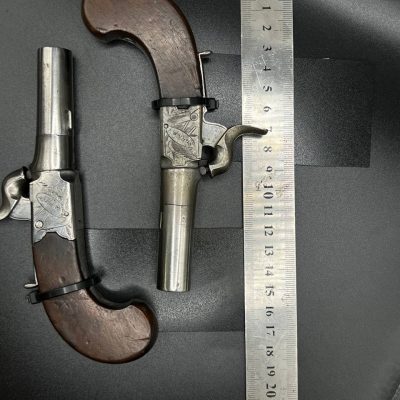
Pair of English Drop Trigger Percussion Pistols Marked H Nock.
Marked with one of England’s premier makers of the period, these guns are likely the fake watches of their day. Both guns are in nice condition with engraved frames and slab butts with vacant silver escutcheons.
Both actions, including push-on safeties, function without problems.
Overall length approximately 5 7/8 inches, with twist off barrels, standard British proofs.



![Imperial German Navy Officer’s Sword [E. & F. Horster]. Marine Corps (Seebataillon)](https://alexmp.com/wp-content/uploads/2026/09/1789686030894-wm81ct25z8n-400x400.jpeg)
![Imperial German Navy Officer’s Dagger pre 1918 [WKC] (damascus steel blade)](https://alexmp.com/wp-content/uploads/2026/09/1789665658850-1zh5cw14spn-400x400.jpeg)
![Naval dagger, Model 1938 [Paul Weyersberg].](https://alexmp.com/wp-content/uploads/2026/08/1786413653953-6lxn1nae2tr-400x400.jpeg)