Login
Register
By clicking Login or Register, you agree that the images of Nazi symbols shown on alexmp.com are not propaganda of fascism, Nazism and are shown solely for historical, cognitive and scientific purposes.
Order a free call and our specialist will contact you shortly!
Contact us and we will get back to you shortly.
Contact us and we will get back to you shortly.
Contact us and we will get back to you shortly.
Contact us and we will get back to you shortly.
Error: Contact form not found.
We will get back to you shortly.
В честь запуска Энциклопедии мы рады предложить вам бесплатный доступ до 01.10.2026.
Будем рады вашим комментариям и предложениям!
Inspected and guaranteed by Alex Warstory.
For more details on AlexMP Guarantee, click [HERE]
Item guaranteed by a verified dealer.
Click [HERE] for full seller guarantee terms.
Sold without expert review or guarantees. No claims accepted post-sale.
Learn more [HERE]


Showing 1–16 of 42 results
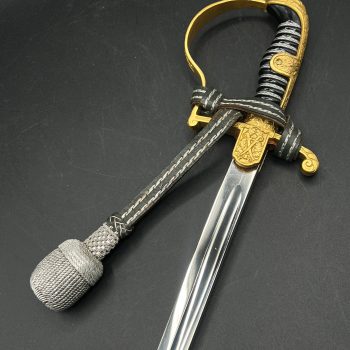
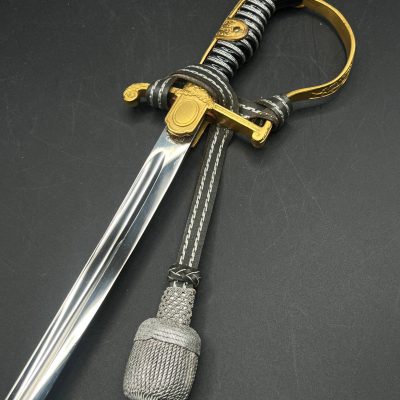
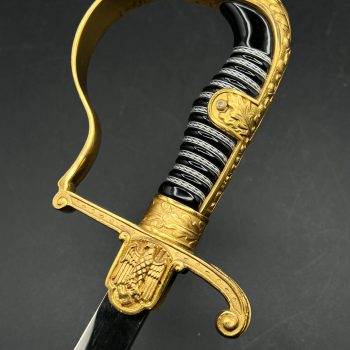
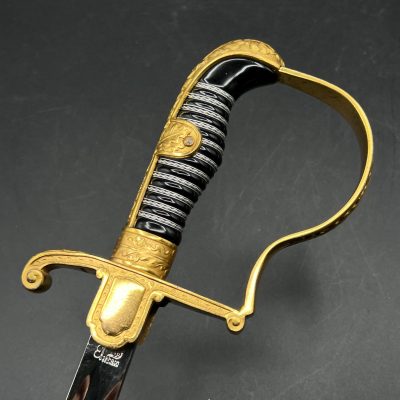
FiltersFollowing the restoration of German armed forces, the saber was reintroduced as a ceremonial cold weapon for officers, continuing the traditions of the Imperial Army and the Reichswehr. Unlike the army dagger model of 1935, officer sabers were produced in numerous design variations by various Solingen manufacturers. In May 1943, saber production was discontinued due to military industrial requirements; however, specimens already in service continued to be worn with dress uniforms. At the end of 1944, the wearing of ceremonial cold weapons was abolished, and officers were ordered to carry a pistol instead of a saber or dagger.
The Carl Eickhorn company was founded in Solingen in 1865 and became one of Germany’s largest producers of cold weapons. The company trademark featuring a squirrel (Eichhörnchen) was a guarantee of the highest quality products. During the Third Reich, the enterprise produced a wide range of regulation cold weapons: daggers for all branches of service, SA, SS, NPEA, NSFK, and TeNo daggers, as well as ceremonial daggers, sabers, and dress swords. Carl Eickhorn products are distinguished by superior steel quality, meticulous finishing, and are highly valued by modern collectors.
The mark “Ges. Gesch.,” an abbreviation of the German “Gesetzlich Geschützt” (Legally Protected), indicates patent protection for the product or its elements within German territory. This marking was widely applied to Third Reich cold weapons, primarily on daggers and daggers of party and paramilitary organizations, designating patented design solutions for hilts, scabbards, or decorative elements. The presence of an original mark attests to the authenticity of the object and its manufacture during the period when German patent law was in effect, which serves as an important attribution characteristic for collectors.
A special place among army sabers of the Third Reich era is occupied by the famous “Field Marshal Series” of Carl Eickhorn, Solingen. The series consisted of nine different models, each bearing the name of an outstanding German military figure or historical personage: Wrangel, Scharnhorst, Blücher, von Stein, Roon, Derfflinger, Zieten, Prinz Eugen, and Lützow. The term “Field Marshal Series” is a traditional collector’s designation. The models had their own catalog numbers and differed in the design of their hilts, pommels, and decorative elements. A significant portion of the designs is connected to the renowned artist and weapons designer Paul Casberg. Today, the “Field Marshal Series” represents a special collecting interest precisely as a complete thematic collection: nine catalog models from one of Solingen’s leading manufacturers allow for assembling a complete, historically established series of Eickhorn army sabers. Individual models are considerably rarer than others, making the creation of a complete set a serious collecting objective.
Following the restoration of the German armed forces, the saber was reintroduced as a ceremonial edged weapon for officers, continuing the traditions of the Imperial Army and the Reichswehr. Unlike the army dagger model of 1935, officer sabers were produced in numerous design variations by different Solingen manufacturers. In May 1943, saber production was discontinued due to wartime industrial demands; however, examples already in service continued to be worn with dress uniforms. In late 1944, the wearing of ceremonial edged weapons was definitively abolished, and officers were instructed to carry a pistol instead of a saber or dagger.
The blade was manufactured by Paul Seilheimer, Solingen, a German edged weapons producer that made sabers, daggers, bayonets, and knives. Of particular interest to collectors is the fact that original Paul Seilheimer catalogs from the Third Reich period have survived to the present day, featuring illustrations of sabers, daggers, and equipment elements; some catalog copies have even preserved the original company price lists. This makes it possible today to compare surviving pieces with the manufacturer’s original product range. Paul Seilheimer blades are encountered considerably less frequently than products from the largest Solingen factories and represent sustained collector interest.
Ceremonial edged weapon for officers, reintroduced following the restoration of the German armed forces and continuing the traditions of the Imperial Army and the Reichswehr. Unlike the army dagger model 1935, officer sabers were produced in numerous design variants by various Solingen manufacturers. In May 1943, saber production was discontinued due to wartime industrial demands; however, examples already in service continued to be worn with dress uniform. In late 1944, the wearing of ceremonial edged weapons was abolished, and officers were required to carry a pistol instead of a saber or dagger.
The blade was manufactured by Emil Voos, Solingen, a renowned German edged weapons producer whose sabers, daggers, and knives represent sustained collector interest today. The firm operated in Solingen, the famous center of German blade production, and was distinguished by its high quality of manufacture and finish. Emil Voos products are encountered noticeably less frequently than those of many major Solingen manufacturers, which enhances their appeal to collectors. At the end of World War II, Solingen suffered heavy Allied bombing, particularly in November 1944, when a significant portion of the city was destroyed.
The hilt featuring a lion head is complemented by a rare design feature: an eagle on the guard. This execution is found among a limited number of manufacturers and represents an interesting collector variant, distinguished by its hilt ornamentation.
Ceremonial edged weapon for officer personnel, introduced following the restoration of German armed forces and continuing the traditions of the Imperial Army and Reichswehr. Unlike the army dagger model 1935, officer sabres were produced in numerous design variations by various Solingen manufacturers. In May 1943, sabre production was discontinued due to wartime industrial demands; however, examples already in service continued to be worn with dress uniform. In late 1944, the wearing of ceremonial edged weapons was abolished, and officers were required to carry a pistol instead of a sabre or dagger.
The manufacturer of this example is Robert Klaas, a renowned German edged weapons company founded in 1834 in Solingen. The firm specialised in producing high quality army daggers and sabres for the Wehrmacht, distinguished by superior finishing of blades and hilts.
Officially introduced on 4 May 1935 concurrently with the restoration of Germany’s armed forces, this model was intended for officers of the Army (Heer) and constituted an integral part of dress and walking-out uniform. The dagger was worn with the appropriate officer’s uniform and quickly became one of the principal symbols of the Wehrmacht officer corps. Its owners included officers of all branches of the land forces, including general officers, and production continued until 1942. Owing to this extended period of manufacture, the Model 1935 Army dagger became the most widely produced German officer’s dagger of the Third Reich era and today remains one of the most popular areas of collecting German edged weapons.
Manufactured by WKC (Weyersberg, Kirschbaum & Cie), one of the oldest and most prestigious arms manufacturers in Solingen, established in 1883 through the merger of two historic firms. The company was a major supplier of edged weapons to the German Army, producing army daggers and sabres of the highest quality bearing a distinctive maker’s mark. WKC products were distinguished by superb blade finishing, impeccable polishing, and precise conformity to regulation patterns, making them particularly valuable to collectors.
Honorary Award Sabre “For Outstanding Achievements in Marksmanship” ranks among the most prestigious state awards of Germany in the period before 1939. Such sabres were presented to military personnel for outstanding results in marksmanship training and represented not a prize for placing in competition, but rather the sole honorary award for the best marksman of the competition. Unlike most richly decorated ceremonial sabres manufactured through private commissions, these blades were official state award weapons. Each was associated with a specific award presentation, making such items considerably rarer and more valuable to collectors. The tradition of such awards existed during the Reichswehr era and continued into the Wehrmacht period. OKW sabres were produced from 1935 to 1937 without the swastika, and from 1938 a new variant appeared featuring an eagle on the crossguard. All award sabres of this type were manufactured exclusively with Damascus steel blades. The blades featured rich etched ornamentation as well as inscriptions indicating the name, rank, and type of weapon with which outstanding results were demonstrated. Depending on the manufacturer and production period, the design could vary slightly. A common characteristic of original examples is also the presence of military acceptance stamps confirming their official state origin.
The year of the sabre’s production (1930) is attested by corresponding markings on the blade. Thus, this example dates to the Reichswehr period and was manufactured before the establishment of the Wehrmacht.
The manufacturer was WKC (Weyersberg, Kirschbaum & Cie), one of the oldest and most respected arms manufactories in Solingen, founded in 1883 through the merger of two historic production facilities. The company was a major supplier of edged weapons for the German army, producing army daggers and sabres of the highest quality bearing their distinctive mark. WKC products were distinguished by superb blade finishing, impeccable polishing, and precise conformity to regulation patterns, making them particularly valuable to collectors.
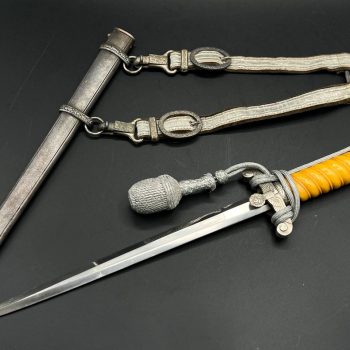
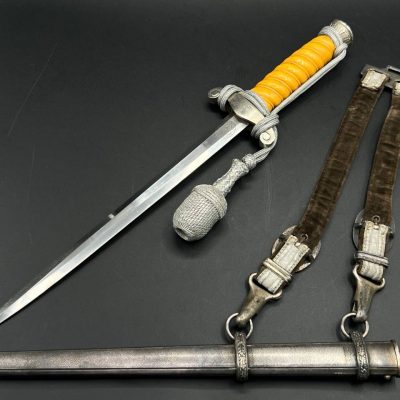
A Wehrmacht Army officer’s dagger, Model 1935, complete with metal scabbard. The grip is crafted from white celluloid featuring characteristic spiral fluting. The crossguard is adorned with a relief depiction of the Wehrmacht eagle with outstretched wings, clutching a swastika within an oak wreath. The pommel and guard ferrule are decorated with engraved oak leaf ornamentation. The metal scabbard has a textured surface and is fitted with two suspension rings featuring ornamented fittings. The blade displays traces of patina.
Officially introduced on 4 May 1935 alongside the restoration of the German armed forces, this dagger was intended for officers of the Army (Heer) and served as an essential part of dress and walking-out uniform. The example presented here was manufactured by the firm Carl Julius Krebs. The dagger quickly became one of the principal symbols of the Wehrmacht officer corps and was worn with the appropriate officer’s uniform. It was used by officers of all branches of the ground forces, including general officers, and production continued until 1942. Owing to this extended period of manufacture, the Model 1935 Army dagger became the most widely produced German officer’s dagger of the Third Reich era and remains today one of the most popular areas of collecting German edged weapons.
Officially introduced on 4 May 1935 simultaneously with the restoration of the German armed forces, this dagger was intended for officers of the Army (Heer) and served as an integral part of dress and walking-out uniform. It was worn with the appropriate officer’s uniform and quickly became one of the main symbols of the Wehrmacht officer corps. The dagger was authorized for officers of all branches of the land forces, including general officers, and its production continued until 1942. Due to this lengthy manufacturing period, the Army dagger model 1935 became the most widely produced German officer’s dagger of the Third Reich era and remains today one of the most popular categories for collectors of German edged weapons.
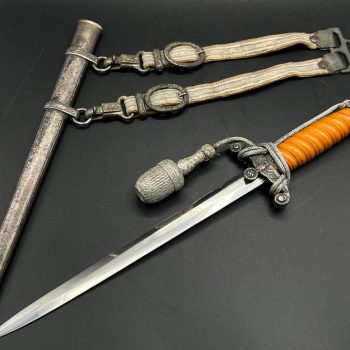
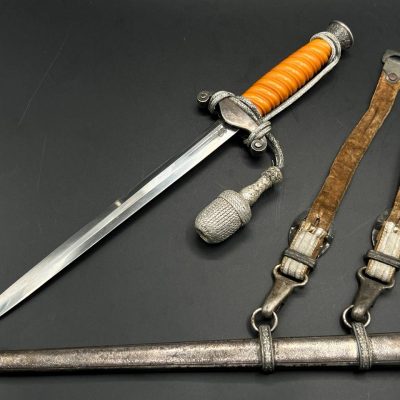
The fittings made of nickel silver (German silver) are characteristic of early examples, typically manufactured prior to 1936. This specimen was crafted by the firm Gustav C. Spitzer. Owing to their limited production runs, high quality of manufacture, and distinguished appearance, such pieces are traditionally valued by collectors more highly than their later counterparts.
This dagger was officially introduced on 4 May 1935, coinciding with the restoration of Germany’s armed forces. Intended for officers of the Army (Heer), it served as part of the dress and walking-out uniform and was worn with the corresponding officer’s attire. The dagger quickly became one of the principal symbols of the Wehrmacht officer corps. It was worn by officers of all branches of the ground forces, including general officers, and production continued until 1942. Due to this extended manufacturing period, the Army dagger became the most widely produced German officer’s dagger of the Third Reich era and remains today one of the most popular areas of German edged weapons collecting.
The fittings made of nickel silver (German silver) are characteristic of early examples, typically manufactured before 1936. Owing to their limited production numbers, superior craftsmanship, and distinguished appearance, such pieces are traditionally valued by collectors more highly than their later counterparts.
The Carl Eickhorn company was founded in Solingen in 1865 and became one of the largest edged weapons manufacturers in Germany. The trademark featuring a squirrel (Eichhörnchen) served as a guarantee of the highest quality products. During the Third Reich period, the firm produced a wide range of regulation edged weapons: daggers for all branches of service, SA, SS, NPEA, NSFK, and TeNo daggers, as well as dress daggers, sabres, and swords. Carl Eickhorn products are distinguished by superb steel quality and meticulous finishing, and they are highly prized by modern collectors.
Officially introduced on 4 May 1935 concurrently with the restoration of Germany’s armed forces, this dagger was intended for officers of the Army (Heer) and served as part of the dress and walking-out uniform, worn with the appropriate officer’s attire. The dagger quickly became one of the principal symbols of the Wehrmacht officer corps. It was worn by officers of all branches of the ground forces, including general officers, and production continued until 1942. Due to the extended period of manufacture, the Army dagger became the most widely produced German officer’s dagger of the Third Reich era and remains today one of the most popular collecting categories for German edged weapons.
The fittings made of nickel silver (German silver) are characteristic of early examples, generally produced before 1936. The present specimen was manufactured by the renowned Solingen firm Anton Wingen Jr. Owing to their limited production numbers, high quality of craftsmanship, and distinguished appearance, such pieces are traditionally valued by collectors more highly than their later counterparts.
The official introduction of this pattern took place on 4 May 1935, coinciding with the restoration of Germany’s armed forces. The dagger was intended for officers of the Army (Heer) and constituted an integral component of dress and walking-out uniform, worn with the corresponding officer’s attire. Having quickly acquired the status of one of the principal symbols of the Wehrmacht officer corps, it was carried by officers of all branches of the land forces, including general officers. Production continued until 1942, making the Army dagger the most widely produced German officer’s dagger of the Third Reich period. Today it remains one of the most popular collecting areas within German edged weapons.
The fittings are executed in nickel silver (German silver) by the craftsmen of the firm Gebr Heller, characteristic of early examples generally manufactured prior to 1936. Owing to limited production runs, superior manufacturing quality, and distinguished appearance, such pieces are traditionally valued by collectors more highly than their later counterparts.
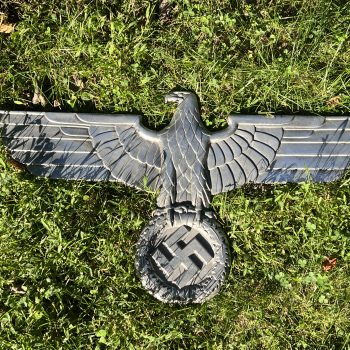
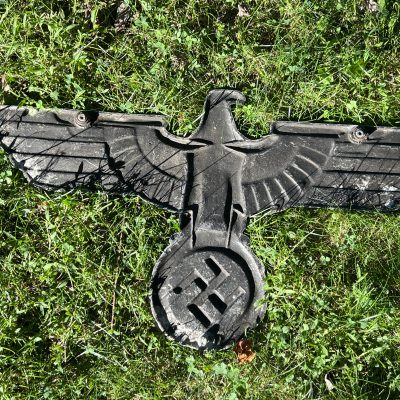
A large original Deutsche Reichsbahn (German State Railways) eagle from the Third Reich period. The eagle is depicted with outstretched wings, clutching a wreath bearing a swastika in its talons. The piece features strong three-dimensional relief, with detailed feathering and wing construction.
The reverse retains stamped/raised manufacturer or production markings, as well as original mounting hardware. The eagle displays an attractive period patina with surface wear, oxidation, scratches, and traces of finish loss consistent with its age and history.
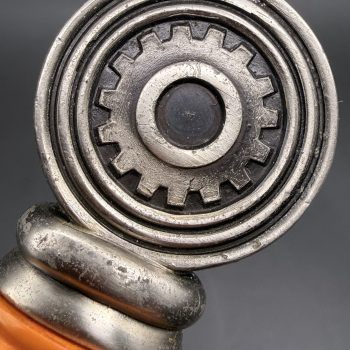
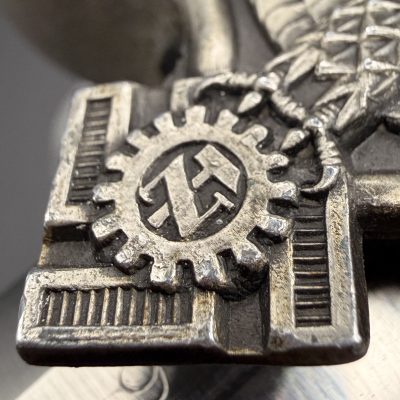
Technical Emergency Corps (TeNo) Leader’s Dagger, Model 1938, manufactured by Carl Eickhorn of Solingen. This example bears the manufacturer’s trademark and retains matching numbers on the blade and scabbard, confirming their factory pairing and attesting to the complete original preservation of the piece.
This dagger model was introduced in November 1938, concurrently with the adoption of new regulation edged weapons for the TeNo organization. It was intended to be worn with dress uniform by commanding officers holding the rank of Stabsscharführer and above. Officers purchased these daggers at their own expense through special organizational outlets.
The history of the Technical Emergency Corps began on September 30, 1919. Throughout the existence of the Weimar Republic, the corps repeatedly distinguished itself, demonstrating efficiency and excellent technical training. Naturally, this organization could not escape the attention of the new leadership, the National Socialist Party. In 1939, to further enhance efficiency, TeNo was transferred to the jurisdiction of the Reich Ministry of Foreign Affairs and subordinated to police structures, allowing for improved operational capacity. Prior to the commencement of the Polish campaign, TeNo was commanded by SS Gruppenführer (SS Lieutenant General) Schmelzer; he was later succeeded in this post by SS Gruppenführer Weinreich.
The Carl Eickhorn company was founded in Solingen in 1865 and became one of the largest manufacturers of edged weapons in Germany. The company’s trademark, featuring a squirrel (Eichhörnchen), served as a guarantee of the highest quality products. During the Third Reich period, the firm produced a wide range of regulation edged weapons, including daggers for all branches of service, SA and SS daggers, NPEA, NSFK, and TeNo daggers, as well as dress daggers, sabers, and swords. Carl Eickhorn products are distinguished by superior steel quality and meticulous finishing, and are highly valued by modern collectors.
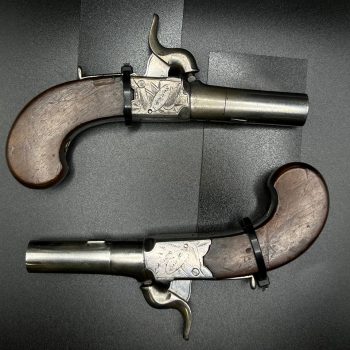
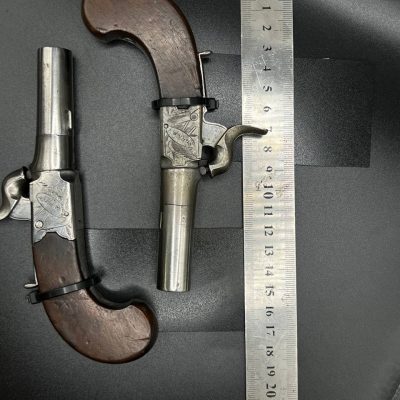
Pair of English Drop Trigger Percussion Pistols Marked H Nock.
Marked with one of England’s premier makers of the period, these guns are likely the fake watches of their day. Both guns are in nice condition with engraved frames and slab butts with vacant silver escutcheons.
Both actions, including push-on safeties, function without problems.
Overall length approximately 5 7/8 inches, with twist off barrels, standard British proofs.
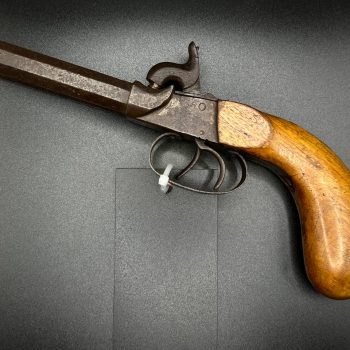
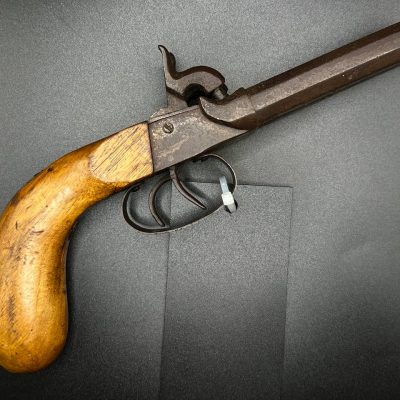
Original Victorian Era Double Barreled Percussion Coat Pistol
.40 caliber with turn-off 3 inch barrels. Overall length is a little over 8 inches.
Actions are mostly functional. The left action holds on half cock only; right action holds on half and full cock.
A good example of this early ‘concealed carry’ firearm at an attractive price.

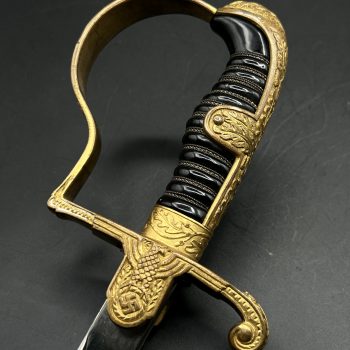
![Officer sword of Third Reich [Carl Eickhorn]. Stamp – Ges. Gesch.. Field Marshall Series Wrangel №1693](https://alexmp.com/wp-content/uploads/2026/09/1786671590887-pgipz40tou-400x400.jpeg)
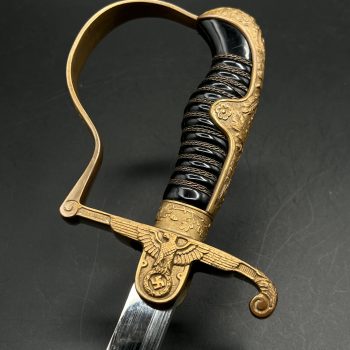
![Officer sword of Third Reich [Paul Seilheimer].](https://alexmp.com/wp-content/uploads/2026/09/1786671657509-5r9qvm0bju-400x400.jpeg)
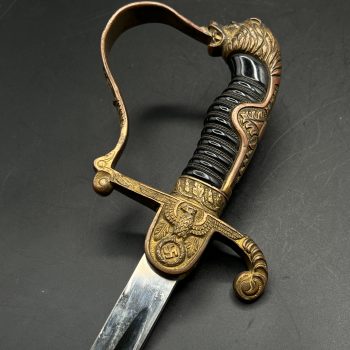
![Officer sword of Third Reich Lion Head. [Emil Voos]. Extra eagle on the langet](https://alexmp.com/wp-content/uploads/2026/09/1786672077809-s7vyu7s3oqh-400x400.jpeg)
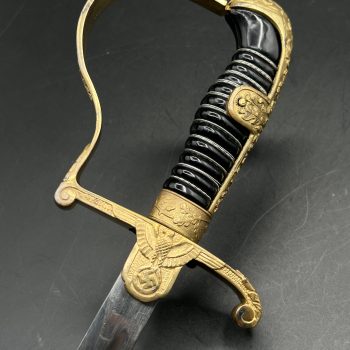
![Officer sword of Third Reich [Robert Klaas].](https://alexmp.com/wp-content/uploads/2026/08/1786672137663-7vf74nsp70g-400x400.jpeg)
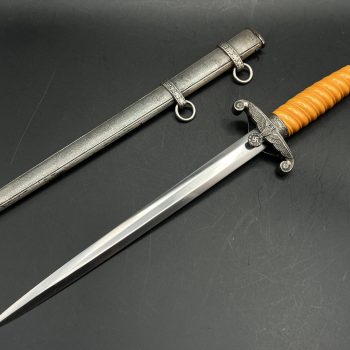
![German Army Dagger, Model 1935 [WKC].](https://alexmp.com/wp-content/uploads/2026/08/1786413306431-mmdh82hm5z-400x400.jpeg)
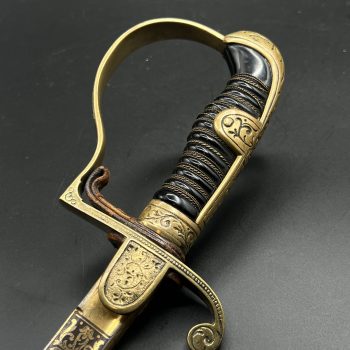
![Honor Presentation Saber for Outstanding Marksmanship of the Oberkommando der Wehrmacht (OKW) 1930. [WKC].](https://alexmp.com/wp-content/uploads/2026/08/1786327324223-5t9w0mpjwk5-400x400.jpeg)
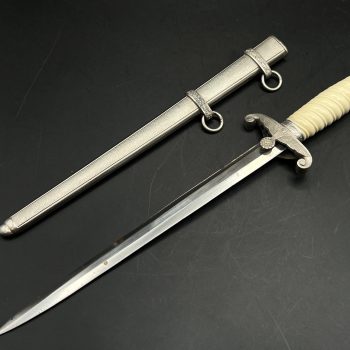
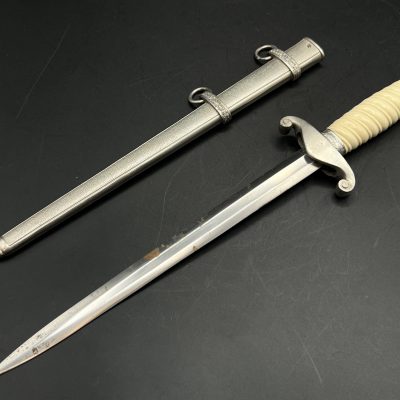
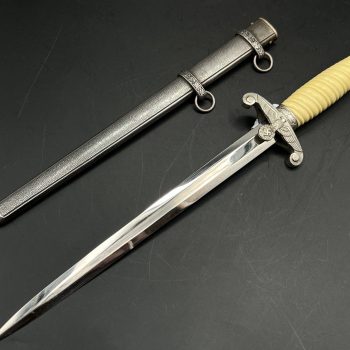
![German Army Dagger, Model 1935 [Carl Julius Krebs].](https://alexmp.com/wp-content/uploads/2026/08/1786373962754-4ptduaaklpx-400x400.jpeg)
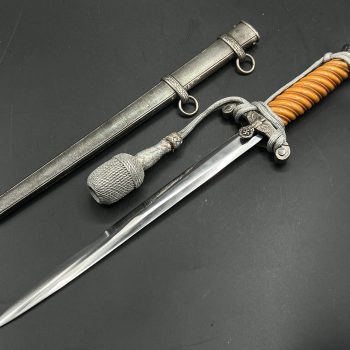
![German Army Dagger, Model 1935 (nickel-silver fittings). [Gustav C. Spitzer].](https://alexmp.com/wp-content/uploads/2026/08/1786283399870-s46108nq9z-400x400.jpeg)
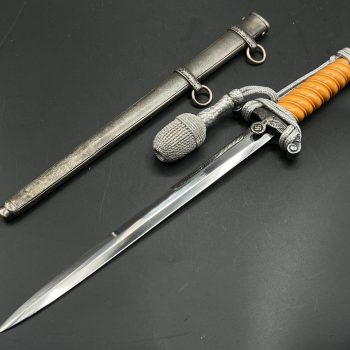
![German Army Dagger, Model 1935 (nickel-silver fittings). [Carl Eickhorn].](https://alexmp.com/wp-content/uploads/2026/08/1786282888986-eaqghbvlk6p-400x400.jpeg)
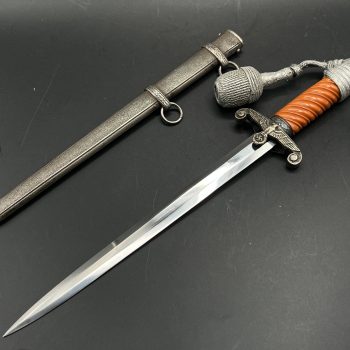
![German Army Dagger, Model 1935 (nickel-silver fittings). [Anton Wingen Jr].](https://alexmp.com/wp-content/uploads/2026/08/1786282483207-z308rppddc8-400x400.jpeg)
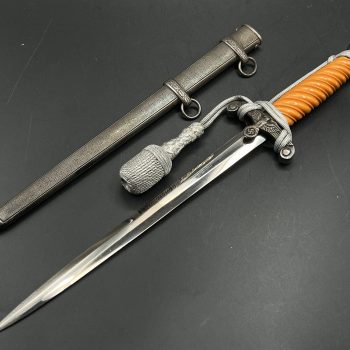
![German Army Dagger, Model 1935 (nickel-silver fittings). [Gebr Heller].](https://alexmp.com/wp-content/uploads/2026/08/1786282115364-u3256i4be47-400x400.jpeg)