Login
Register
By clicking Login or Register, you agree that the images of Nazi symbols shown on alexmp.com are not propaganda of fascism, Nazism and are shown solely for historical, cognitive and scientific purposes.
Order a free call and our specialist will contact you shortly!
Contact us and we will get back to you shortly.
Contact us and we will get back to you shortly.
Contact us and we will get back to you shortly.
Contact us and we will get back to you shortly.
Error: Contact form not found.
We will get back to you shortly.
В честь запуска Энциклопедии мы рады предложить вам бесплатный доступ до 01.10.2026.
Будем рады вашим комментариям и предложениям!
Inspected and guaranteed by Alex Warstory.
For more details on AlexMP Guarantee, click [HERE]
Item guaranteed by a verified dealer.
Click [HERE] for full seller guarantee terms.
Sold without expert review or guarantees. No claims accepted post-sale.
Learn more [HERE]


Showing all 12 results
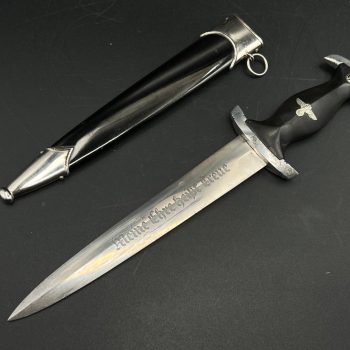
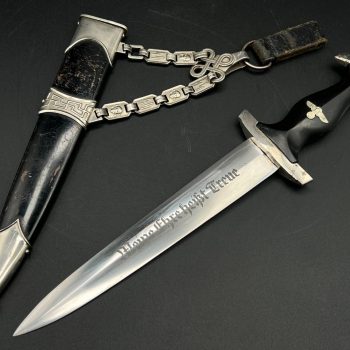
FiltersThe first official cold weapon of the Schutzstaffel, introduced in 1933, became one of the most recognizable symbols of the organization. The dagger’s design traces back to sixteenth-century Swiss daggers known as Holbein daggers and closely resembles the SA dagger adopted at approximately the same time. The blade bears the motto ‘Meine Ehre heißt Treue’ (‘My honor is loyalty’), which became one of the principal symbols of the SS. In the organization’s early years, the dagger was regarded not only as an element of uniform and symbol of SS membership, but also as personal cold steel that the owner could use when necessary.
Early SS daggers produced before 1936 were distinguished by nickel-silver fittings on the hilt and scabbard, high manufacturing quality, and careful assembly of components. The scabbards typically featured an anodized finish, although original painted variants are also encountered. Blades most often bore maker’s marks with the manufacturer’s company name; early RZM stamps are sometimes present. From 1936 onward, the construction gradually simplified; zinc, aluminum, and steel scabbard fittings came into use, along with painted scabbards. Transitional stamps appeared bearing the manufacturer’s logo and RZM code, followed later by RZM markings alone. Early daggers were produced in smaller quantities and typically saw extended service wear, making mint and near-mint condition examples extremely rare. Minor chips to the hilt and signs of use are entirely normal for these pieces. Special attention should be paid to restorations and later assembly; should such interventions be present, they are separately noted in the item’s description.
Robert Klaas ranks among the most sought-after manufacturers of German cold weapons by collectors. A characteristic feature of many Klaas products is their contrasting bluing and high-quality finishing, which has often allowed decorative elements to remain well preserved to the present day. The company operated in Solingen and produced parade and combat cold weapons, bayonets and components, and participated in the manufacture of experimental samples for military industry. In 1944, the production facilities of Robert Klaas, like much of Solingen’s weapons industry, suffered damage from Allied bombing.
The stamp ‘I’ on the reverse of the lower crossguard of this early SS dagger indicates the SS distribution and inspection center in Munich (München). Such marking is characteristic of early daggers from the 1933–1935 period and represents an important feature of the original SS dagger acceptance and distribution system.
Includes suspension loop with 1938 maker’s mark.
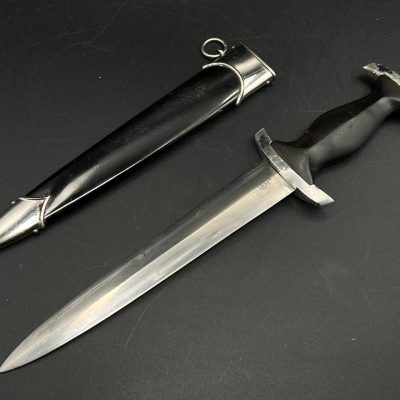
The official Schutzstaffel edged weapon pattern, introduced in 1933, became the first SS dagger and one of the most recognizable symbols of this organization. The blade design derives from 16th-century Swiss daggers known as Holbein daggers, and visually bears considerable resemblance to the SA dagger, which was adopted at nearly the same time. The blade featured the motto “Meine Ehre heißt Treue” (“My Honor is Loyalty”), which became one of the principal symbols of the SS. In the early years of the organization, the dagger was regarded not merely as a uniform element and a mark of SS membership, but also as a personal edged weapon that the owner could use if necessary.
In 1934, a certain number of SS members were awarded honor daggers bearing a facsimile of Ernst Röhm’s signature and the dedication “In herzlicher Kameradschaft” (“In Heartfelt Comradeship”) on the reverse of the blade. Following the “Night of the Long Knives” and the elimination of the SA leadership in the summer of 1934, Röhm’s name became undesirable, and an order was issued to remove his dedication from the award daggers. Surviving examples display various methods of such removal, ranging from complete grinding of the entire inscription to partial removal of only Röhm’s facsimile. Of particular interest are the so-called “Lazy Röhms,” on which Röhm’s name was only partially removed or essentially scratched out, leaving a significant portion of the original dedication visible. An intermediate variant also exists: Röhm’s facsimile is completely removed, yet the text “In herzlicher Kameradschaft” remains untouched. Such removal allowed the direct connection to Röhm to be eliminated while preserving visible evidence of the owner’s original award. The traces of removal in this case do not constitute a blade defect; rather, they represent an important historical and attributional feature. All else being equal, examples with completely removed dedications are typically valued at the level of ordinary early SS daggers, whereas pieces retaining elements of the dedication hold greater collector interest. “Lazy Röhms” are especially prized, with the degree of preservation of the original inscription being significant. Examples with Röhm’s facsimile completely removed but the dedication text preserved occupy an intermediate position.
The firm Richard Herder of Solingen was one of the edged weapon manufacturers for Third Reich organizations and participated in the production of SA daggers as early as 1934. This is confirmed, in particular, by surviving early Richard Herder daggers bearing Ernst Röhm’s dedication, as well as examples on which this inscription was subsequently officially removed following the events of summer 1934. Thus, Richard Herder belongs to the manufacturers whose participation in SA dagger production is documented from the very earliest period of their manufacture.
The first official cold weapon of the Schutzstaffel, introduced in 1933 and created based on Swiss daggers of the 16th century, known as Holbein daggers. In appearance, it bore considerable resemblance to the SA dagger, adopted at approximately the same time. The blade bore the motto ‘Meine Ehre heißt Treue’ (‘My Honor is Called Loyalty’), which became one of the principal symbols of the SS. In the early years of the organization’s existence, the dagger was regarded not only as an element of uniform and a symbol of SS membership, but also as a personal cold weapon that its owner could use when necessary.
Early SS daggers produced before 1936 were distinguished by nickel-silver fittings on the hilt and scabbard, high quality of manufacture, and careful assembly of components. Scabbards typically featured an anodized finish, although original painted variants do occur. Blades most commonly bore a maker’s mark with the manufacturer’s name; early RZM stamps are occasionally encountered. From 1936 onward, the construction was gradually simplified; zinc, aluminum, and steel fittings for scabbards came into use, along with painted scabbards. Transitional stamps bearing the manufacturer’s logo and RZM code appeared, followed later by RZM stamps alone. Early daggers were produced in smaller quantities and typically saw longer periods of wear; consequently, specimens in mint and near-mint condition are extremely rare. Minor chips to the hilt and signs of use are quite normal for such pieces. Particular attention should be paid to restorations and later assembly; any such interventions are noted separately in the item description.
Robert Klaas ranks among the most sought-after manufacturers of German cold weapons by collectors. A characteristic feature of many Klaas products is their contrasting bluing and high quality of finish, thanks to which decorative elements often remain well-preserved to the present day. The firm operated in Solingen and produced dress and combat cold weapons, bayonets and fittings, and also participated in the manufacture of experimental samples for military industry. In 1944, the production facilities of Robert Klaas, like a significant portion of Solingen’s weapons industry, suffered damage as a result of Allied bombing.
The stamp ‘I’ on the reverse side of the lower crossguard indicates the SS distribution and inspection center in Munich. Such marking is characteristic of early daggers from the period 1933-1935 and represents an important feature of the initial SS dagger acceptance and distribution system.
The SS dagger model 1933 became the first official edged weapon of the Schutzstaffel. The design of this weapon traces back to 16th-century Swiss daggers known as Holbein daggers, and its appearance largely resembled the SA dagger, which was introduced at virtually the same time. The blade bears the motto “Meine Ehre heißt Treue” (“My Honour is Loyalty”), which became one of the organization’s principal symbols. In the early years of the SS, the dagger was regarded not only as an element of uniform and a symbol of unit membership, but also as a personal edged weapon that the owner could use if necessary.
The reverse side of the blade carries the dedication “In herzlicher Kameradschaft, H. Himmler” (“In heartfelt comradeship, H. Himmler”). The history of these daggers is directly connected to the events of summer 1934, known historically as the “Night of the Long Knives.” Between 30 June and 2 July 1934, the Nazi leadership conducted a bloody purge of the SA leadership and various other political opponents; SS units played a significant role in these events, substantially strengthening the organization’s position. On 3 July 1934, 200 specially selected SS members and leaders who had participated in the “Night of the Long Knives” were presented with model 1933 daggers bearing Heinrich Himmler’s personal dedication. Thus, the present example is not an ordinary SS service dagger, but a special presentation variant directly linked to one of the key events in the organization’s formative history. The limited number of examples presented, Himmler’s personal dedication, and the clear historical connection to the events of 1934 make such daggers one of the rarest and most historically significant varieties of early SS edged weapons.
The dagger was manufactured by Carl Eickhorn, a company founded in Solingen in 1865 that became one of the largest edged weapons manufacturers in Germany. The company’s trademark depicting a squirrel (Eichhörnchen) served as a guarantee of the highest quality products. During the Third Reich period, the firm produced a wide range of regulation edged weapons: dirks for all branches of the armed forces, SA, SS, NPEA, NSFK, and TeNo daggers, as well as dress dirks, sabres, and swords. Carl Eickhorn products are distinguished by superior steel quality and meticulous finishing, and are highly valued by modern collectors.
The official edged weapon of the Schutzstaffel, established in 1933, became the first dagger officially adopted by this organization. The blade design traces back to 16th-century Swiss daggers known as Holbein daggers, and in appearance largely resembles the SA dagger, which was introduced at virtually the same time. The blade bore the motto “Meine Ehre heißt Treue” (“My Honor is Loyalty”), which became one of the principal symbols of the SS. In the early years of the organization, the dagger was regarded not merely as a uniform element and symbol of SS membership, but also as a personal edged weapon that its owner could employ if necessary.
The firm Jacobs & Co., Solingen-Gräfrath ranks among the rarest manufacturers of early SS daggers of the 1933 pattern and is encountered considerably less frequently than most major producers. Of particular interest are early-type examples bearing the Jacobs & Co. maker’s mark, preserved in their original configuration prior to 1936, and without an issue depot stamp on the crossguard. Due to the high value and scarcity of such daggers, the markings and blades of this manufacturer are also subject to forgery today; therefore, the authenticity of all stampings and the correspondence of every detail to this specific maker require especially thorough verification.
The first official edged weapon of the Schutzstaffel, introduced in 1933 and designed after 16th-century Swiss daggers known as Holbein daggers. In appearance, it closely resembled the SA dagger, which was adopted at nearly the same time. The blade bears the motto “Meine Ehre heißt Treue” (“My Honour is Loyalty”), which became one of the principal symbols of the SS. In the early years of the organization, the dagger was regarded not only as a uniform accessory and symbol of SS membership, but also as a personal edged weapon that its owner could use if necessary.
The early variant of the SS dagger Model 1933, produced before 1936, features nickel silver fittings on the grip and scabbard, high manufacturing quality, and careful fitting of components. Scabbards typically had an anodized finish, although original painted variants are also encountered. Blades most commonly bear a maker’s mark with the manufacturer’s name; early RZM marks are occasionally found. From 1936 onward, the construction was gradually simplified: zinc, aluminum, steel scabbard fittings, and painted scabbards came into use. Transitional marks appeared, featuring both the manufacturer’s logo and RZM code, later replaced by RZM markings alone. Early daggers were produced in smaller quantities and typically saw longer periods of wear; consequently, examples in mint or near-mint condition are extremely rare. Minor grip chips and signs of use are considered normal for these pieces. Particular attention should be paid to restorations and later-period components; if such interventions are present, they are specifically noted in the item description.
Gottlieb Hammesfahr, Solingen-Foche, is a renowned Solingen firm with a history dating back to the 19th century. The company was engaged in edged weapon production for many years, and during the Third Reich period became one of the manufacturers of early SS daggers Model 1933. Early Hammesfahr examples feature the maker’s mark on the blade, nickel silver fittings, and typically anodized scabbards.
The “III” mark on the lower crossguard refers to the SS distribution and inspection center in Berlin. Like the I and II markings, it is a characteristic feature of the early period of SS dagger production and distribution.
The first official edged weapon of the Schutzstaffel (SS), approved in 1933, was designed based on 16th-century Swiss daggers known as Holbein daggers. In appearance, it closely resembled the SA dagger, which was introduced at nearly the same time. The blade bore the motto “Meine Ehre heißt Treue” (“My Honor is Loyalty”), which became one of the principal symbols of the SS. In the early years of the organization, the dagger was regarded not only as a uniform accessory and symbol of SS membership, but also as a personal edged weapon that its owner could use if necessary.
The RZM type represents a category of German daggers from the Third Reich period, manufactured under the supervision of the Reichszeugmeisterei, the Reich Equipment Office of the NSDAP. Items in this category were marked with a special RZM code and manufacturer number instead of the traditional maker’s trademark; this system was introduced to standardize and ensure quality control of Party edged weapons. RZM-type daggers are distinguished by their more uniform construction. This example bears the marking M7/91, indicating the specific manufacturer.
Carl Spitzer was located in Solingen and specialized in the production of daggers, dirks, and bladed weapons for various organizations of the Third Reich, including SS and SA units. The firm’s products were distinguished by high manufacturing quality and characteristic markings indicating the manufacturer’s name and place of production. Carl Spitzer products are of considerable collector interest due to their relative rarity and quality of craftsmanship.
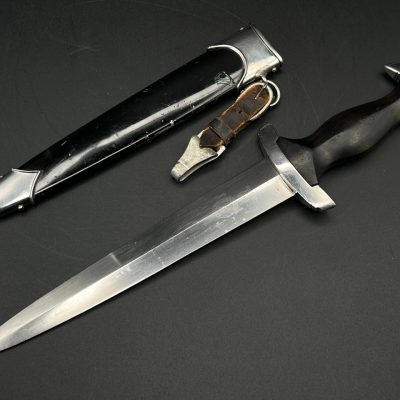
SS service dagger model 1933, early type, with removed Röhm inscription (ground Röhm). Wooden grip with eagle and SS emblem. Blade with motto «Meine Ehre heißt Treue», Böker maker’s mark on spine. Scabbard repainted over original anodized finish — a common feature for this type. Original vertical leather hanger. Fully complete.
An original SS service dagger, Model 1933, manufactured by F.W. Helbig, Steinbach. The blade bears the standard SS motto “Meine Ehre heißt Treue” (“My Honor is Loyalty”), along with the RZM code 1163/38.
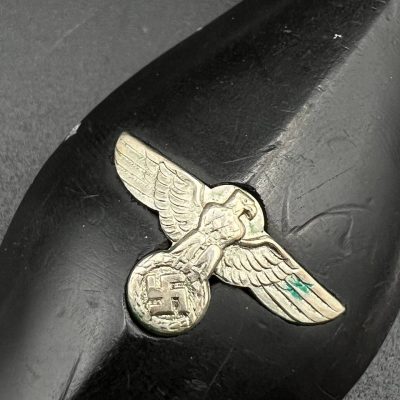
The grip is made of dark wood with inlaid the eagle and enamel SS emblem. All fittings are nickel-plated, showing a natural patina of age. The scabbard is original, black painted with nickel-plated fittings. Complete with its leather hanger, marked by RZM.
Steel made magnetic cross guards!
100% original chained dagger SS in very good condition.
Original paint on the scabbard and original cross grain on the blade. Untouched grip.
Awesome piece from my collection
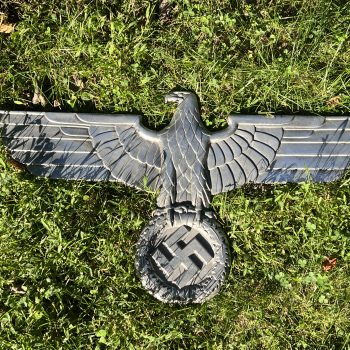
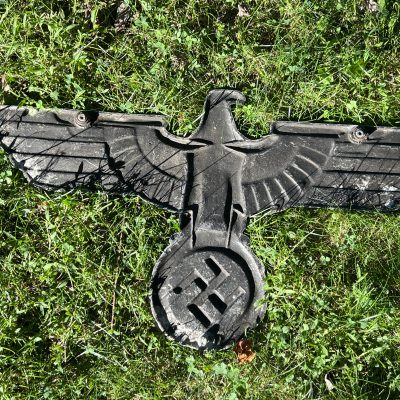
A large original Deutsche Reichsbahn (German State Railways) eagle from the Third Reich period. The eagle is depicted with outstretched wings, clutching a wreath bearing a swastika in its talons. The piece features strong three-dimensional relief, with detailed feathering and wing construction.
The reverse retains stamped/raised manufacturer or production markings, as well as original mounting hardware. The eagle displays an attractive period patina with surface wear, oxidation, scratches, and traces of finish loss consistent with its age and history.
Technical Emergency Corps (TeNo) Leader’s Dagger, Model 1938, manufactured by Carl Eickhorn of Solingen. This example bears the manufacturer’s trademark and retains matching numbers on the blade and scabbard, confirming their factory pairing and attesting to the complete original preservation of the piece.
This dagger model was introduced in November 1938, concurrently with the adoption of new regulation edged weapons for the TeNo organization. It was intended to be worn with dress uniform by commanding officers holding the rank of Stabsscharführer and above. Officers purchased these daggers at their own expense through special organizational outlets.
The history of the Technical Emergency Corps began on September 30, 1919. Throughout the existence of the Weimar Republic, the corps repeatedly distinguished itself, demonstrating efficiency and excellent technical training. Naturally, this organization could not escape the attention of the new leadership, the National Socialist Party. In 1939, to further enhance efficiency, TeNo was transferred to the jurisdiction of the Reich Ministry of Foreign Affairs and subordinated to police structures, allowing for improved operational capacity. Prior to the commencement of the Polish campaign, TeNo was commanded by SS Gruppenführer (SS Lieutenant General) Schmelzer; he was later succeeded in this post by SS Gruppenführer Weinreich.
The Carl Eickhorn company was founded in Solingen in 1865 and became one of the largest manufacturers of edged weapons in Germany. The company’s trademark, featuring a squirrel (Eichhörnchen), served as a guarantee of the highest quality products. During the Third Reich period, the firm produced a wide range of regulation edged weapons, including daggers for all branches of service, SA and SS daggers, NPEA, NSFK, and TeNo daggers, as well as dress daggers, sabers, and swords. Carl Eickhorn products are distinguished by superior steel quality and meticulous finishing, and are highly valued by modern collectors.
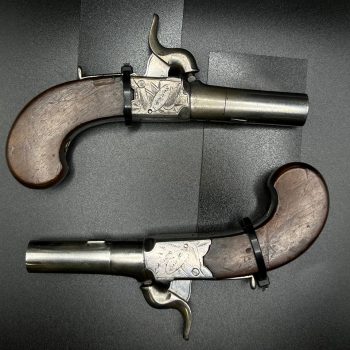
Pair of English Drop Trigger Percussion Pistols Marked H Nock.
Marked with one of England’s premier makers of the period, these guns are likely the fake watches of their day. Both guns are in nice condition with engraved frames and slab butts with vacant silver escutcheons.
Both actions, including push-on safeties, function without problems.
Overall length approximately 5 7/8 inches, with twist off barrels, standard British proofs.
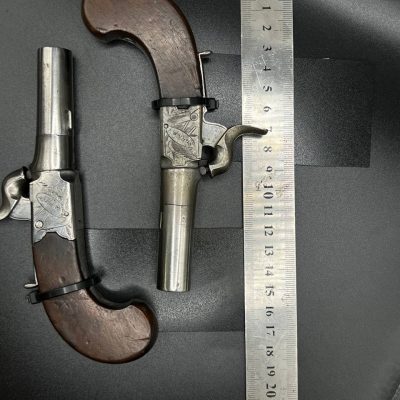
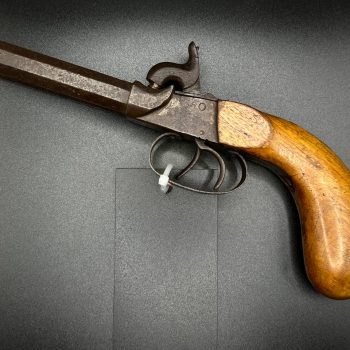
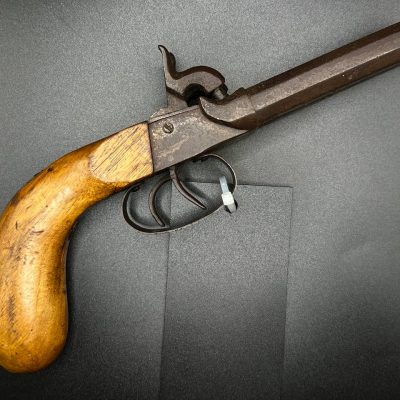
Original Victorian Era Double Barreled Percussion Coat Pistol
.40 caliber with turn-off 3 inch barrels. Overall length is a little over 8 inches.
Actions are mostly functional. The left action holds on half cock only; right action holds on half and full cock.
A good example of this early ‘concealed carry’ firearm at an attractive price.

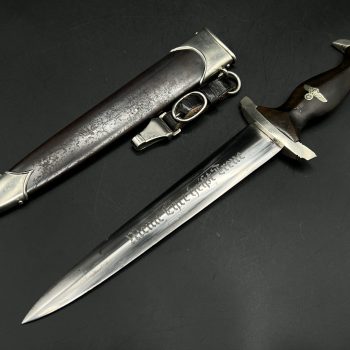
![SS Dagger, Model 1933. (Early type). [Robert Klaas]. Stamp – I.](https://alexmp.com/wp-content/uploads/2026/09/1789683178998-9z7gm3a6syw-400x400.jpeg)
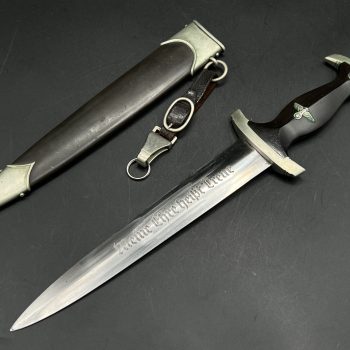
![SS Dagger, Model 1933. (with the Röhm dedication ground off). [Richard Albrecht Herder].](https://alexmp.com/wp-content/uploads/2026/09/1789683006033-1r4qka6ed64-400x400.jpeg)
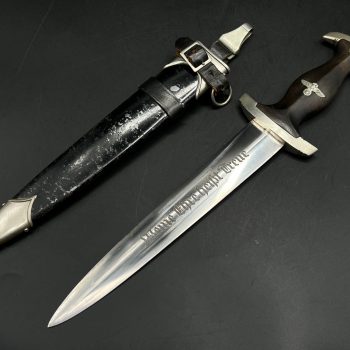
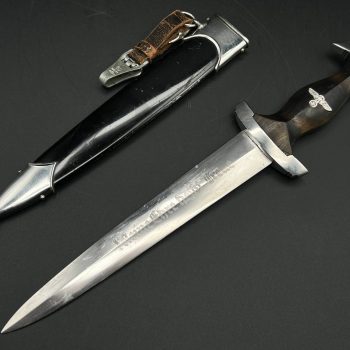
![SS Dagger, Model 1933. (Early type). [Robert Klaas]. Stamp – I. SS ID Number](https://alexmp.com/wp-content/uploads/2026/09/1789683422849-4z7tl53pjc7-400x400.jpeg)
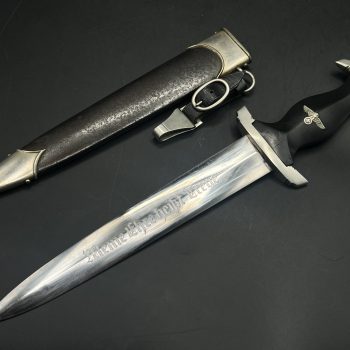
![SS Dagger, Model 1933. (with a dedication from Heinrich Himmler). [Carl Eickhorn].](https://alexmp.com/wp-content/uploads/2026/08/1786655338882-anwc73qxd0t-400x400.jpeg)
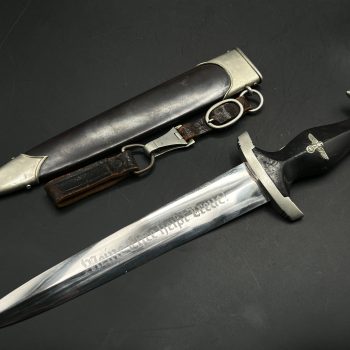
![SS Dagger, Model 1933. (Early type). [Jacobs & Co].](https://alexmp.com/wp-content/uploads/2026/08/1786655450521-lfq3d6bekna-400x400.jpeg)
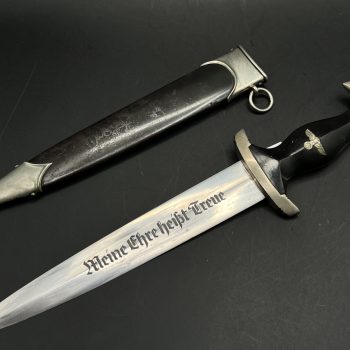
![SS Dagger, Model 1933. (Early type). [Gottlieb Hammesfahr]. Stamp – III.](https://alexmp.com/wp-content/uploads/2026/08/1786656039694-gpovpft324k-400x400.jpeg)
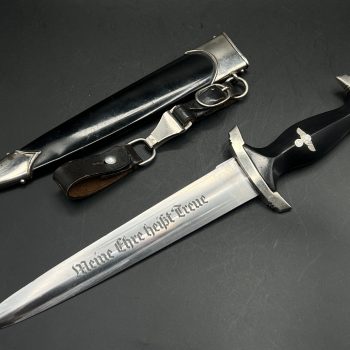
![SS Dagger, Model 1933. (RZM type). [Carl Spitzer]. Stamp – M7/91.](https://alexmp.com/wp-content/uploads/2026/08/1786490272311-pyajwk186za-400x400.jpeg)
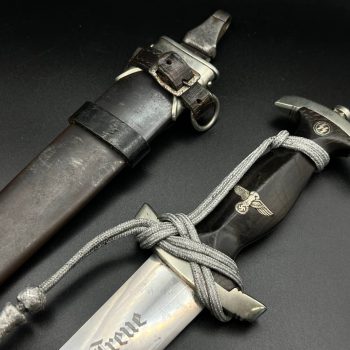
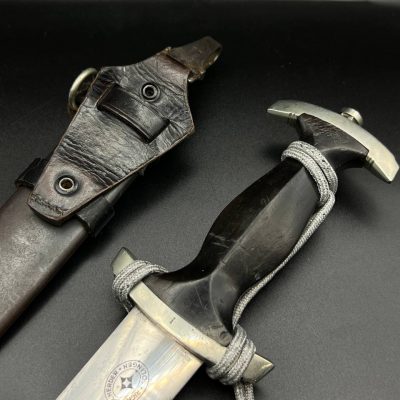
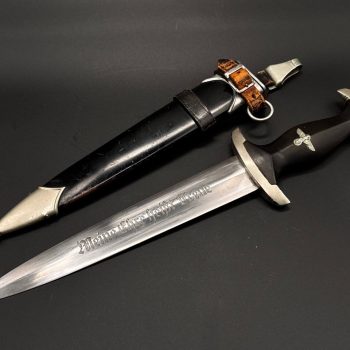
![SS Service Dagger (Early type). [Böker]. Ground Röhm](https://alexmp.com/wp-content/uploads/2026/06/1781736876673-bun3xoxrwbp-400x400.jpeg)