Login
Register
By clicking Login or Register, you agree that the images of Nazi symbols shown on alexmp.com are not propaganda of fascism, Nazism and are shown solely for historical, cognitive and scientific purposes.


$ 245 Show price in EUR
In stock
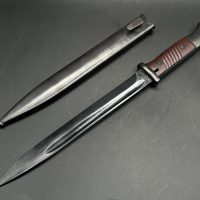
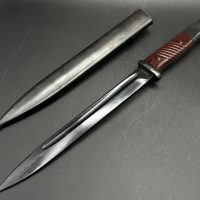
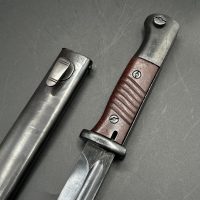
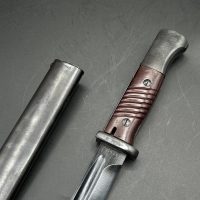
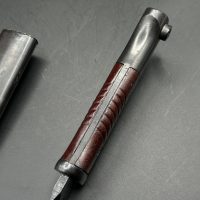
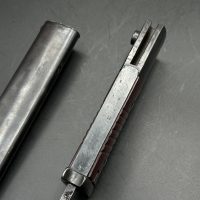
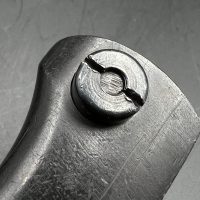
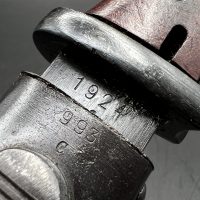
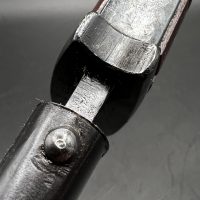
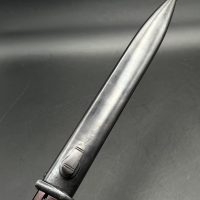
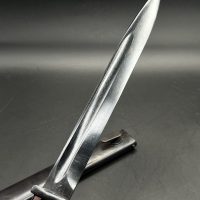
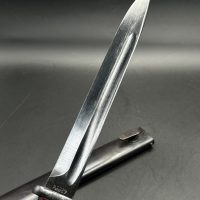
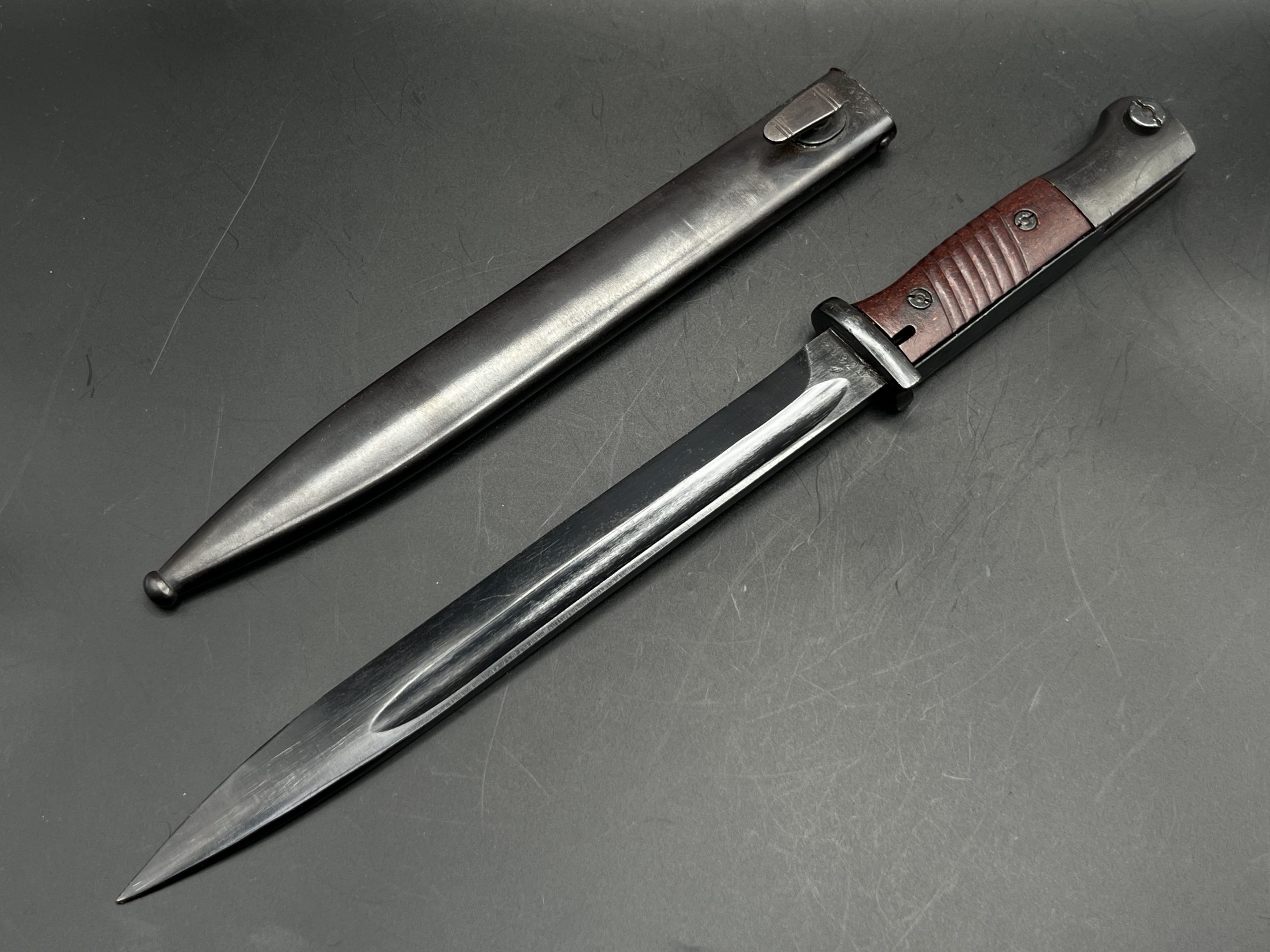
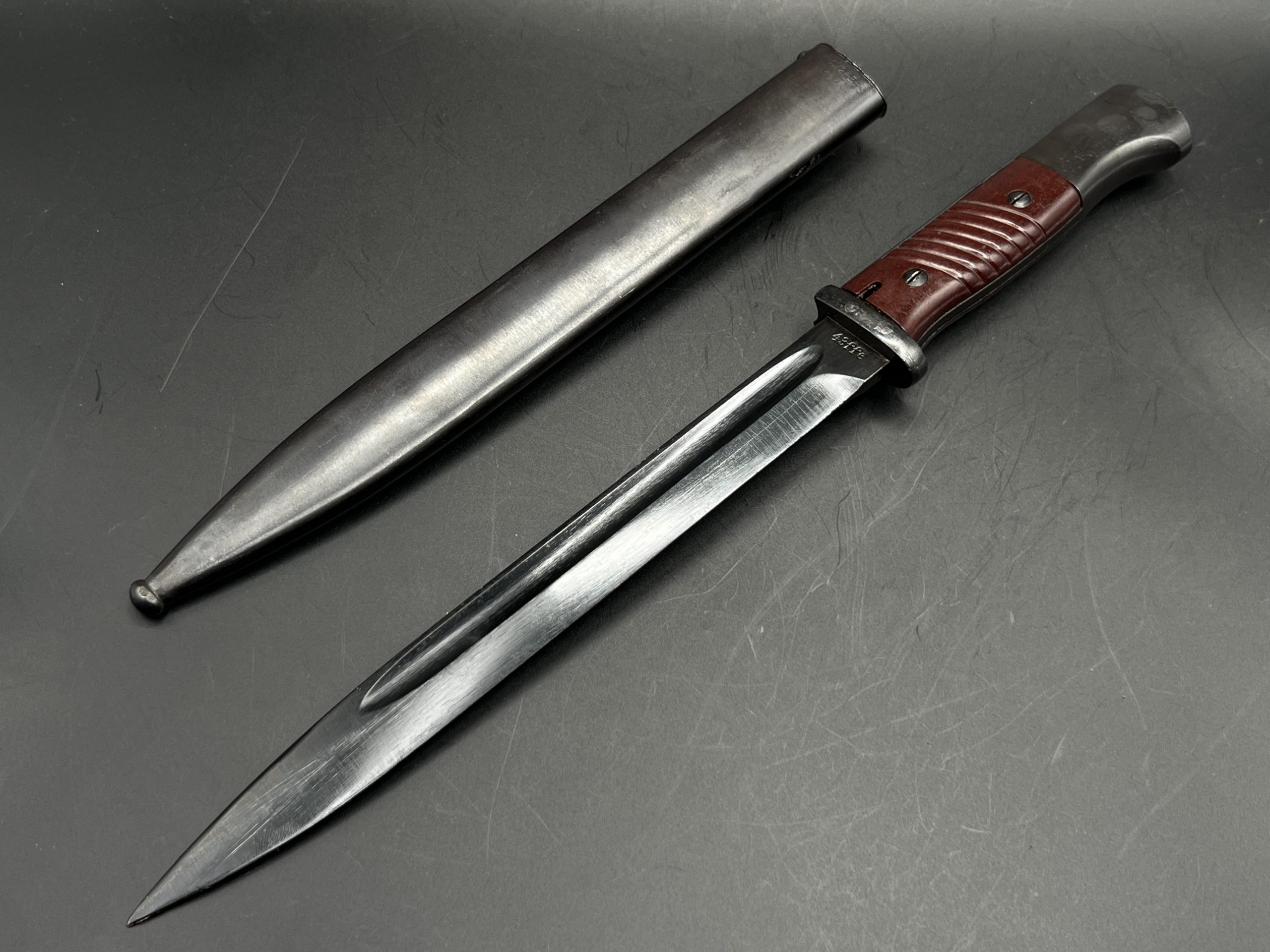
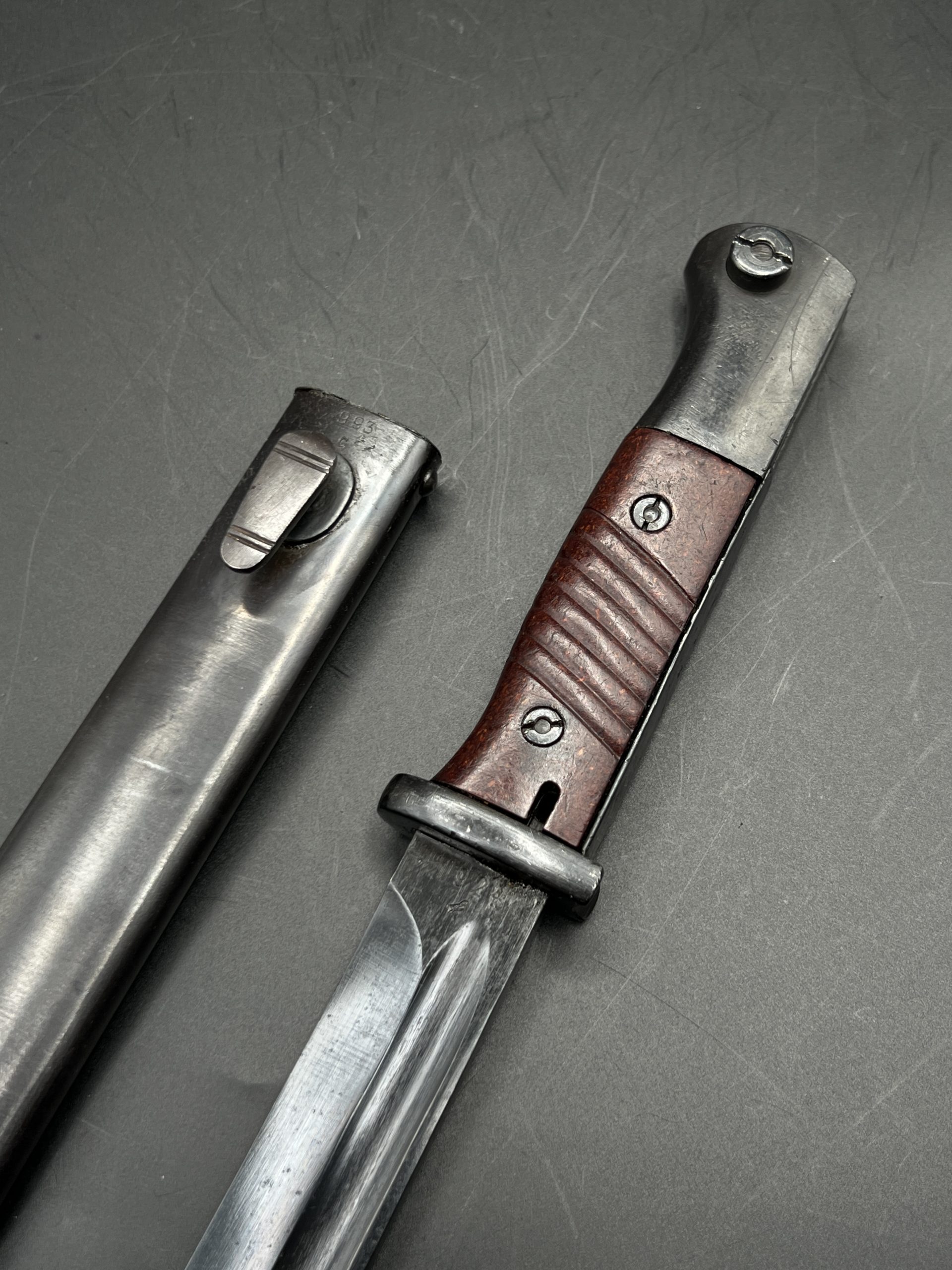
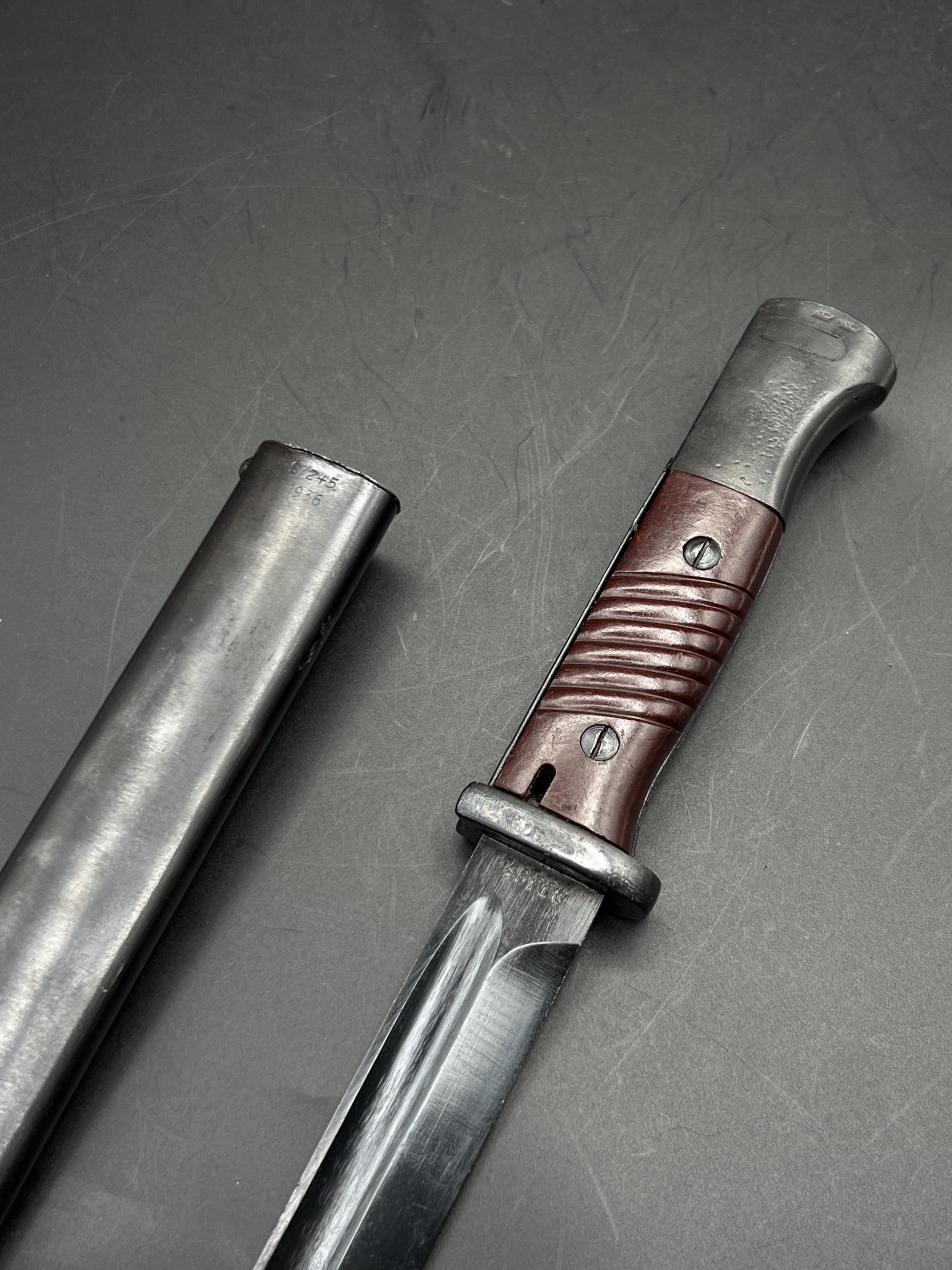
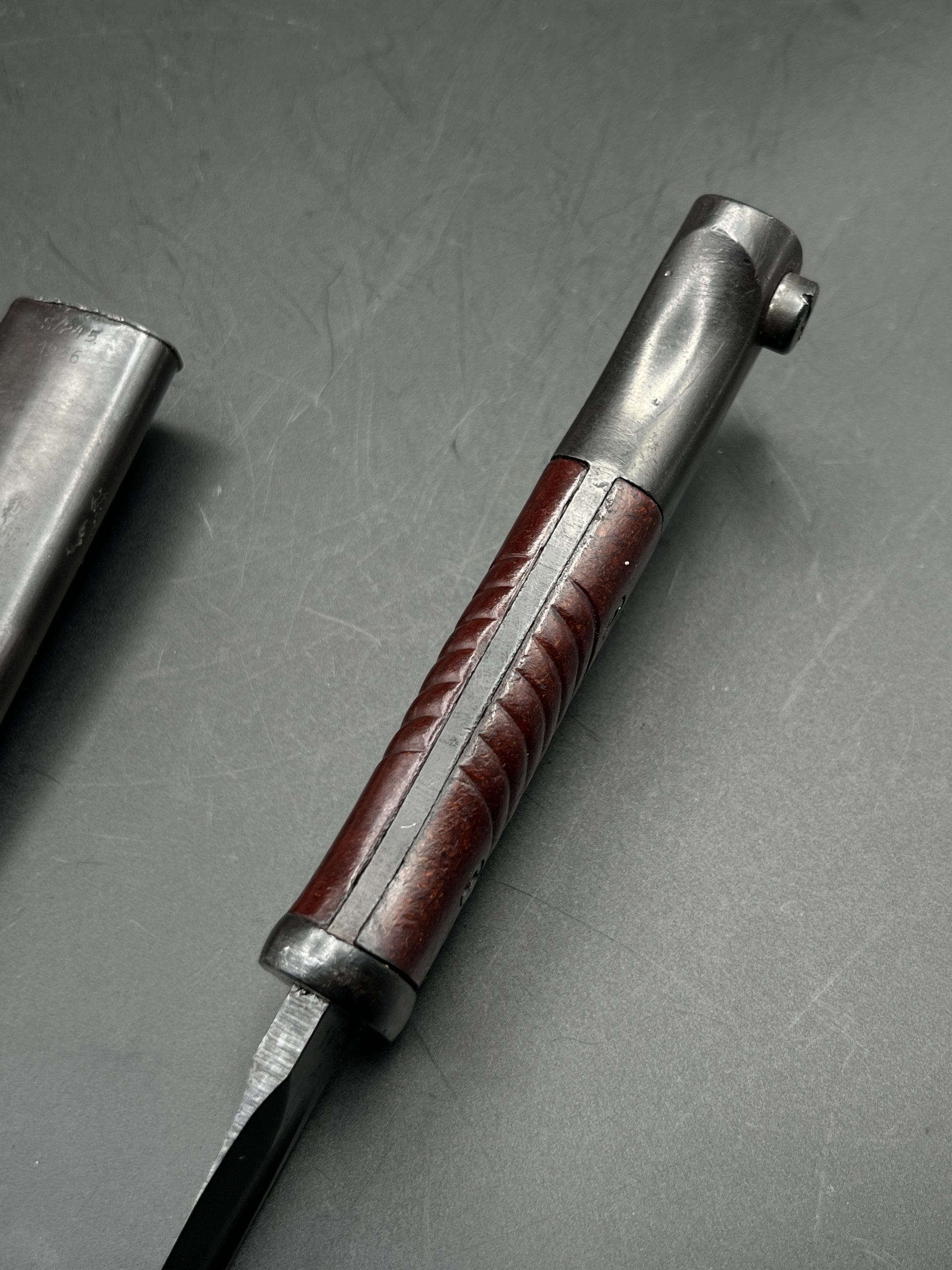
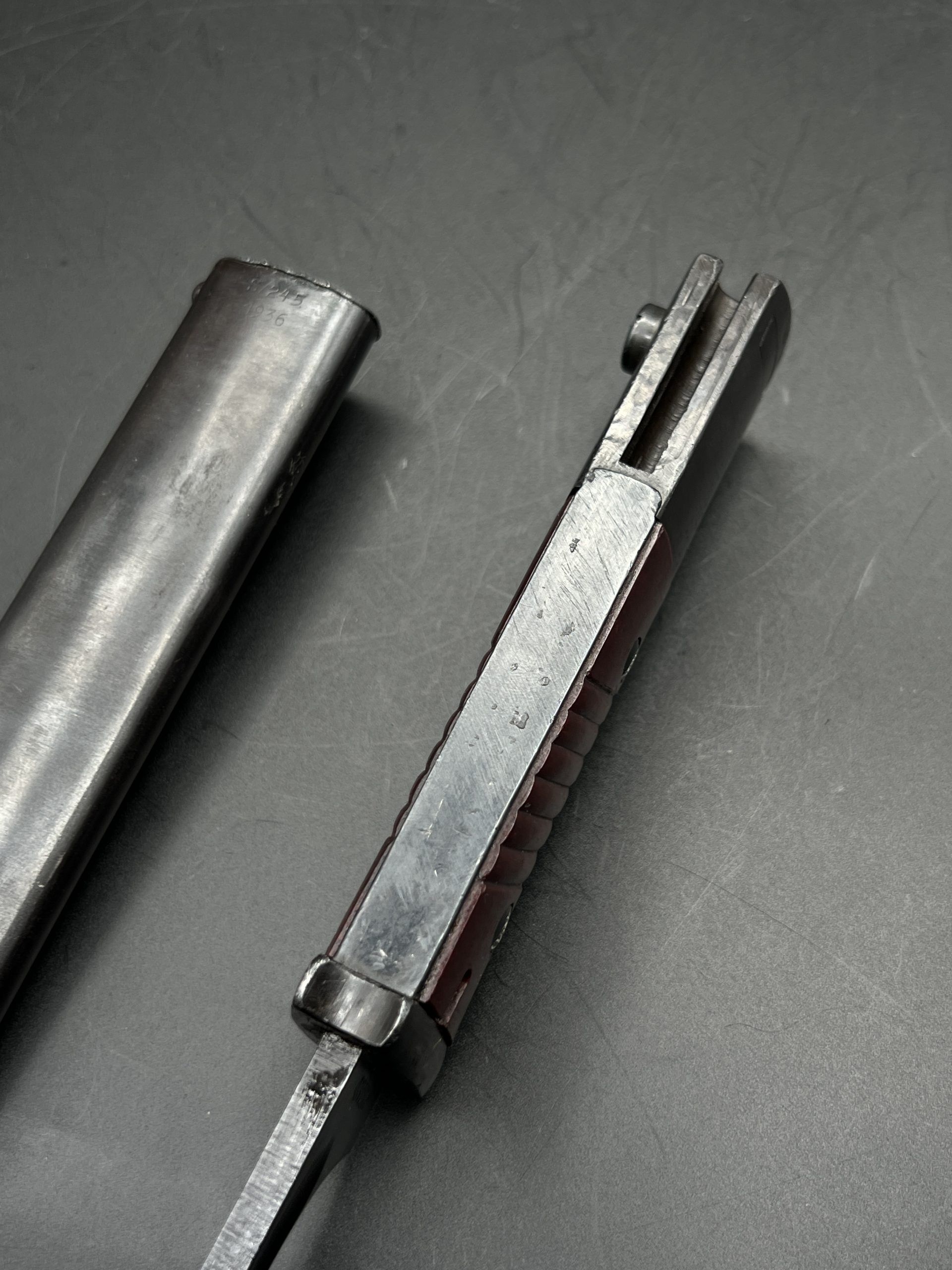
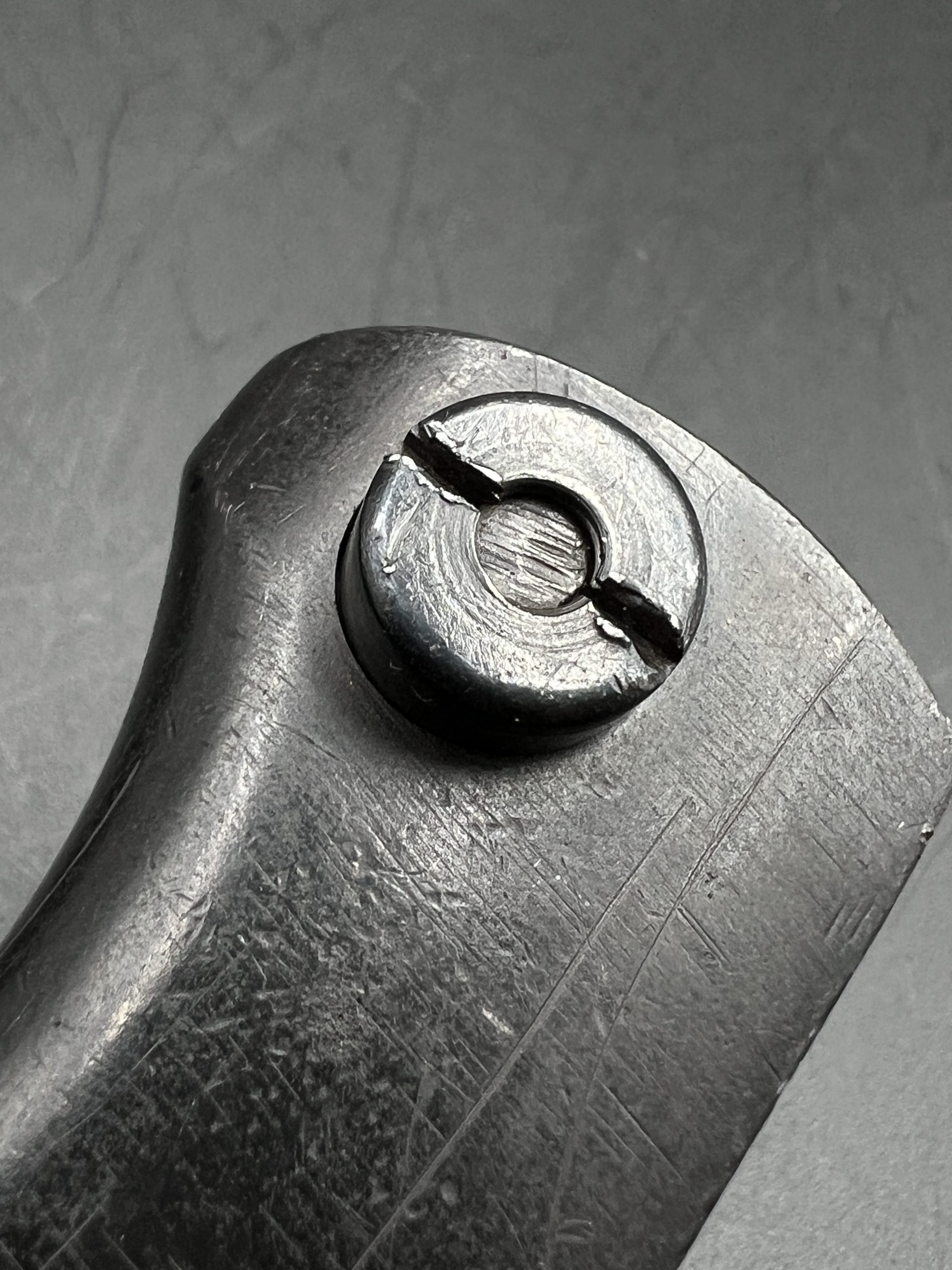
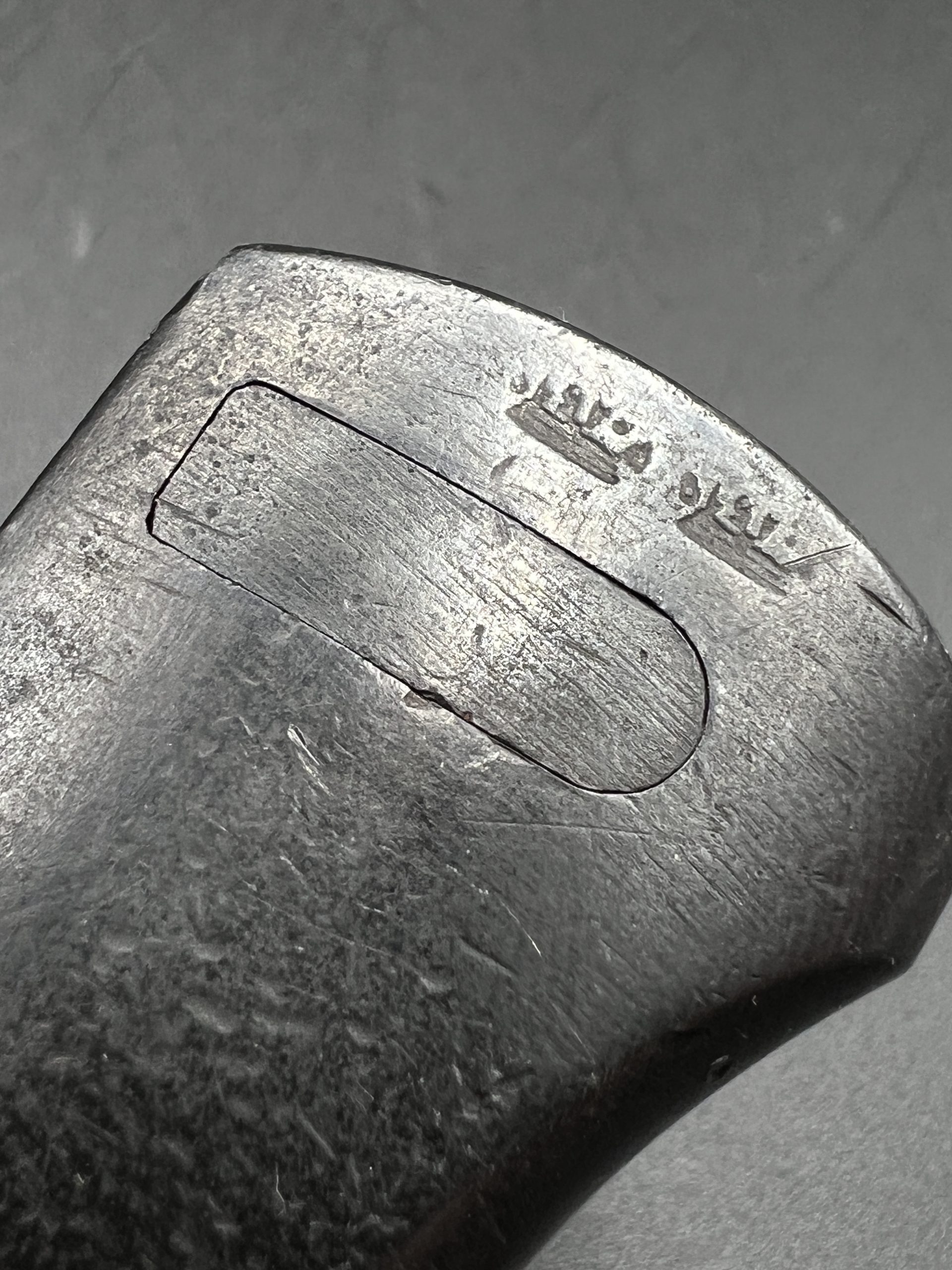
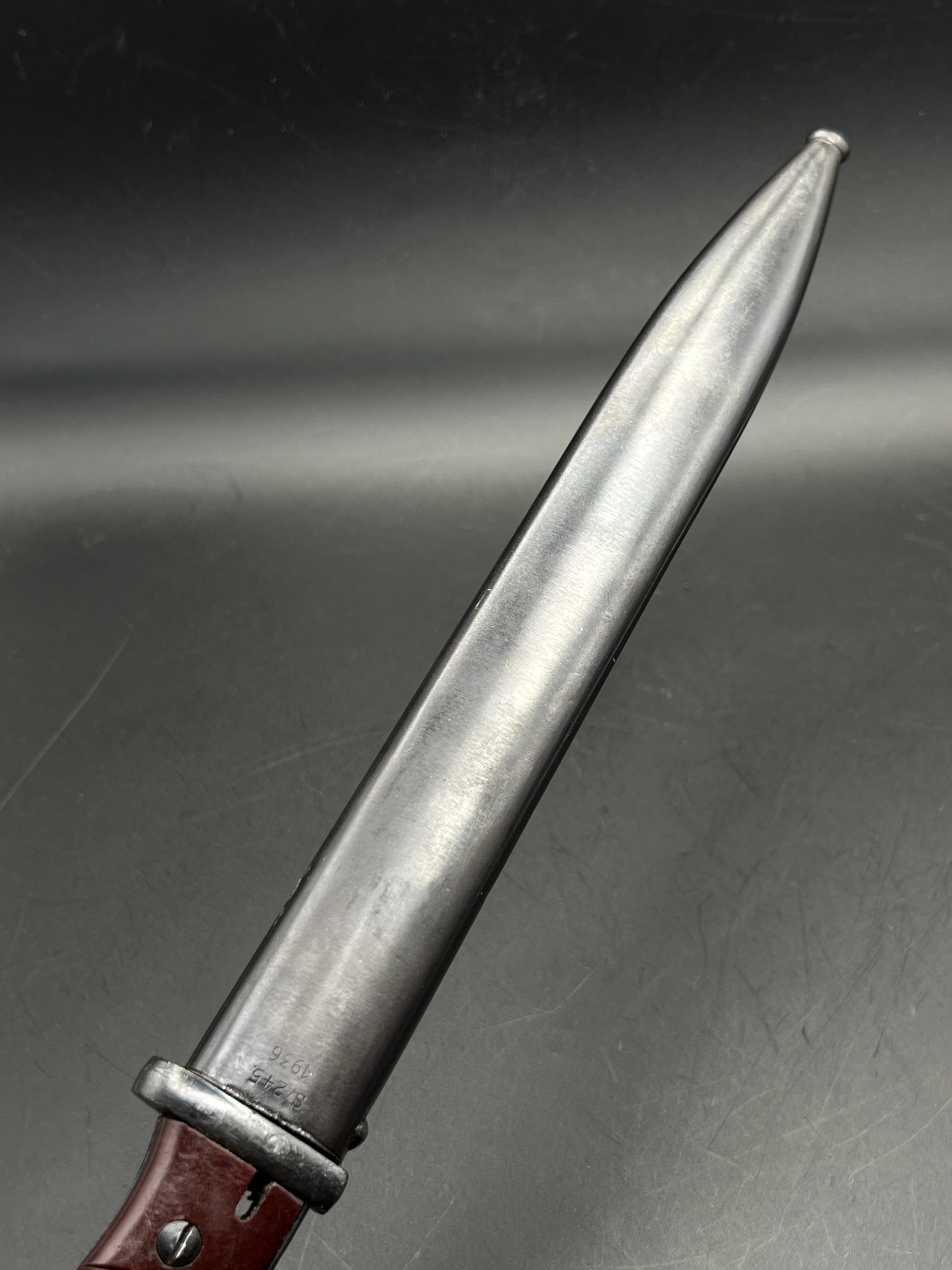
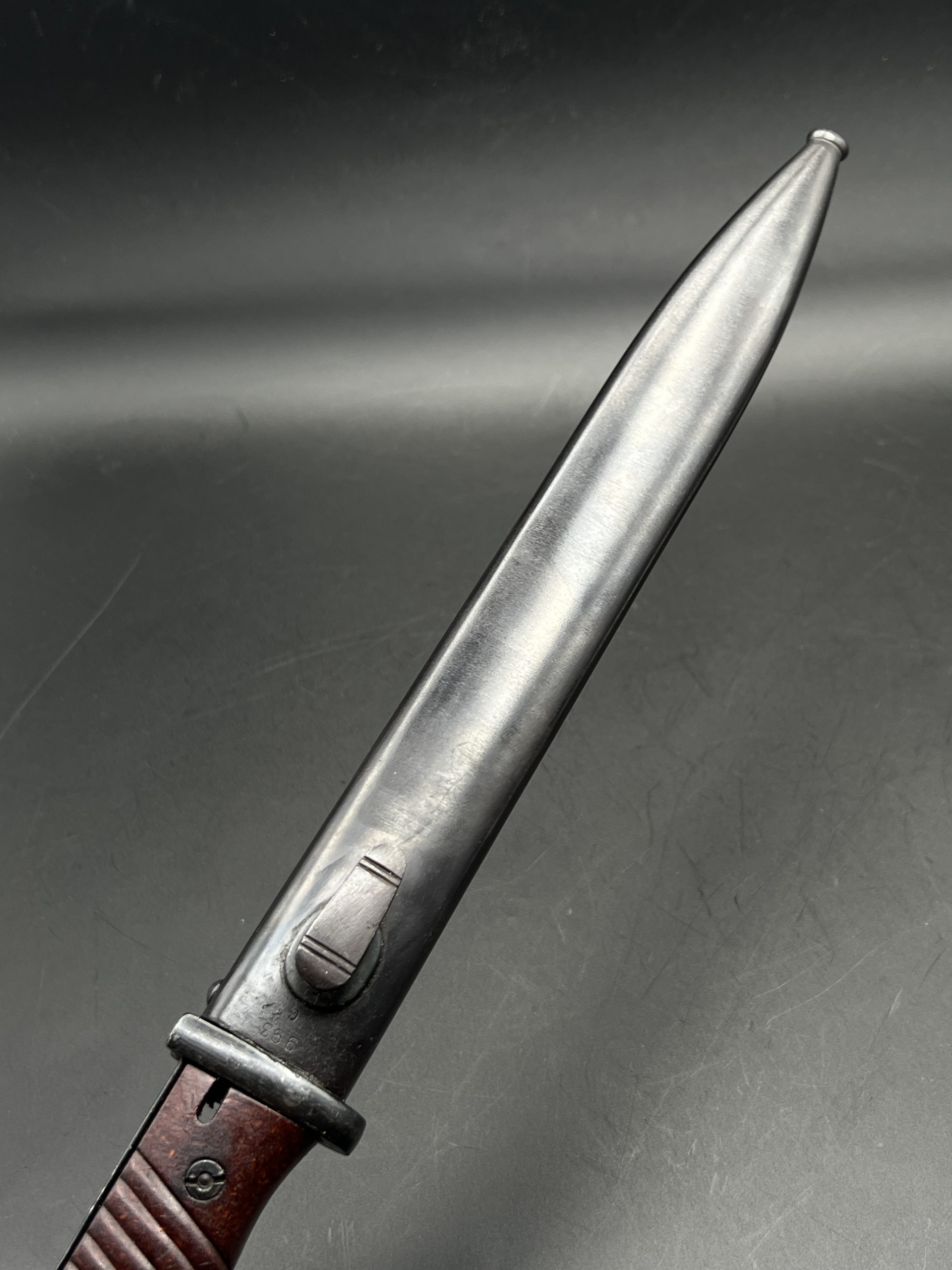
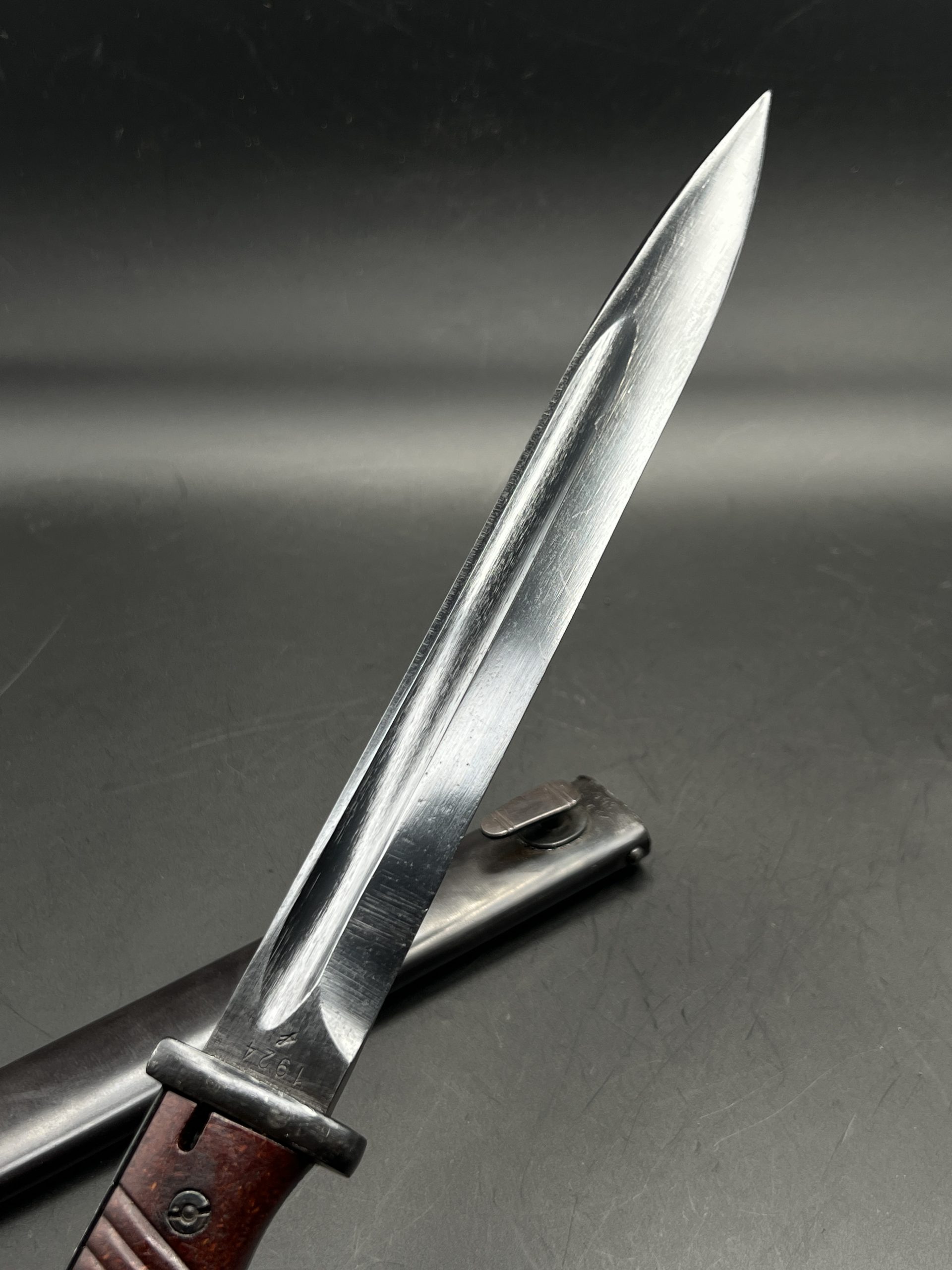
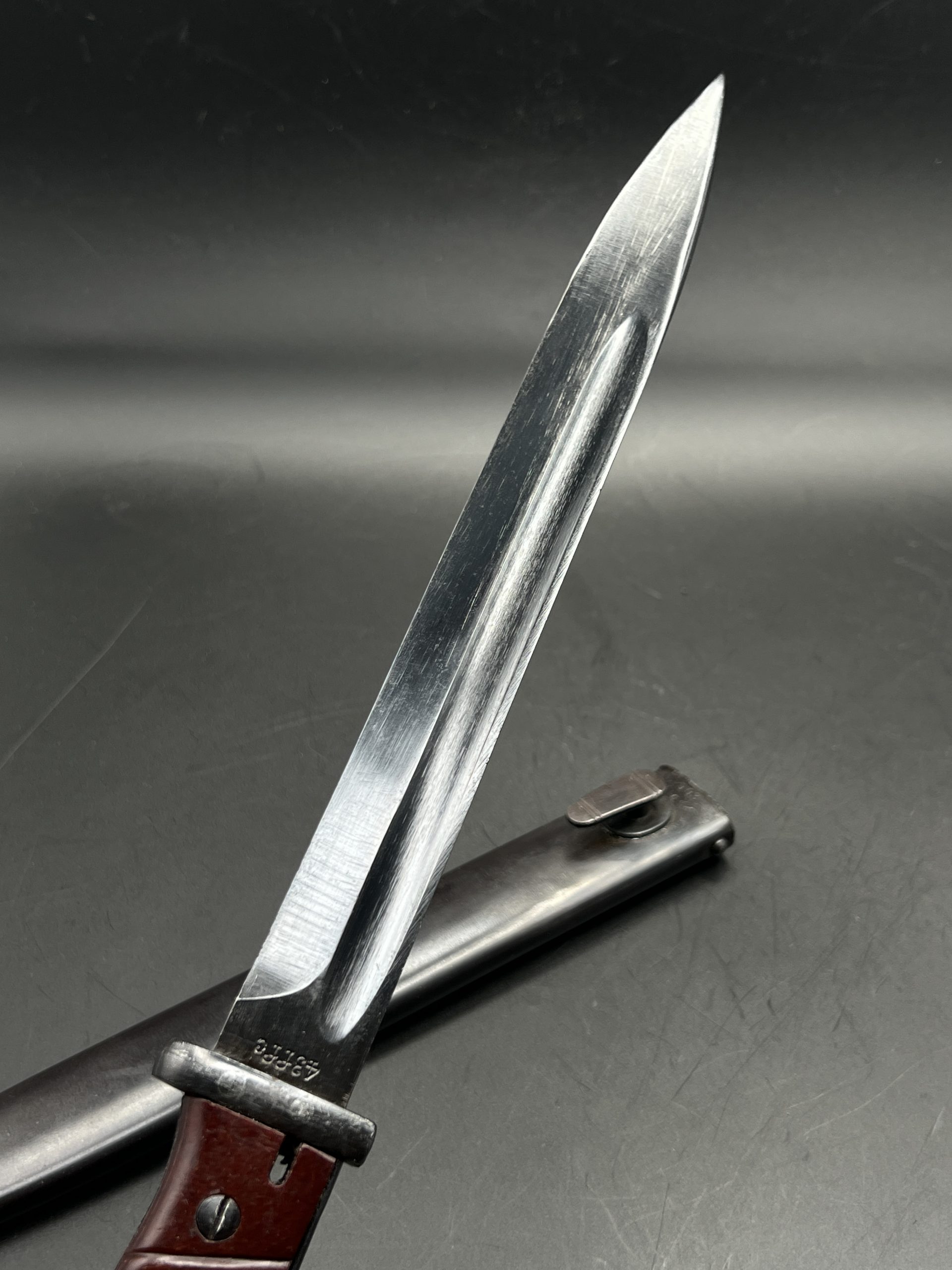
The S84/98 bayonet is one of the most recognizable symbols of the German soldier during the Second World War. Representing a further development of the earlier S84/98 model, it was adopted as the standard bayonet for the Mauser Karabiner 98k carbine and was mass-produced by the German arms industry. Due to its widespread use, this bayonet remained in service with the Wehrmacht throughout the Second World War and today represents one of the most popular collecting areas for German edged weapons.
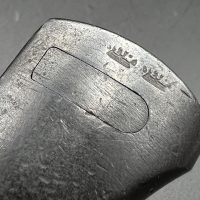
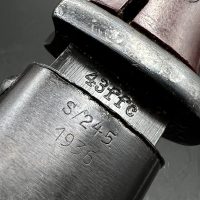
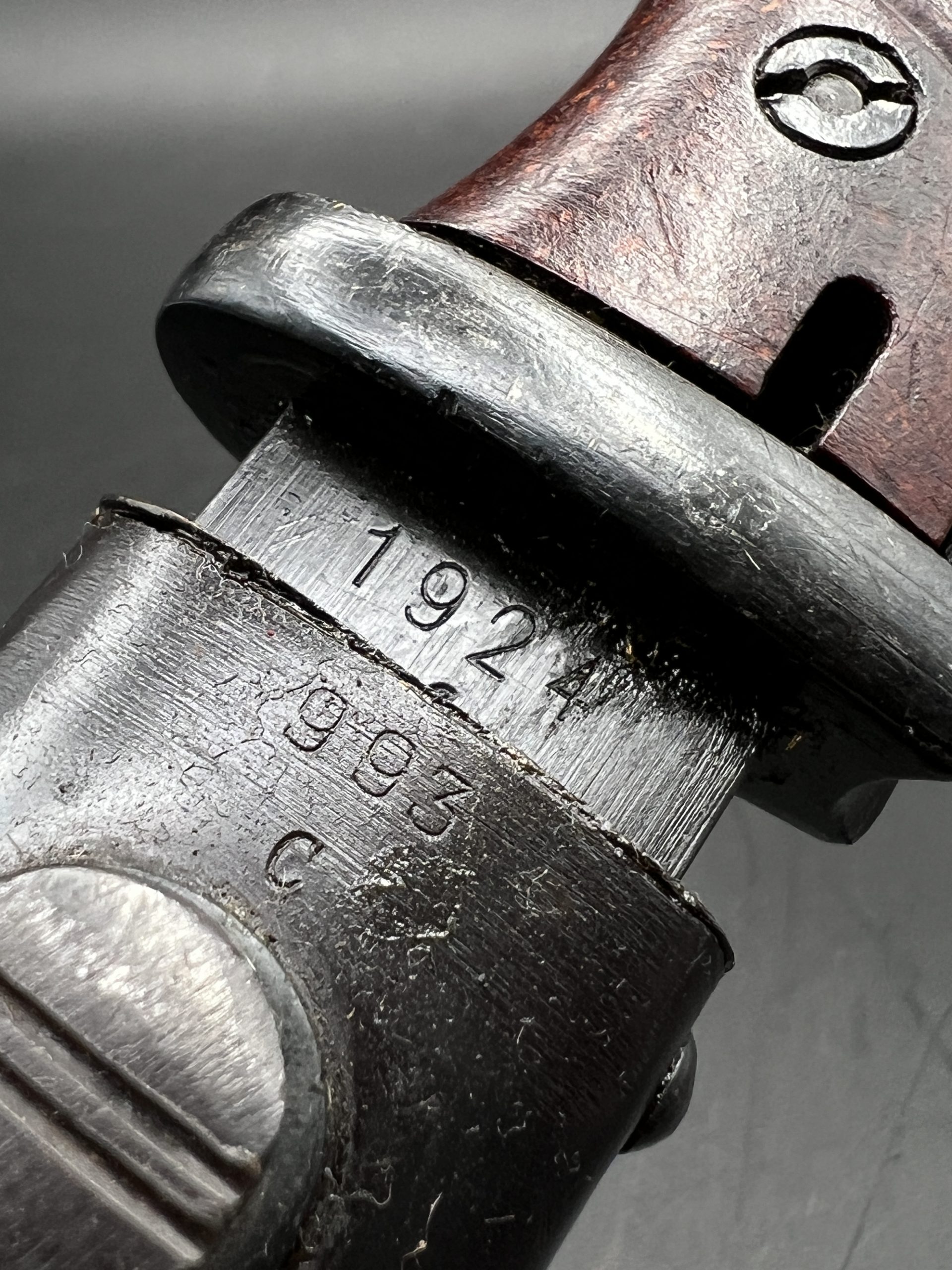
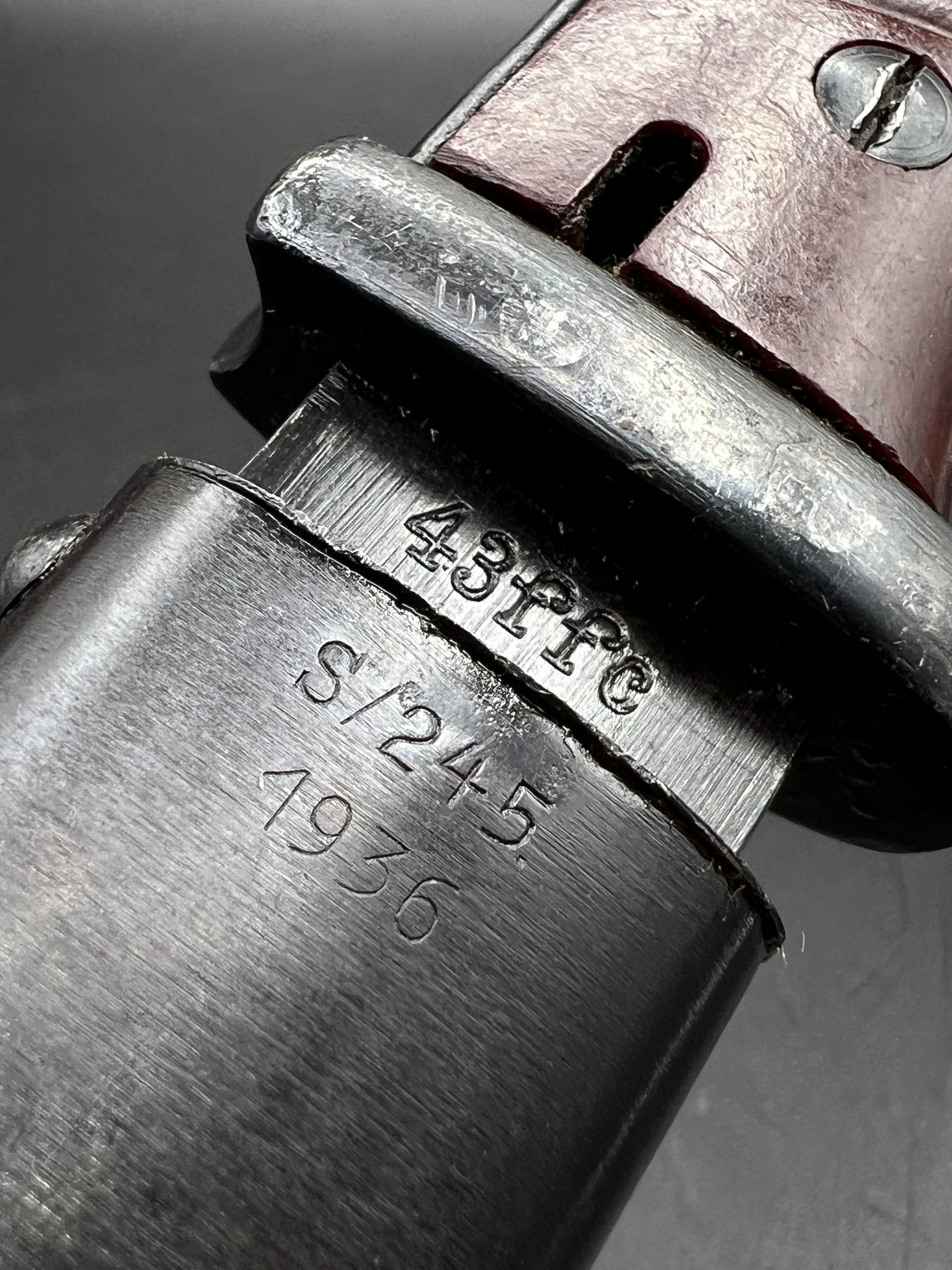
The “ffc 43” marking indicates that the bayonet was manufactured in 1943 at the Friedrich Herder Abr. Sohn factory in Solingen, which operated under a code designation within the Third Reich’s military secrecy system. This period is characterized by mass production of K98k bayonets for Wehrmacht requirements under conditions of total war. The “ffc” stamp belongs to the three-letter production codes introduced by the German military authority to conceal information about the locations of defense enterprises.
F. Herder A. Sn. (full name Friedr. Herder Abraham Sohn) is a renowned German cutlery manufactory from Solingen, founded in 1727. The company was one of the largest edged weapons manufacturers in Germany, fulfilling state contracts for bayonet production for the Prussian and subsequently the German army.
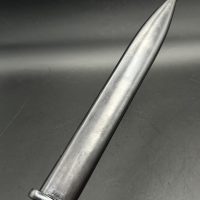
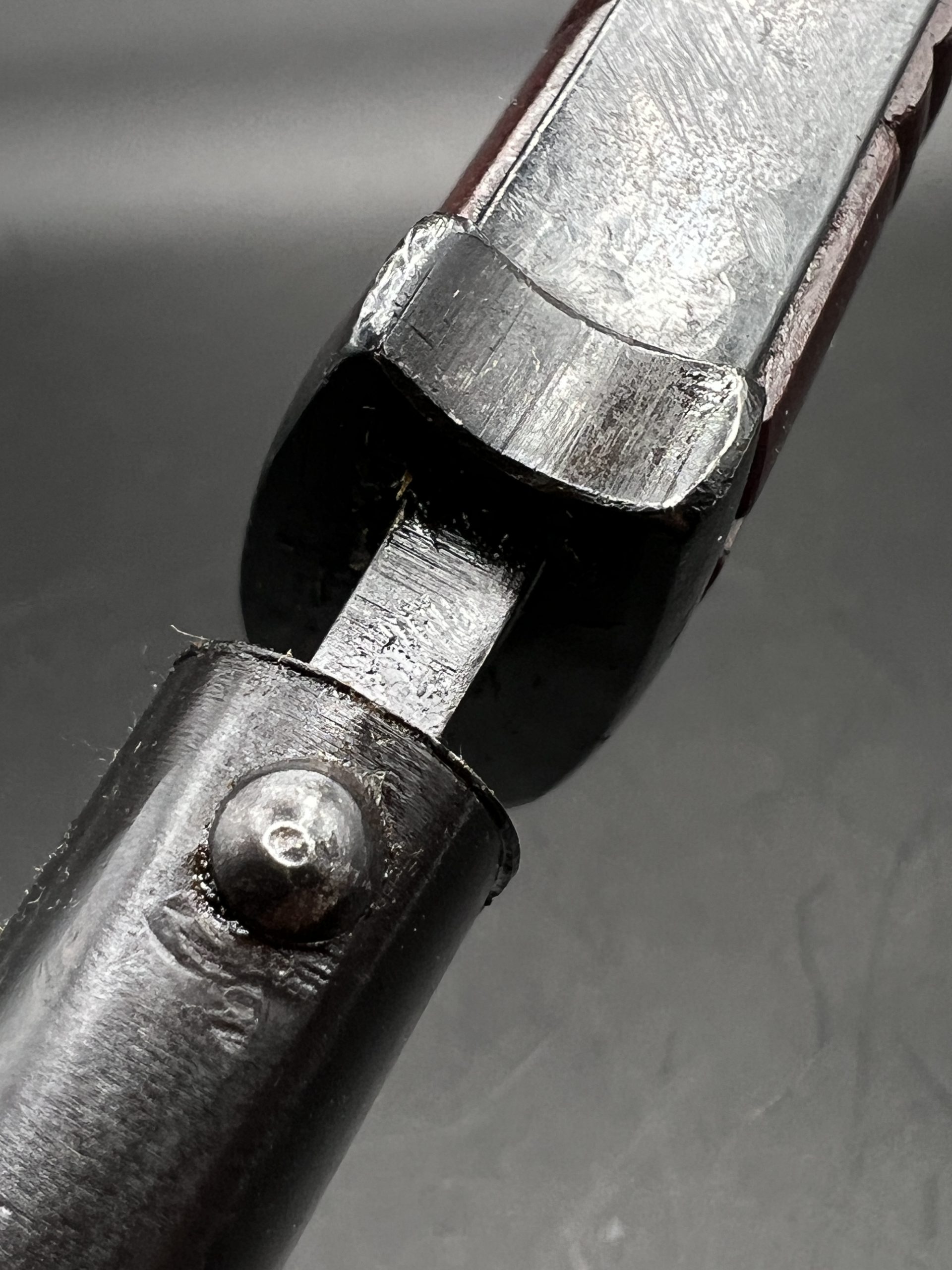
The blade of this example has not been sharpened, which is of particular value to collectors as it indicates minimal combat use or warehouse storage. The absence of resharpening marks preserves the original blade geometry, substantially increasing the collectible value of the specimen.