By clicking Login or Register, you agree that the images of Nazi symbols shown on alexmp.com are not propaganda of fascism, Nazism and are shown solely for historical, cognitive and scientific purposes.
Request a callback
Order a free call and our specialist will contact you shortly!
Ask a question
Contact us and we will get back to you shortly.
Request a Blitz Price
Contact us and we will get back to you shortly.
Request a price
Contact us and we will get back to you shortly.
Offer your blitz price
Contact us and we will get back to you shortly.
Error: Contact form not found.
Request a subscription
We will get back to you shortly.
Subscription
В честь запуска Энциклопедии мы рады предложить вам бесплатный доступ до 01.10.2026. Будем рады вашим комментариям и предложениям!
Officer’s Dress Dagger Model 1937 was introduced as the new pattern of ceremonial edged weapon for the officer corps of the German Air Force. It replaced the Model 1935 and remained the standard Luftwaffe officer’s dagger until the end of World War II.
The aluminum version represents a distinct variety of edged weapons of the DLV, NSFK, and Luftwaffe organizations, where this lightweight metal was used for manufacturing hilt components, scabbards, or decorative elements. The use of aluminum was dictated by both aesthetic considerations and the conservation of strategic materials under wartime conditions.
The Carl Eickhorn company, whose maker’s mark is present on the example offered here, was founded in Solingen in 1865 and became one of the largest manufacturers of edged weapons in Germany. The trademark featuring a squirrel (Eichhörnchen) served as a guarantee of the highest quality products. During the Third Reich period, the firm produced a wide range of regulation edged weapons: daggers for all branches of the armed forces, SA and SS daggers, NPEA, NSFK, and TeNo daggers, as well as dress daggers, sabers, and swords. Carl Eickhorn products are distinguished by superior steel quality and meticulous finishing, and they are highly valued by collectors today.
A modernized version of the 1929 pattern dirk issued to the German naval forces, this piece represents a characteristic example of Kriegsmarine regulation edged weaponry. The primary external distinction of the new model was the replacement of the spherical pommel with a pommel in the form of the state eagle, brought into conformity with the symbolism of the Third Reich period. Despite this modification, the dirk retained the overall construction and distinctive design of the 1929 model, remaining an element of the dress uniform for Kriegsmarine officers.
The firm Paul Weyersberg & Co. was a German manufacturer of edged weapons located in Solingen. The enterprise produced a wide range of military and regulation edged weapons, including bayonets, sabers, swords, and daggers. Paul Weyersberg products were used by various military, state, and party organizations in Germany. The firm’s pieces can be found from the German Empire and Weimar Republic periods, as well as from the Third Reich period. During the Third Reich, the firm was assigned RZM code M7/43, while in the military manufacturer code system the designation “crs” was used. The trademark “Paul Weyersberg & Co. Solingen” is also widely encountered on the firm’s pieces.
Officially introduced on 4 May 1935 concurrently with the restoration of Germany’s armed forces, this model was intended for officers of the Army (Heer) and constituted an integral part of dress and walking-out uniform. The dagger was worn with the appropriate officer’s uniform and quickly became one of the principal symbols of the Wehrmacht officer corps. Its owners included officers of all branches of the land forces, including general officers, and production continued until 1942. Owing to this extended period of manufacture, the Model 1935 Army dagger became the most widely produced German officer’s dagger of the Third Reich era and today remains one of the most popular areas of collecting German edged weapons.
Manufactured by WKC (Weyersberg, Kirschbaum & Cie), one of the oldest and most prestigious arms manufacturers in Solingen, established in 1883 through the merger of two historic firms. The company was a major supplier of edged weapons to the German Army, producing army daggers and sabres of the highest quality bearing a distinctive maker’s mark. WKC products were distinguished by superb blade finishing, impeccable polishing, and precise conformity to regulation patterns, making them particularly valuable to collectors.
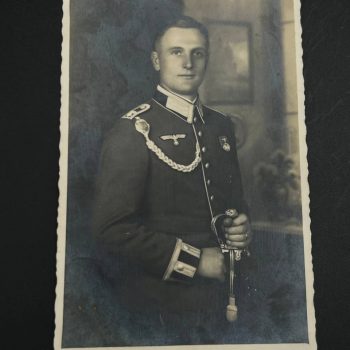
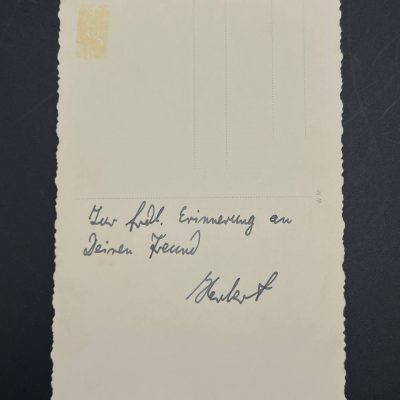
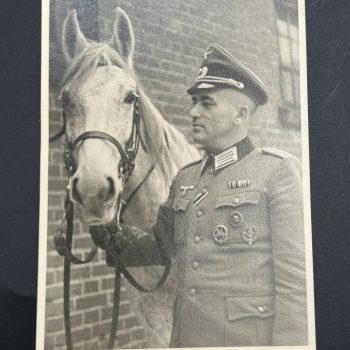
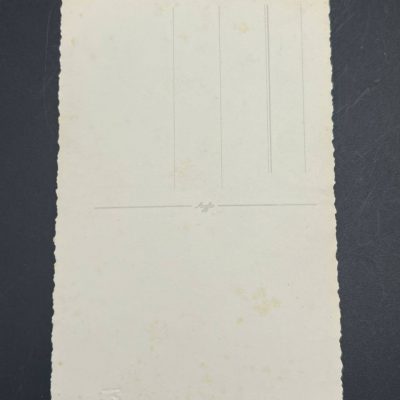
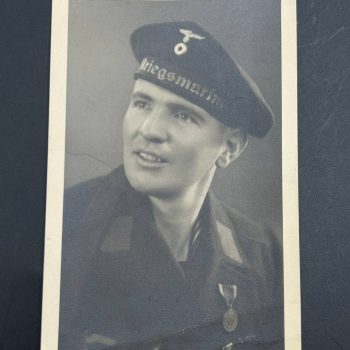
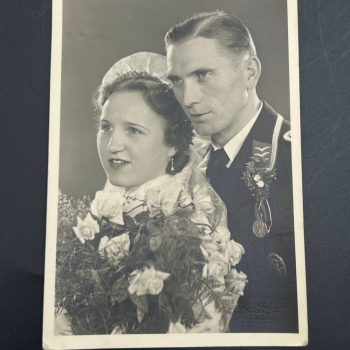
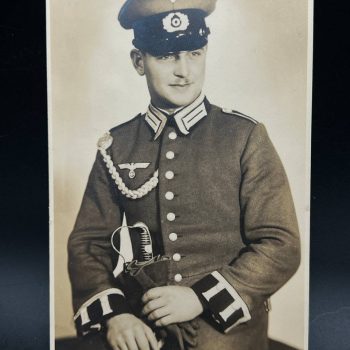
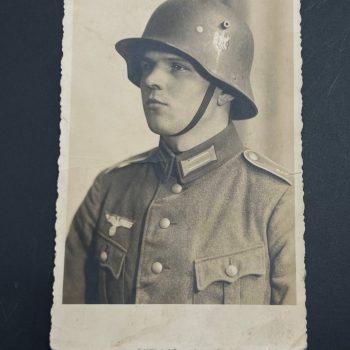
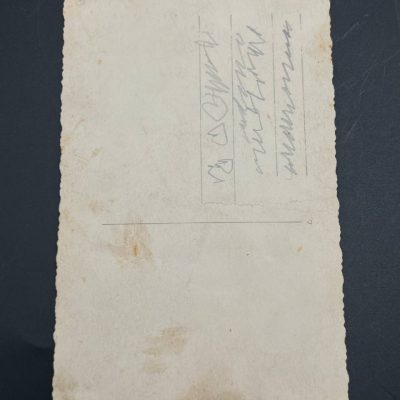
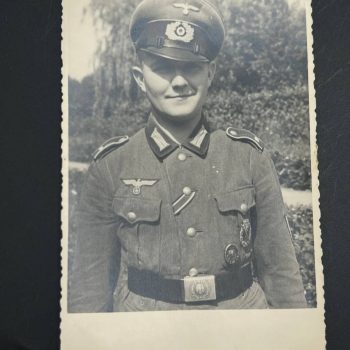
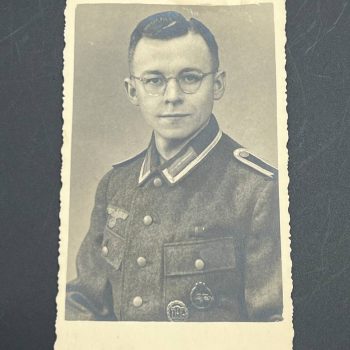
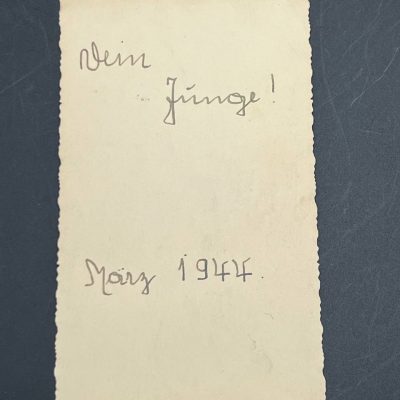
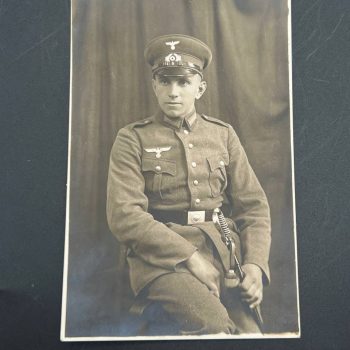
Photo of an infantry officer and sportsman. Awarded the SA Sports Badge, the 1914 Wound Badge, the War Merit Cross 2nd Class and a sports badge for horse riding.
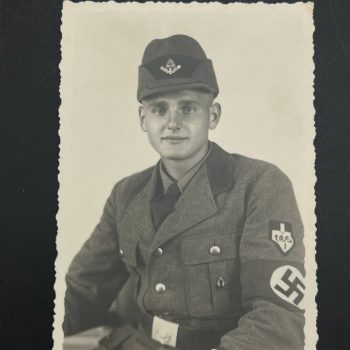
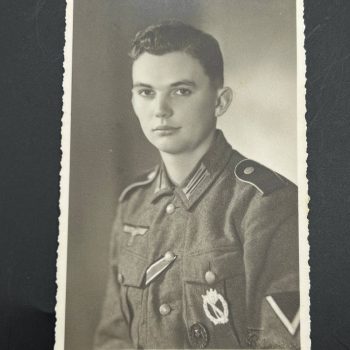
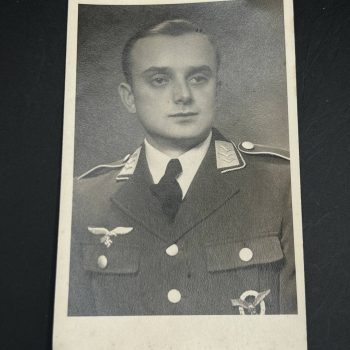
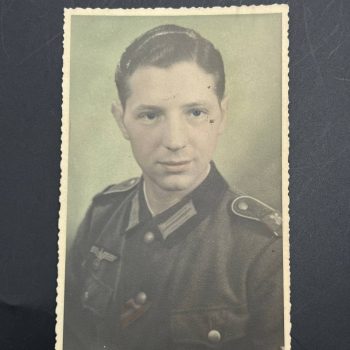
Photo of a Panzer troops specialist (the edge of the specialist’s sleeve insignia is visible). Awarded the DRL Sports Badge, the “Tank Assault Badge” and the Eastern Medal. March 1944.
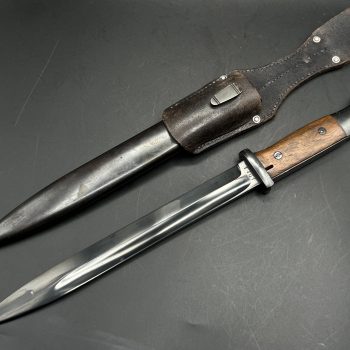
The S84/98 bayonet is one of the most recognizable symbols of the German soldier during the Second World War. Representing a further development of the earlier S84/98 model, it was adopted as the standard bayonet for the Mauser Karabiner 98k carbine and was mass-produced by the German arms industry. Due to its widespread use, this bayonet remained in service with the Wehrmacht throughout the Second World War and is today one of the most popular areas of German edged weapons collecting.
The S/155G marking on the present example indicates the manufacturer, the firm E.u.F Hörster of Solingen, one of Germany’s leading edged weapons manufacturers. The production year of 1935 corresponds to the early period of Wehrmacht rearmament, when mass production of the SG 84/98 model bayonets for Mauser K98k rifles commenced.
The E.u.F Hörster company was founded in Solingen in 1850. The firm specialized in the production of edged weapons and bayonets for the German army, supplying products during both the First and Second World Wars.
The blade of this example has never been sharpened, which is of particular value to collectors. Such condition indicates minimal combat use or warehouse storage of the item. The absence of resharpening marks preserves the original blade geometry, which substantially increases the collectible value of the specimen.
Matching serial numbers on the blade and scabbard confirm their original pairing from the time of manufacture. Such examples are encountered considerably less frequently due to combat losses and post-war reassembly, and therefore command higher collectible value.
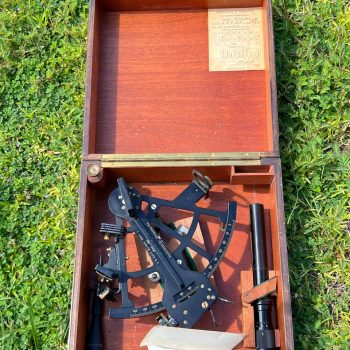
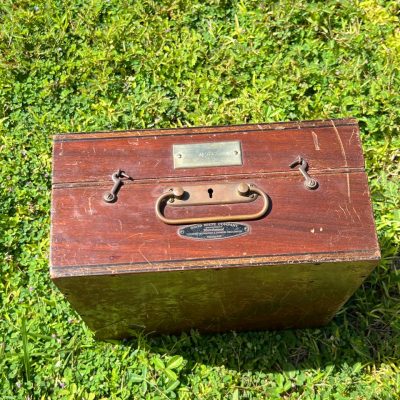
The Navy Mark II sextant by David White Company of Milwaukee was one of the principal instruments of U.S. Navy navigation throughout World War II. This example, serial number 647-1939, was inspected and certified by the U.S. Naval Observatory in Washington on August 15, 1941 — just four months before Pearl Harbor — making it a genuine pre-war/early-war service instrument. The limb reads to single degrees with drum micrometer to 1 minute, and vernier to 6 seconds of arc. Original mahogany dovetailed case with brass hardware and David White Company nameplate. Original inspection certificate with handwritten eccentricity corrections and inspector’s signature survives intact. Telescope present.
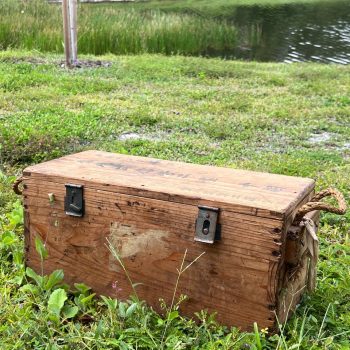
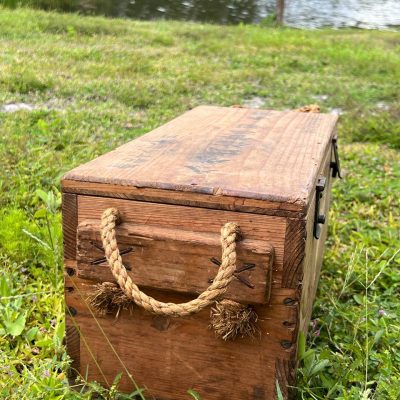
Large field supply crate from the Imperial Japanese Army, dated to Showa Year 15 (1940). Lid bears hand-stenciled kanji markings indicating production year, arsenal or unit designation, and logistical data. Pine board construction with iron hardware and, notably, both original heavy rope carrying handles retained — a rare find, as these are almost always missing on surviving examples. Solid and display-ready. A compelling piece of Pacific Theater militaria.



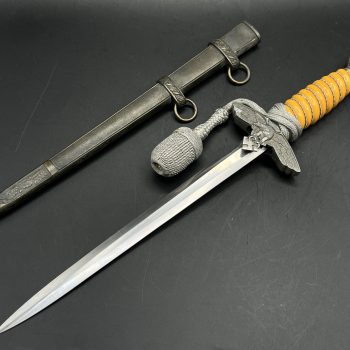
![Luftwaffe Dagger, Model 1937 (aluminum fittings). [Carl Eickhorn]. Stamp – Carl Eickhorn.](https://alexmp.com/wp-content/uploads/2026/08/1786413485849-dyrcyoerko-400x400.jpeg)
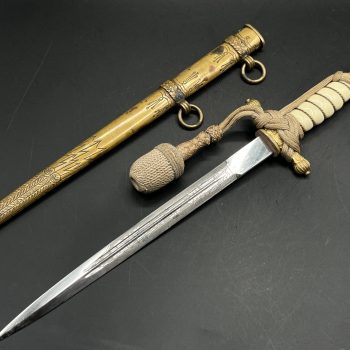
![Naval dagger, Model 1938 [Paul Weyersberg].](https://alexmp.com/wp-content/uploads/2026/08/1786413653953-6lxn1nae2tr-400x400.jpeg)
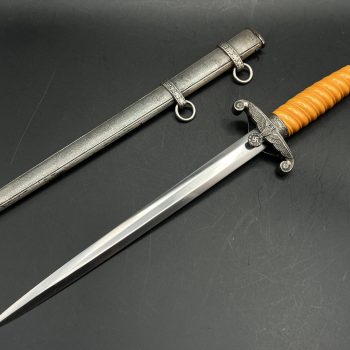
![German Army Dagger, Model 1935 [WKC].](https://alexmp.com/wp-content/uploads/2026/08/1786413306431-mmdh82hm5z-400x400.jpeg)
![Mauser rifle bayonet (1934-1945). 1935 – S/155G. [E.u.F Hörster]. Unsharpened blade. Matching numbers.](https://alexmp.com/wp-content/uploads/2026/08/1786402466446-9ho0h4hakhu-400x400.jpeg)