Login
Register
By clicking Login or Register, you agree that the images of Nazi symbols shown on alexmp.com are not propaganda of fascism, Nazism and are shown solely for historical, cognitive and scientific purposes.
Order a free call and our specialist will contact you shortly!
Contact us and we will get back to you shortly.
Error: Contact form not found.
We will get back to you shortly.
В честь запуска Энциклопедии мы рады предложить вам бесплатный доступ до 01.10.2026.
Будем рады вашим комментариям и предложениям!
Inspected and guaranteed by Alex Warstory.
For more details on AlexMP Guarantee, click [HERE]
Item guaranteed by a verified dealer.
Click [HERE] for full seller guarantee terms.
Sold without expert review or guarantees. No claims accepted post-sale.
Learn more [HERE]
Showing all 16 results
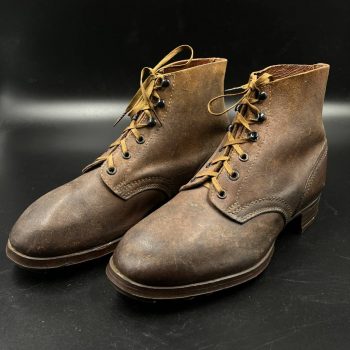
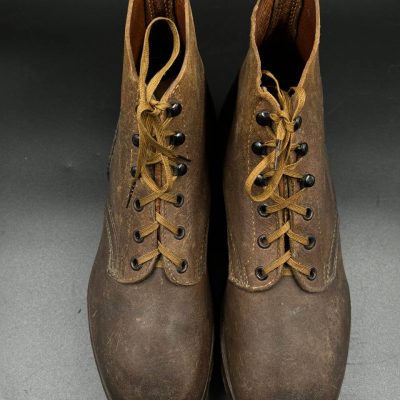
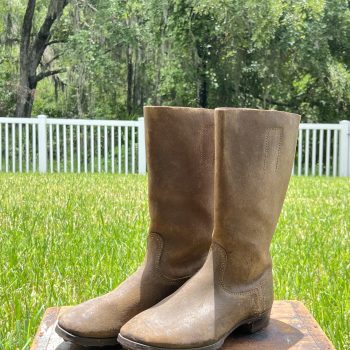
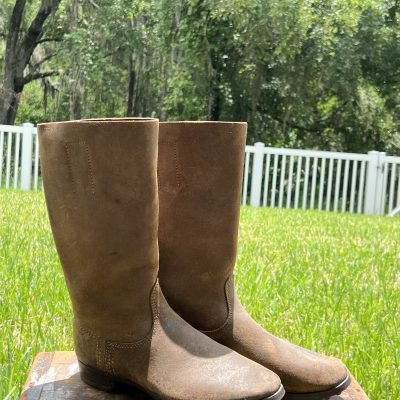
FiltersGerman Army (Wehrmacht) combat boots for enlisted men and non-commissioned officers — early World War II period, first half of the war.
An extraordinary find. Boots of this type, in this condition, are virtually impossible to encounter on the antique militaria market. A piece this well-preserved represents a once-in-a-lifetime opportunity for any serious collector of Third Reich militaria.
Do not miss your chance to own a genuine artifact of the early war German fighting man — the kind of item that simply does not come up for sale anymore.
Luftwaffe flight boots manufactured by Wilop. The boots are made of quality brown leather with a construction typical of aviation footwear. The shafts are high, featuring a zipper closure on the inner side for ease of donning. The sole is leather with a rubber heel tap.
The interior bears the manufacturer’s stamp of Wilop — a well-known German firm specializing in the production of flight equipment for the Luftwaffe. The company Wilop (Wilhelm Lohmann, Pinneberg) was one of the principal suppliers of flight boots and gloves for the German Air Force.
Such boots formed part of the flight clothing ensemble issued to pilots and aircrew members of the Luftwaffe. The footwear design provided protection from cold at altitude and comfort when operating aircraft pedals. The supple leather and well-designed shaft construction did not restrict movement and permitted rapid egress from the cockpit in emergency situations.
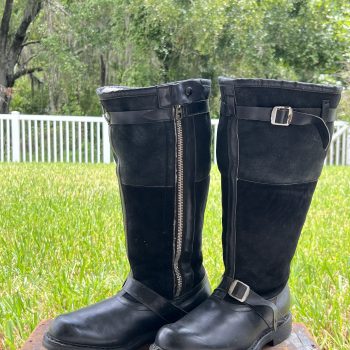
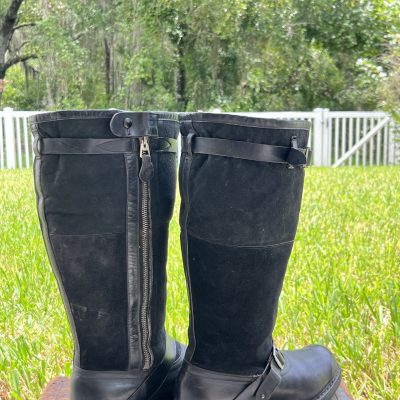
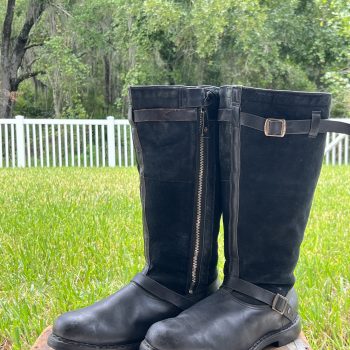
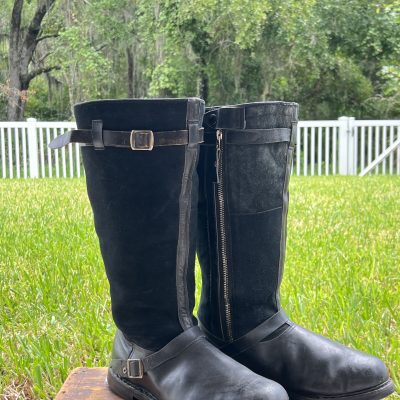
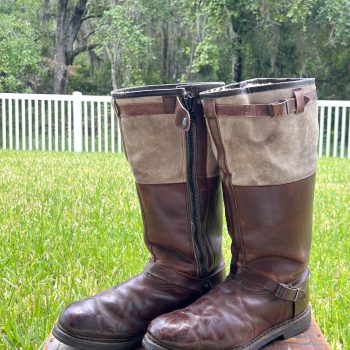
Luftwaffe pilot flight boots from the World War II period. The construction consists of a leather lower section and a black suede shaft. The shaft is equipped with a side zipper for ease of donning, as well as adjustable straps with metal buckles at the top and bottom sections. The sole bears the manufacturer’s stamp ‘Original Wilop’ with a heraldic image. The rubber sole features a distinctive textured pattern with circular studs. These boots were designed to protect against low temperatures at high altitudes and represent significant collector interest as an example of specialized aviation equipment.
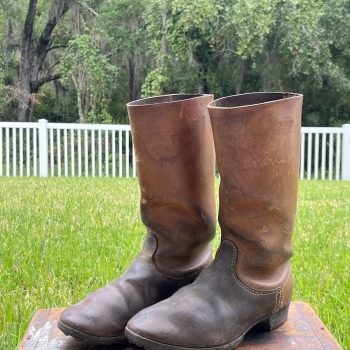
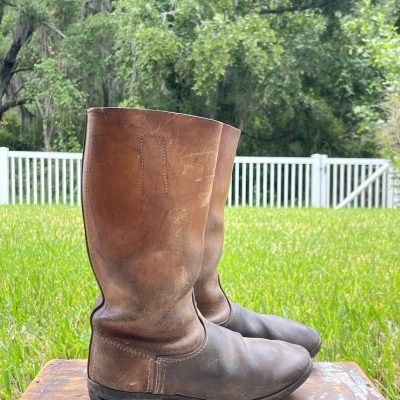
Wehrmacht marching boots crafted from brown leather with tall shafts. The interior of the shaft bears a stamp dated ’43’ (1943) along with numerical markings ‘2917 43 T18’. The soles are reinforced with characteristic steel hobnails (Schuhnägel) arranged around the perimeter of the toe and heel, with metal horseshoe plates on the heels. The original canvas pull loops for donning remain intact inside the boots. This example exhibits natural wear consistent with period use and is of particular interest to collectors of Third Reich uniforms and equipment.
Wehrmacht marching boots crafted from genuine brown leather, featuring the characteristic tall shaft. The sole is fitted with original forged hobnails (heel irons) designed to enhance durability and traction. The sole bears the manufacturer’s stamp “Spangenberg”. The boots display signs of wear consistent with period use, including natural leather patina and oxidation on metal components. Of considerable interest to collectors of German armed forces uniforms and equipment from the Second World War period.
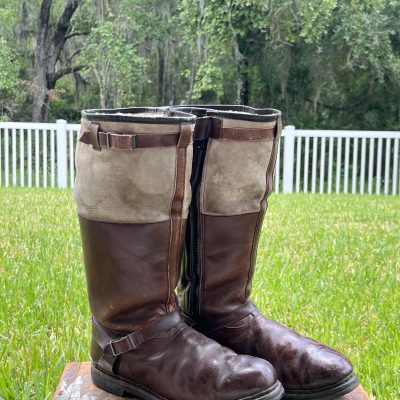
Flight boots (Fliegerstiefel) from the World War II period, designed for Luftwaffe aircrews. The boots are crafted from two-tone leather, featuring polished brown leather on the lower section and light brown suede on the upper shaft. The construction includes a side zipper fastening for ease of wear, along with adjustable leather straps with metal buckles at the ankle area. The rubber sole displays a textured pattern with circular studs and bears the “ORIGINAL VULCO” stamp with a coat of arms motif. The boots exhibit signs of use and characteristic patina on the leather, confirming their service history in combat operations.
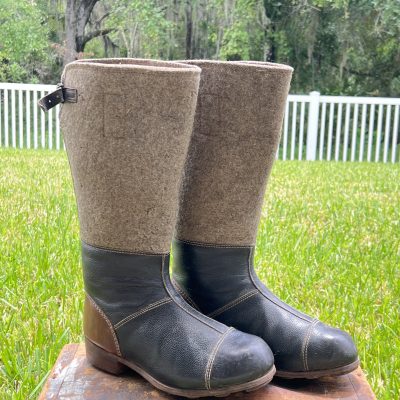
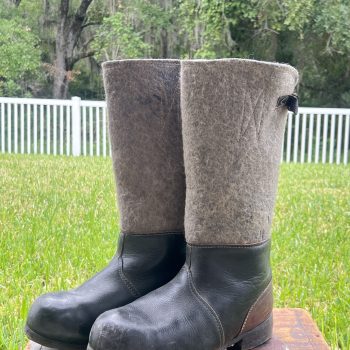
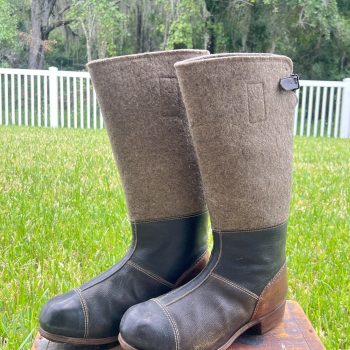
German Army winter boots from the Second World War period, featuring a combined construction. The lower portion is made of black grained leather with a reinforced toe cap of natural brown leather, while the shafts are constructed from dense grey-brown felt. The shafts feature leather reinforcing elements and adjustable straps with metal buckles. The sole is leather with characteristic round metal hobnails (Eisenbeschlag) for enhanced durability. The sole bears the size marking “30”. This type of footwear was used in winter conditions on the Eastern Front to provide protection against extremely low temperatures.
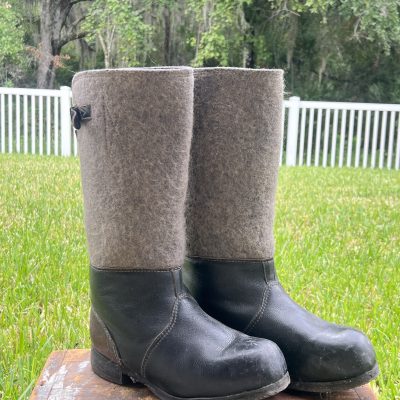
German Army winter boots from the World War II period, designed for use in Eastern Front conditions. The construction features a black leather lower section with brown heel reinforcements and gray felt shafts. The shafts are equipped with leather straps featuring metal buckles for fastening, as well as characteristic triangular leather reinforcements. The sole is rubber with a textured tread pattern; the fabric lining inside the shaft has been preserved. The boots are in good collectible condition with natural signs of storage and use.
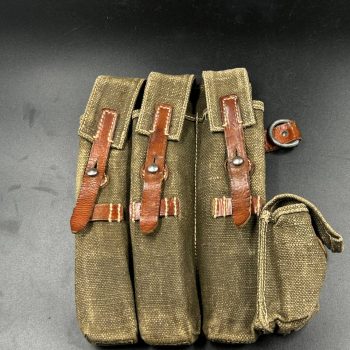
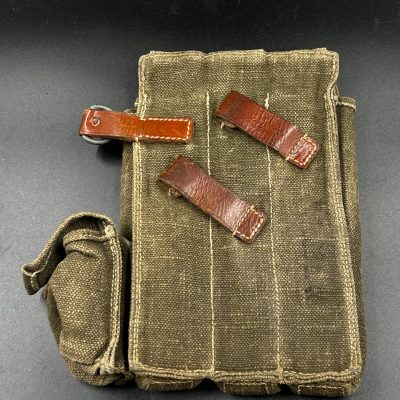
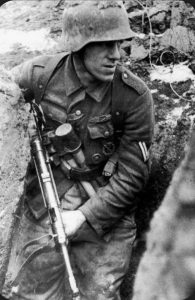
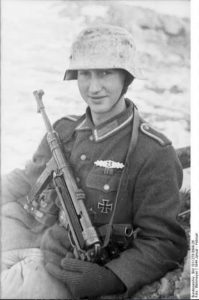
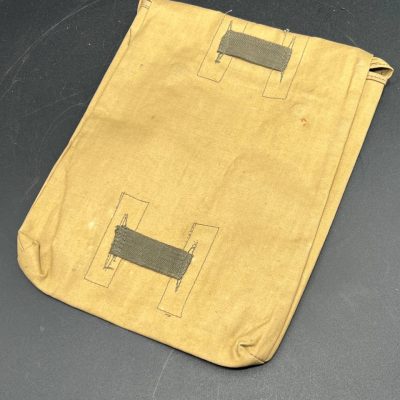
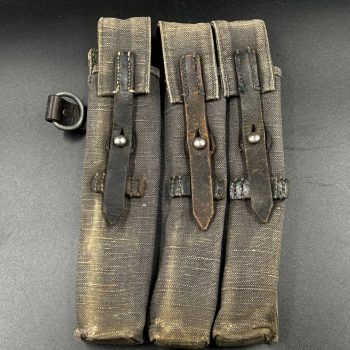
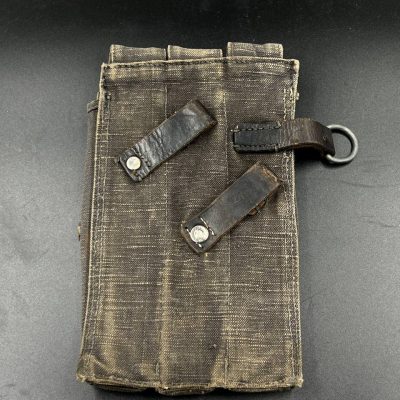
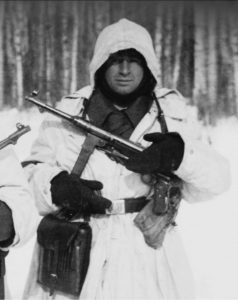
Rare MP38/40 magazine pouch for Wehrmacht and Waffen-SS in excellent condition.
.
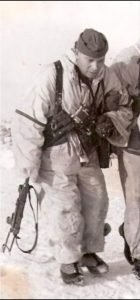
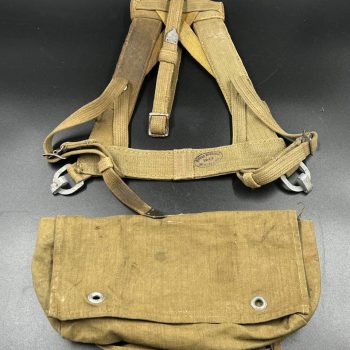
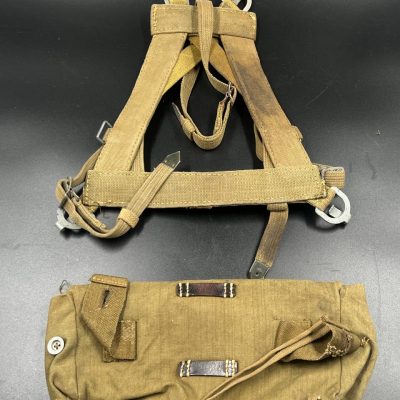
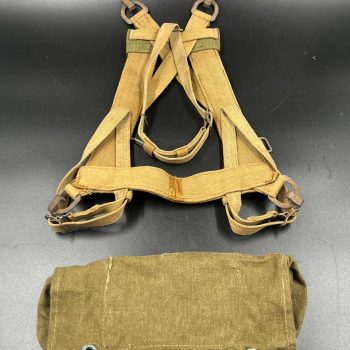
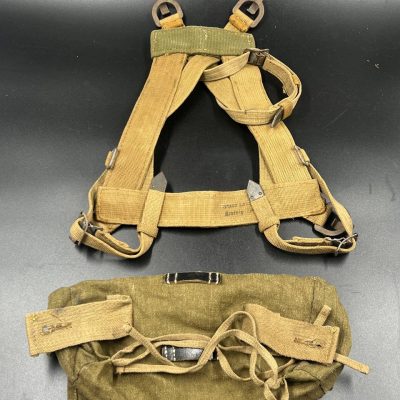
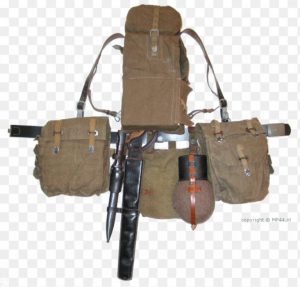
Complete WWII German Wehrmacht Infantry Combat Assault Pack (Sturmgepäck / A-Frame), introduced April 1939. Designed for use with Y-straps by assault infantry.
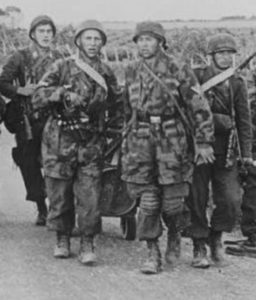
Set includes:
∙ A-frame (Traggestell) with original riveted leather straps
∙ Y-straps (Koppeltragegestell)
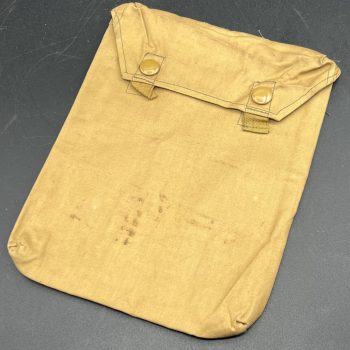
∙ Small items bag (Beutel)
∙ Belt with original steel hardware
Construction: Heavy canvas webbing, double-layered vertical straps with internal metal reinforcement, cross-straps forming characteristic “X” pattern, quick-release D-rings, original matte gray steel fittings.
Condition: Age-appropriate patina. Straps remain supple and functional. Metal shows expected oxidation.
Near mint condition
Complete sets with all components are increasingly difficult to find.
Sold as shown. Please review all photos carefully.
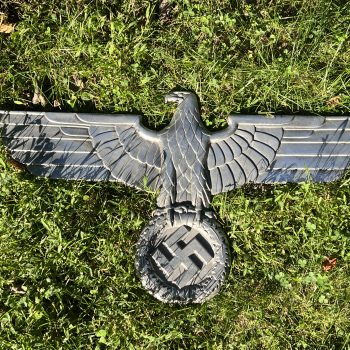
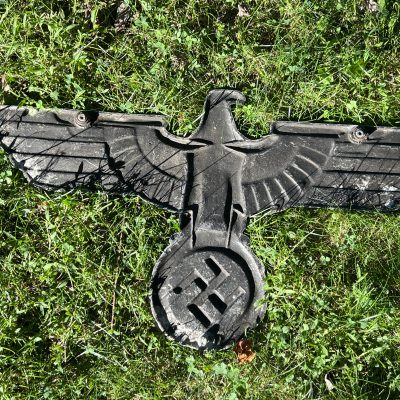
A large original Deutsche Reichsbahn (German State Railways) eagle from the Third Reich period. The eagle is depicted with outstretched wings, clutching a wreath bearing a swastika in its talons. The piece features strong three-dimensional relief, with detailed feathering and wing construction.
The reverse retains stamped/raised manufacturer or production markings, as well as original mounting hardware. The eagle displays an attractive period patina with surface wear, oxidation, scratches, and traces of finish loss consistent with its age and history.
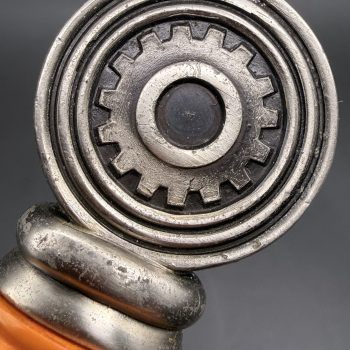
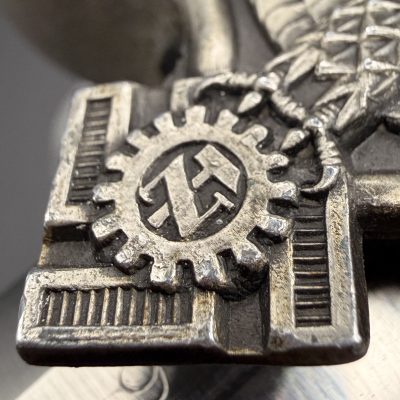
Technical Emergency Corps (TeNo) Leader’s Dagger, Model 1938, manufactured by Carl Eickhorn of Solingen. This example bears the manufacturer’s trademark and retains matching numbers on the blade and scabbard, confirming their factory pairing and attesting to the complete original preservation of the piece.
This dagger model was introduced in November 1938, concurrently with the adoption of new regulation edged weapons for the TeNo organization. It was intended to be worn with dress uniform by commanding officers holding the rank of Stabsscharführer and above. Officers purchased these daggers at their own expense through special organizational outlets.
The history of the Technical Emergency Corps began on September 30, 1919. Throughout the existence of the Weimar Republic, the corps repeatedly distinguished itself, demonstrating efficiency and excellent technical training. Naturally, this organization could not escape the attention of the new leadership, the National Socialist Party. In 1939, to further enhance efficiency, TeNo was transferred to the jurisdiction of the Reich Ministry of Foreign Affairs and subordinated to police structures, allowing for improved operational capacity. Prior to the commencement of the Polish campaign, TeNo was commanded by SS Gruppenführer (SS Lieutenant General) Schmelzer; he was later succeeded in this post by SS Gruppenführer Weinreich.
The Carl Eickhorn company was founded in Solingen in 1865 and became one of the largest manufacturers of edged weapons in Germany. The company’s trademark, featuring a squirrel (Eichhörnchen), served as a guarantee of the highest quality products. During the Third Reich period, the firm produced a wide range of regulation edged weapons, including daggers for all branches of service, SA and SS daggers, NPEA, NSFK, and TeNo daggers, as well as dress daggers, sabers, and swords. Carl Eickhorn products are distinguished by superior steel quality and meticulous finishing, and are highly valued by modern collectors.
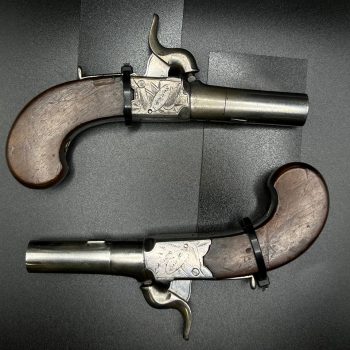
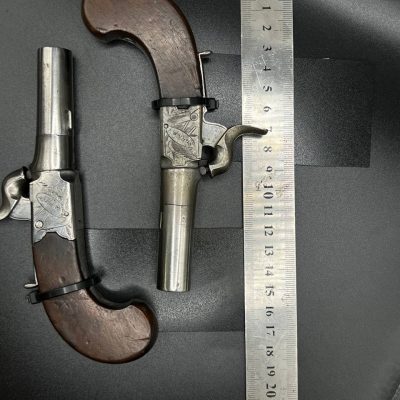
Pair of English Drop Trigger Percussion Pistols Marked H Nock.
Marked with one of England’s premier makers of the period, these guns are likely the fake watches of their day. Both guns are in nice condition with engraved frames and slab butts with vacant silver escutcheons.
Both actions, including push-on safeties, function without problems.
Overall length approximately 5 7/8 inches, with twist off barrels, standard British proofs.
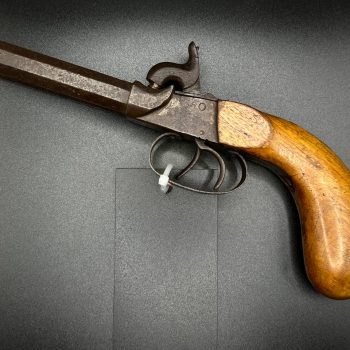
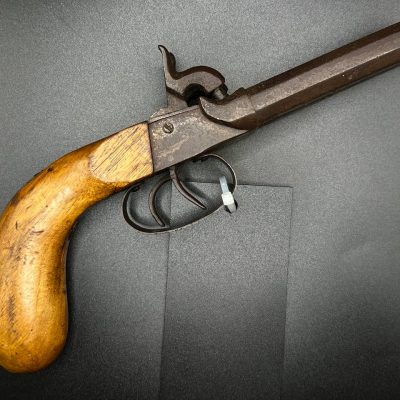
Original Victorian Era Double Barreled Percussion Coat Pistol
.40 caliber with turn-off 3 inch barrels. Overall length is a little over 8 inches.
Actions are mostly functional. The left action holds on half cock only; right action holds on half and full cock.
A good example of this early ‘concealed carry’ firearm at an attractive price.