Login
Register
By clicking Login or Register, you agree that the images of Nazi symbols shown on alexmp.com are not propaganda of fascism, Nazism and are shown solely for historical, cognitive and scientific purposes.
Order a free call and our specialist will contact you shortly!
Contact us and we will get back to you shortly.
Error: Contact form not found.
We will get back to you shortly.
В честь запуска Энциклопедии мы рады предложить вам бесплатный доступ до 01.10.2026.
Будем рады вашим комментариям и предложениям!
Inspected and guaranteed by Alex Warstory.
For more details on AlexMP Guarantee, click [HERE]
Item guaranteed by a verified dealer.
Click [HERE] for full seller guarantee terms.
Sold without expert review or guarantees. No claims accepted post-sale.
Learn more [HERE]
Showing 17–32 of 198 results
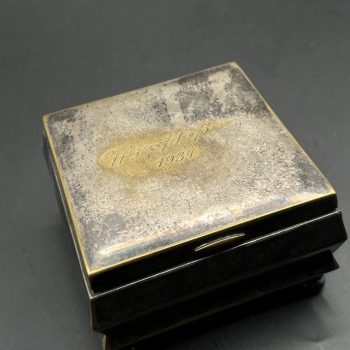
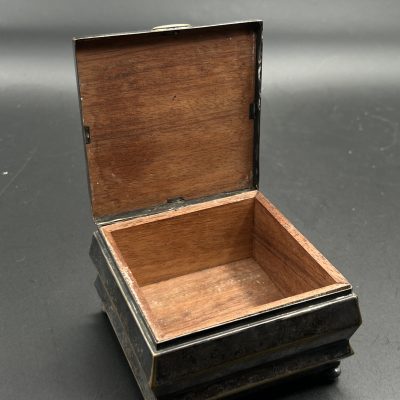
FiltersGerman nickel-silver tabletop box (cigarette casket) in the Art Deco style, featuring a wooden body clad in silver-plated metal. The lid is adorned with an engraved date 1934. The construction features a characteristic stepped design with a hinged flip-top lid, while the interior is finished in polished wood. Four ball-shaped feet provide stability to the piece. This box is of interest as an example of presentation items from the early Third Reich period.
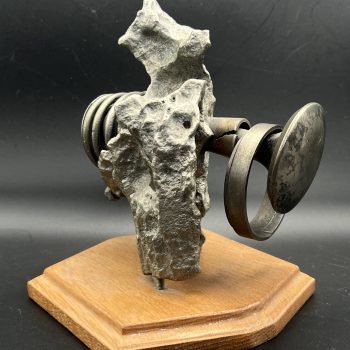
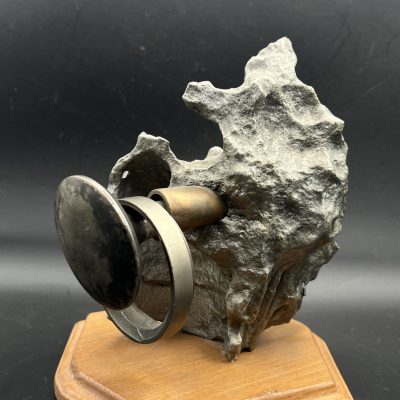
A fragment of a BMW 801 aircraft piston engine cylinder, originally fitted to Focke-Wulf Fw 190 fighters. The assembly includes a piston with connecting rod, valve mechanism with springs, and a deformed aluminum cylinder block bearing characteristic traces of combat damage or crash impact. The shaped wooden stand has been crafted specifically for display purposes. Approximate dimensions of the fragment: 6 x 6 inches.
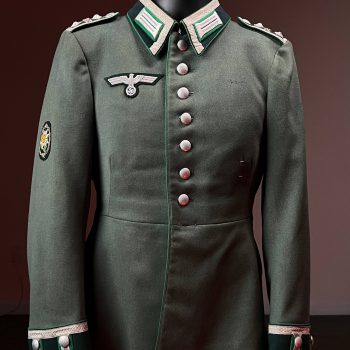
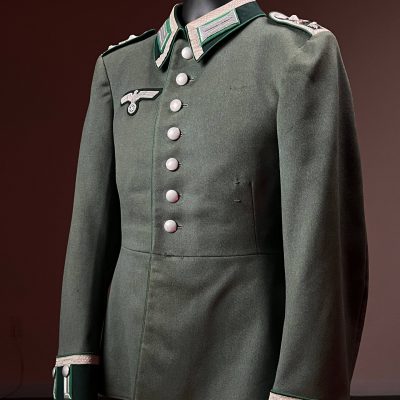
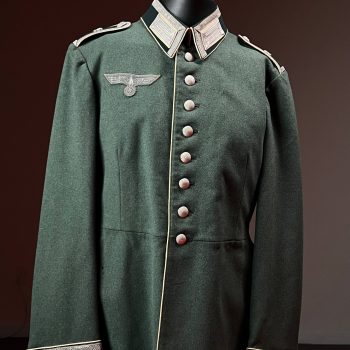
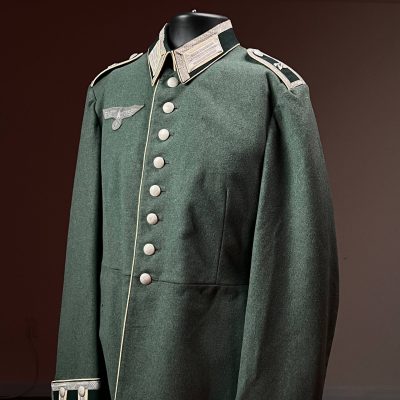
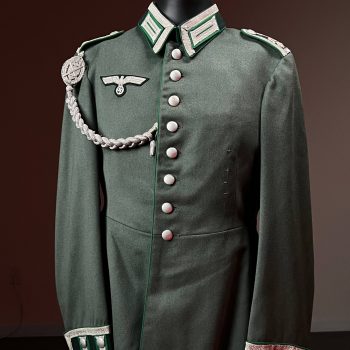
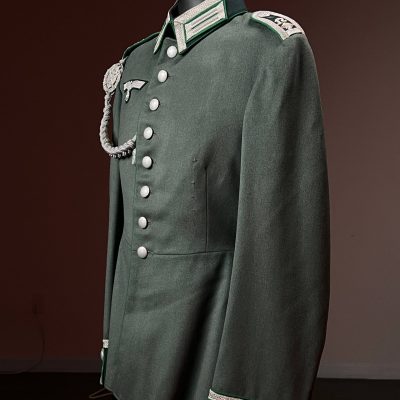
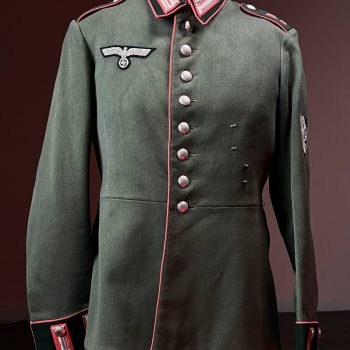
Wehrmacht Heer tunic of a member of Infanterie-Regiment 17 (Braunschweig).
An interesting uniform item associated with one of the traditional regiments of the German Army. The 17th Infantry Regiment was formed in 1921 with the creation of the Reichswehr, drawing its personnel and traditions from units of the former Imperial German Army. The regiment continued the traditions of several Prussian, Brunswick, Hanoverian and Jäger units.
Of particular interest is the green piping used on the collar, shoulder straps and cuffs. This green piping is associated with the Jäger traditions represented in the history of Infanterie-Regiment 17 and is a distinctive feature of this tunic.
In 1935 the regiment received the designation Infanterie-Regiment 17, and from 1937 it formed part of the 31st Infantry Division. The tunic is therefore interesting not only as a Wehrmacht uniform item, but also as an example of the continuation of the rich regimental traditions of the old German Army.
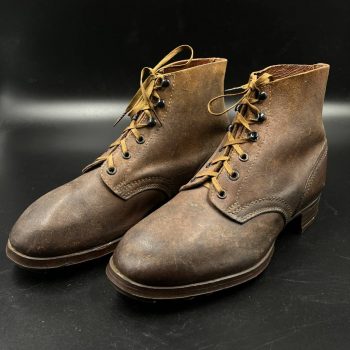
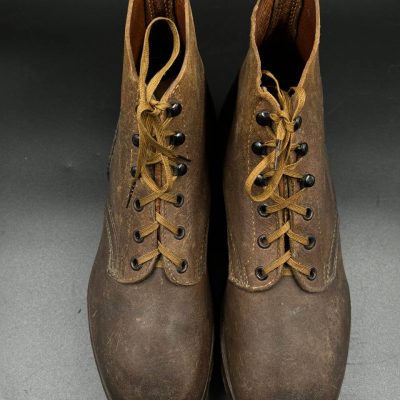
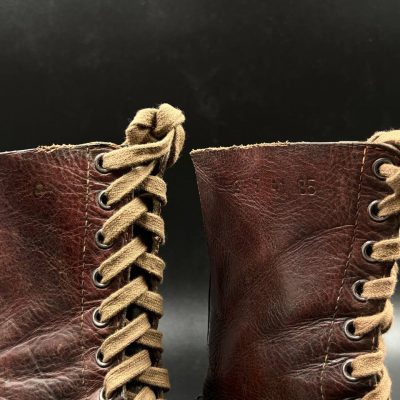
German Army (Wehrmacht) combat boots for enlisted men and non-commissioned officers — early World War II period, first half of the war.
An extraordinary find. Boots of this type, in this condition, are virtually impossible to encounter on the antique militaria market. A piece this well-preserved represents a once-in-a-lifetime opportunity for any serious collector of Third Reich militaria.
Do not miss your chance to own a genuine artifact of the early war German fighting man — the kind of item that simply does not come up for sale anymore.
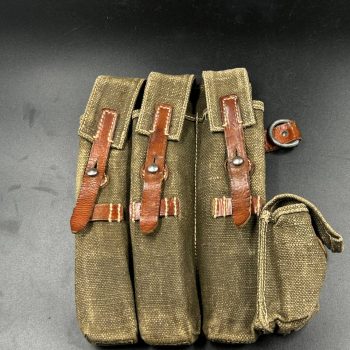
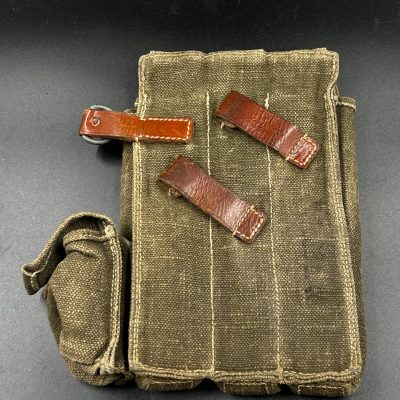
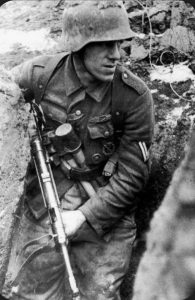
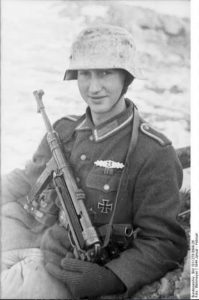
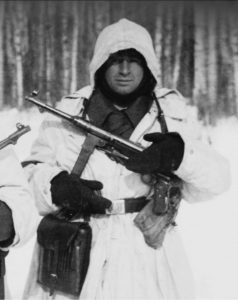
Rare MP38/40 magazine pouch for Wehrmacht and Waffen-SS in excellent condition.
.
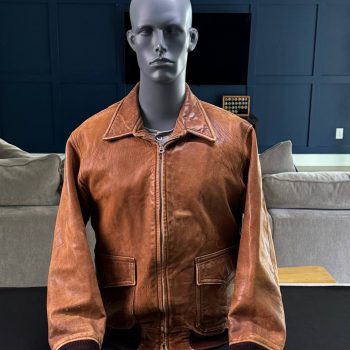
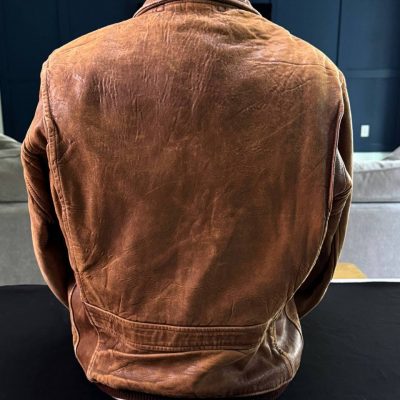
Genuine private-purchase leather flight jacket built on the AN-J-3 pattern, dating to the 1940s. Made by David D. Doniger and Company of New York and carrying the label of the firm’s civilian brand, McGregor Sportswear.
The AN-J-3 was a 1943 joint Army and Navy project, intended as a single replacement for the Army A-2 and the Navy M-422A. Because of the wartime leather shortage, the leather version of the official specification was effectively never purchased for service, which makes civilian and private-purchase jackets in this silhouette especially interesting to collectors. Alongside its A-2 military contract, Doniger produced a civilian capeskin line under the McGregor label, and this jacket belongs to that line.
The jacket is cut from russet capeskin, a lighter and softer hide than the goatskin used on military contracts. It shows the characteristic features of the style: the signature pointed Doniger collar with a buttoned throat latch, a Talon zipper with bell-shaped slider, a wind flap behind the zipper, buttoned patch pockets with a pen slot, pleated shoulders for movement, gusseted sleeves, a belted back, and ribbed knit cuffs and waistband. Inside there is a vertical pocket with a snap closure. The original McGregor Sportswear woven label is present.
Condition: an honestly worn piece with a beautiful aged patina across the leather. There is general wear and some surface marking consistent with age. Offered as a genuine vintage jacket in worn, but awesome displayable condition.
Provenance: private collection. The connection to a maker of military A-2 jackets, combined with the quality capeskin, makes this an attractive piece for the collector of vintage aviation clothing.
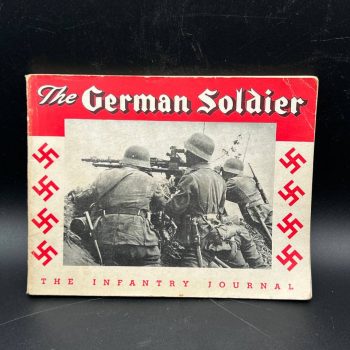
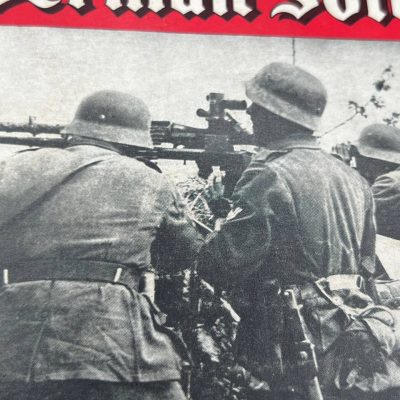
Original U.S. wartime publication from the Infantry Journal series, issued to American servicemen as an enemy intelligence guide covering Wehrmacht tactics, weapons, and psychology. Black-and-white photographs throughout with analytical text. Features a handwritten period ownership inscription — “Property of Pvt. Samuel Riskin” — adding personal provenance and documentary value. Cover worn, interior pages in good condition.
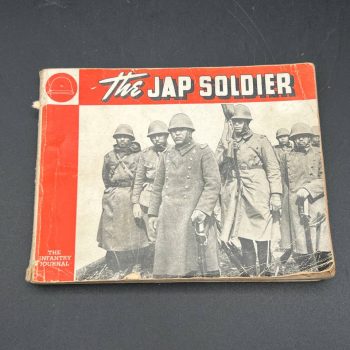
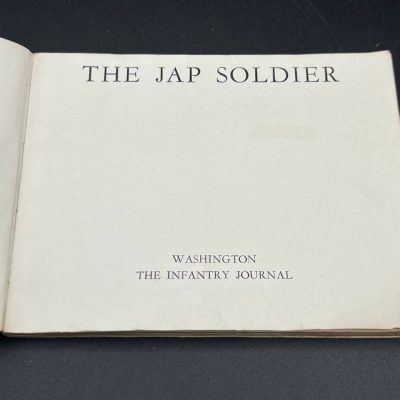
Original wartime U.S. military publication produced during the Pacific Campaign. Softcover photo handbook with black-and-white photographs of the Japanese Imperial Army accompanied by analytical text, issued to American servicemen as an enemy identification and intelligence guide. Published by Infantry Journal Inc., Washington D.C., 1943, First Edition. Cover shows wear and creasing; interior pages intact. A rare piece of WWII American propaganda and a primary historical document of the era.
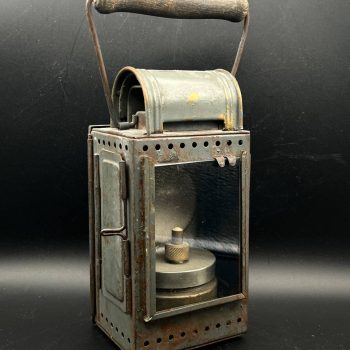
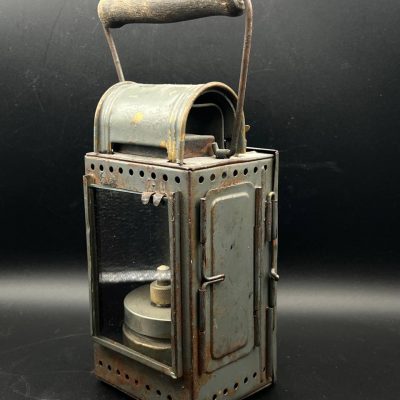
Steel body with original grey paint and stamped DR imperial eagle mark. Wooden carry handle, brass OSMEKA oil reservoir (1955), reflector unit by Hugo Znege, Esslingen marked Deutsche Bundesbahn (1954). Complete with two original colored glass filters — red (stop/danger signal) and blue (shunting/service signal). A compelling example of wartime equipment repurposed for post-war West German railway service.
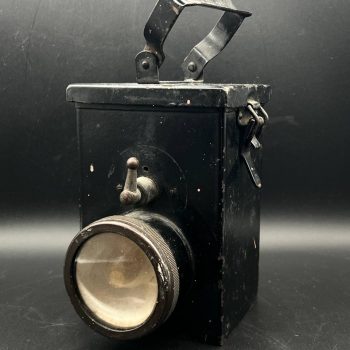
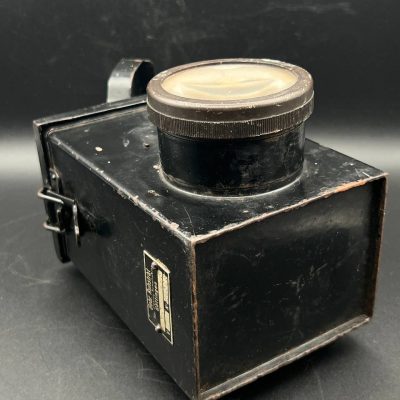
Original German portable electric military lamp from World War II. Manufactured by Gebr. Ruhstrat, Elektro-Schaltwerk division, Göttingen, Germany. Year of manufacture: 1943, serial number 14523. Features a steel body with original black lacquer paint, folding carry handle, round diffuser lens, toggle switch, and side latch closure. The original manufacturer’s data plate and stamped “Notlampe 4” designation are both intact. Shows natural age-appropriate wear, surface scratches, and patina consistent with field use. Unrestored original condition.
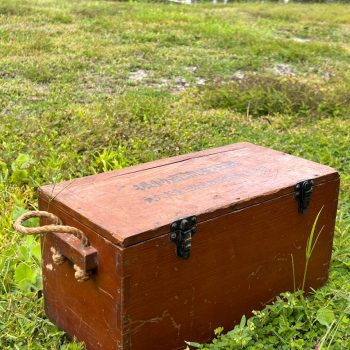
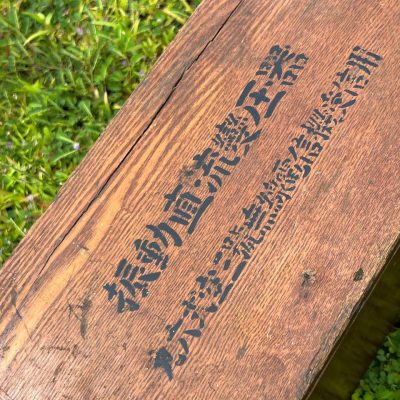
Japanese WWII field vibrator/generator units were ordered destroyed after the war, making survivors with original casing exceptionally scarce. This is the wooden transport/storage crate for such a unit, stenciled in black kanji with the equipment designation 振動直流発電機 (Vibrating DC Generator) and arsenal/unit markings. Interior lid features original green felt cushioning pads and a document/diagram pocket. Original rope handles and black steel latches. On the bottom, a American serviceman burned a personal inscription: “To Mrs. Fay C. Wood” — a direct and touching piece of Pacific Theater provenance. Approximately 18” x 9” x 9”.
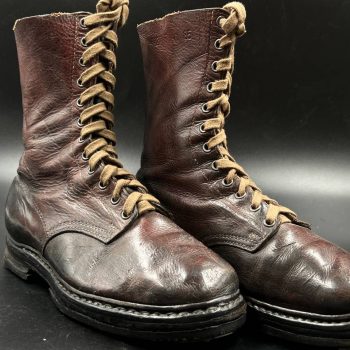
Genuine WWII German Luftwaffe Fallschirmjäger (paratrooper) front-lace jump boots, 2nd pattern (Schnürschuhe). The 2nd pattern boots were an improvement over the first pattern — now front-laced, specifically designed to prevent ankle injuries during jumps. This model was the most common pattern and saw extensive use throughout the war.
Sole stamped with production date 8.1942 (August 1942) and size 28. Shaft marked 85. Constructed in desirable and seldom-encountered brown smooth leather, with original circular hobnails on the sole and steel heel plate intact. Interior clean and intact.