-
U.S. Navy Bureau of Navigation Mark II Sextant — David White Co., Milwaukee — Serial No. 647-1939 — With Original U.S. Naval Observatory Certificate of Inspection, dated August 15, 1941 (Lot: 1114)
Auction EndedThe Navy Mark II sextant by David White Company of Milwaukee was one of the principal instruments of U.S. Navy navigation throughout World War II. This example, serial number 647-1939, was inspected and certified by the U.S. Naval Observatory in Washington on August 15, 1941 — just four months before Pearl Harbor — making it a genuine pre-war/early-war service instrument. The limb reads to single degrees with drum micrometer to 1 minute, and vernier to 6 seconds of arc. Original mahogany dovetailed case with brass hardware and David White Company nameplate. Original inspection certificate with handwritten eccentricity corrections and inspector’s signature survives intact. Telescope present.
Product sold for blitz price: $ 665
Dear customers,
We will be attending the following exhibitions:
- 29.01. – 31.01.2026 / SOS Show, USA
- 20.02. – 21.02.2026 / Pomona CA, USA
- 22.02.2026 / Houten, NL
- 20.03. – 21.03.2026 / Greding, DE
- 09.04. – 11.04.2026 / Gunzenhausen, DE
- 26.04.2026 / Ciney, BE
- 09.05. – 10.05.2026 / Allentown PA, USA
- 05.06. – 06.06.2026 / Wilmington OH, USA
- 14.06.2026 / Houten, NL
- 11.07. – 12.07.2026 / Allentown PA, USA
- 30.08.2026 / Houten, NL
- 03.09. – 05.09.2026 / Münsingen, DE
- 17.09. – 20.09.2026 / MAX Show, USA
- 08.10. – 10.10.2026 / Gunzenhausen, DE
- 10.10. – 11.10.2026 / Allentown PA, USA
- 25.10.2026 / Ciney, BE
- 29.10. – 31.10.2026 / Wilmington OH, USA
- 06.11. – 07.11.2026 / Greding, DE
- 05.12. – 06.12.2026 / Allentown PA, USA
- 13.12.2026 / Houten, NL
If you are interested in any items from our catalogue and have the opportunity to visit one of the exhibitions, please let us know the item number and your name, and we will bring the goods for you to view in person.
Kind regards, Alex
-
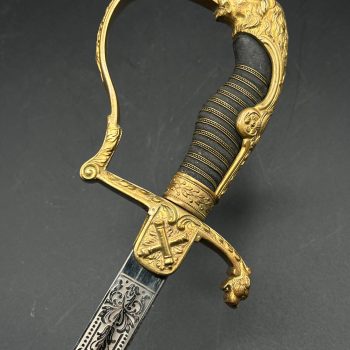
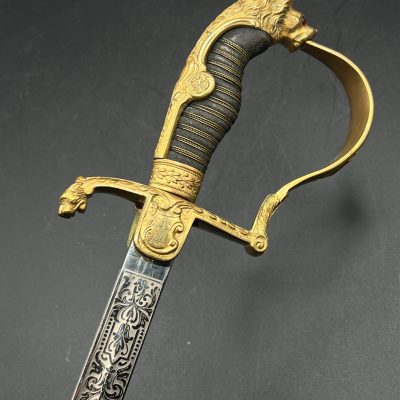
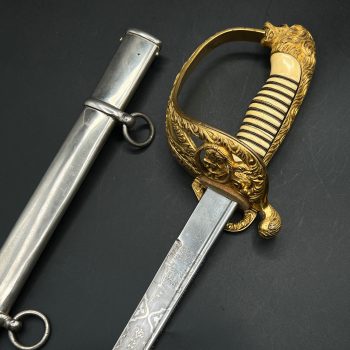
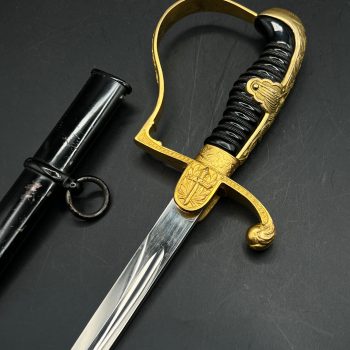
German Sword, pre-1918 Cavalry. Lion head [M. Neumann Berlin] Family Coat of Arms. Damascus steel, etching, gilding. (Lot: 1382)
Starting bid: $ 7,875Cavalry edged weapons of the German Empire were intended for officers and enlisted men of dragoon, cuirassier, uhlan, hussar, and other cavalry regiments, remaining in service until the end of the First World War in 1918. This category includes sabers, pallasches, and other examples of bladed weapons that formed an integral part of German cavalry equipment. The presented German saber, dating to before 1918, serves as an excellent example of officer armament from the Imperial period.
The most distinctive feature of many officer cavalry sabers is the pommel in the form of a lion’s head, one of the most recognizable symbols of German edged weapons from the Imperial period. This model gained widespread use in German armies of the 19th century, particularly among cavalry and infantry officers, and to this day remains a desirable acquisition for serious collectors.
The firm M. Neumann, Berlin was a German supplier of military equipment and edged weapons in the late 19th and early 20th centuries. The enterprise was located in Berlin and supplied sabers, pallasches, bayonets, and other military items for the German army, earning a reputation as a reliable manufacturer of quality officer weapons.
A coat of arms on the blade or hilt of a German saber indicates that the weapon belonged to a member of a noble house or aristocratic family. Such examples were made to individual order and were frequently embellished with a motto, initials, or a crown of the appropriate rank. The presence of a family coat of arms significantly enhances the historical and collectible value of the piece, as in certain cases it allows identification of the specific owner and tracing of the weapon’s provenance.
The blade is forged from Damascus steel and decorated with ornamental etching and gilding. This combination of materials and techniques is characteristic of the most prestigious examples of ceremonial and presentation edged weapons, making this specimen particularly attractive to discerning connoisseurs of German military antiques.
-
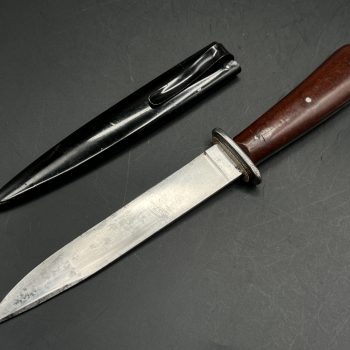
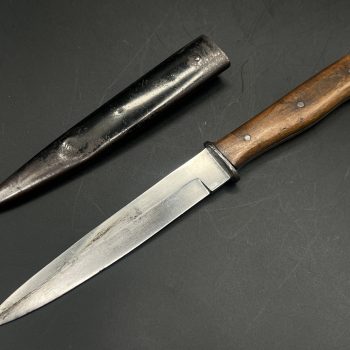
Combat knife, Model 1942 Trench Knife (Grabendolch), Germany, World War I (Lot: 1381)
Starting bid: $ 365The Nahkampfmesser combat knife, Model 1942, was officially adopted by the German armed forces in 1942. It was intended for use by military personnel across various branches of service and was distinguished by its simple, robust, and technologically efficient design.
Unlike ceremonial edged weapons, the Nahkampfmesser was an exclusively utilitarian item. It served as a combat knife, a tool for fieldwork, and an element of the soldier’s individual equipment.
The Nahkampfmesser was manufactured by numerous German enterprises; however, maker’s marks on the blades are encountered extremely rarely.
During excavations at Second World War battle sites, Nahkampfmesser knives are regularly discovered both along the lines of direct combat engagement and among the personal effects of military personnel. However, examples in good or excellent condition are extremely rare, as these knives continued to be widely used by the civilian population after the war, resulting in significant wear and loss of their original condition.
-
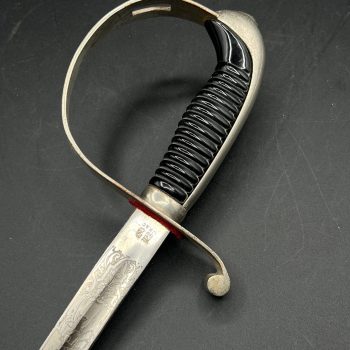
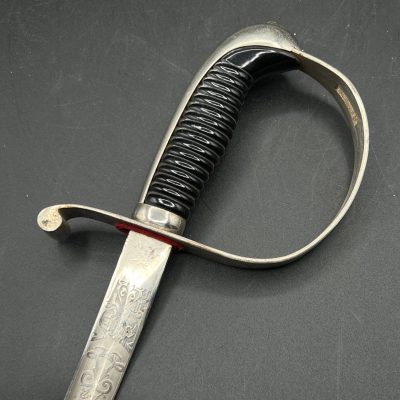
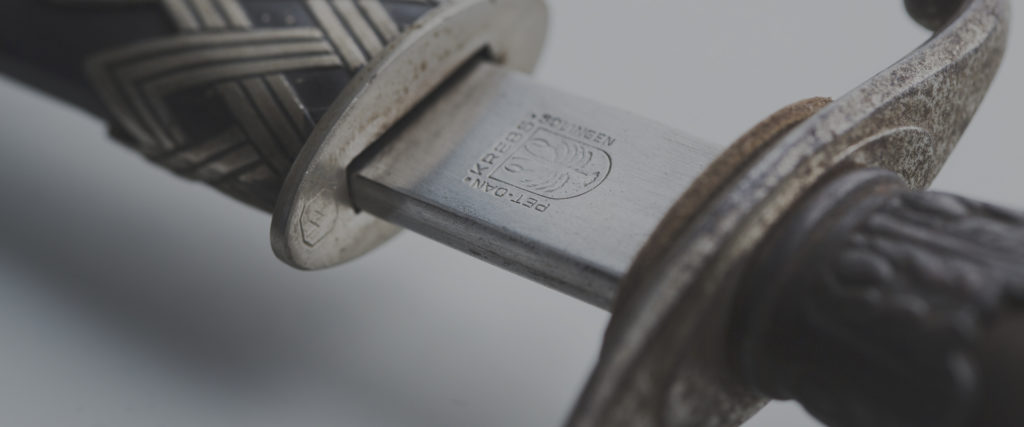
Honor Presentation Saber for Outstanding Marksmanship of the Oberkommando der Wehrmacht (OKW) 1930. [WKC]. (Lot: 1380)
Starting bid: $ 5,475Honorary Award Sabre “For Outstanding Achievements in Marksmanship” ranks among the most prestigious state awards of Germany in the period before 1939. Such sabres were presented to military personnel for outstanding results in marksmanship training and represented not a prize for placing in competition, but rather the sole honorary award for the best marksman of the competition. Unlike most richly decorated ceremonial sabres manufactured through private commissions, these blades were official state award weapons. Each was associated with a specific award presentation, making such items considerably rarer and more valuable to collectors. The tradition of such awards existed during the Reichswehr era and continued into the Wehrmacht period. OKW sabres were produced from 1935 to 1937 without the swastika, and from 1938 a new variant appeared featuring an eagle on the crossguard. All award sabres of this type were manufactured exclusively with Damascus steel blades. The blades featured rich etched ornamentation as well as inscriptions indicating the name, rank, and type of weapon with which outstanding results were demonstrated. Depending on the manufacturer and production period, the design could vary slightly. A common characteristic of original examples is also the presence of military acceptance stamps confirming their official state origin.
The year of the sabre’s production (1930) is attested by corresponding markings on the blade. Thus, this example dates to the Reichswehr period and was manufactured before the establishment of the Wehrmacht.
The manufacturer was WKC (Weyersberg, Kirschbaum & Cie), one of the oldest and most respected arms manufactories in Solingen, founded in 1883 through the merger of two historic production facilities. The company was a major supplier of edged weapons for the German army, producing army daggers and sabres of the highest quality bearing their distinctive mark. WKC products were distinguished by superb blade finishing, impeccable polishing, and precise conformity to regulation patterns, making them particularly valuable to collectors.
-
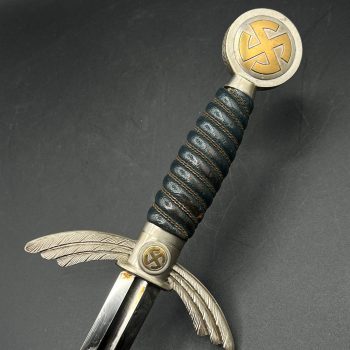
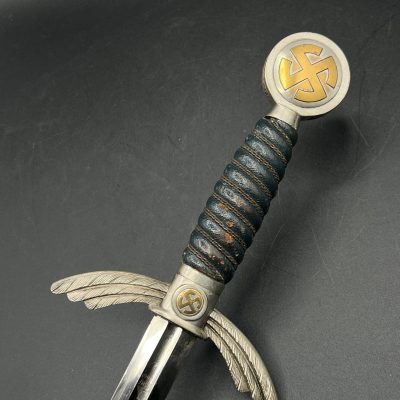
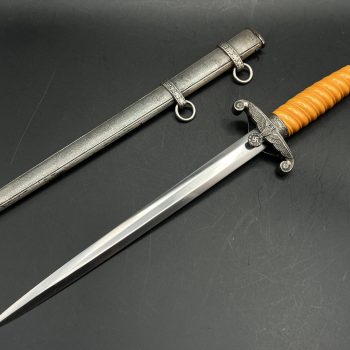
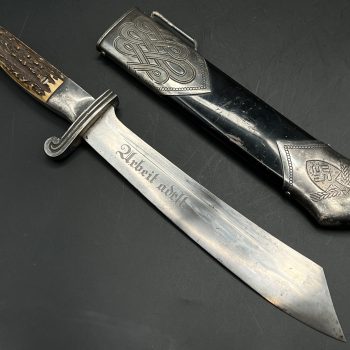
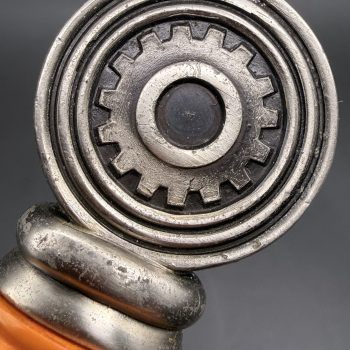
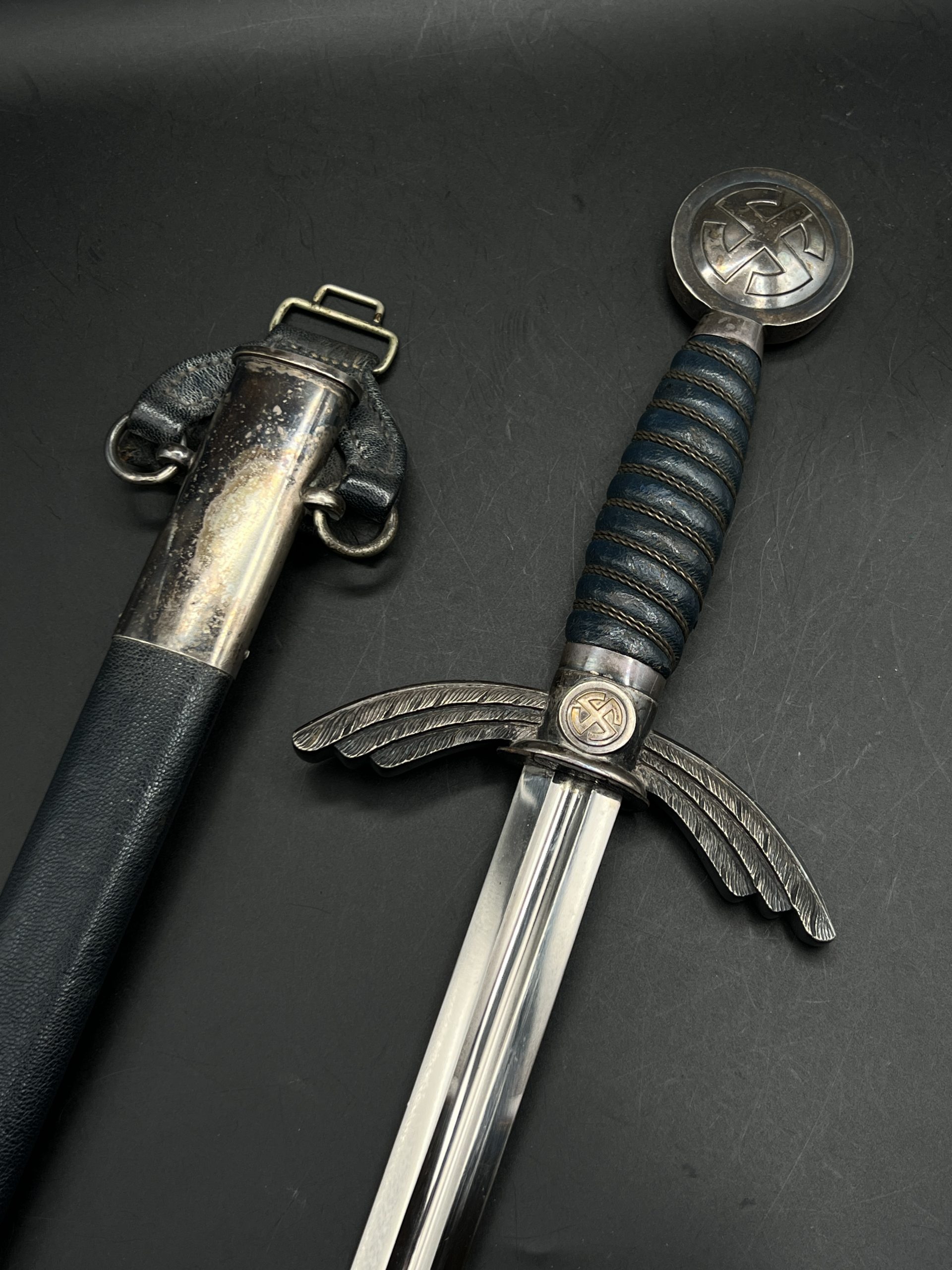
Luftwaffe Dagger, Model 1935 (nickel-silver fittings). [Stöcker & Co. SMF]. Stamp – SMF. (Lot: 1379)
Starting bid: $ 2,195Officially established on 10 March 1935 alongside the creation of the German Air Force, this dagger was intended for Luftwaffe career personnel in accordance with the established uniform regulations and represented the first official edged weapon of the new branch of the armed forces. Notably, the dagger’s design was based on the earlier Deutscher Luftsportverband (DLV) dagger, the German Air Sports Association, which in the early 1930s effectively served as a cover organization for training future Luftwaffe personnel. For this reason, the early Luftwaffe dagger retained many features of the DLV dagger and is considered a transitional model in the development of German aviation edged weapons.
The fittings made of nickel silver (German silver) are characteristic of early examples, typically manufactured before 1936. Due to limited production runs, high manufacturing quality, and distinguished appearance, such pieces are traditionally valued by collectors more highly than later variants.
The manufacturer was Stöcker & Co. SMF, a German metalworking company from Solingen that specialized in producing edged weapons for aviation organizations of the Third Reich. The firm produced daggers for the DLV, NSFK, and Luftwaffe, distinguished by the high quality of their blades and fittings. The blade bears the characteristic “SMF” mark, confirming the item’s origin.
-
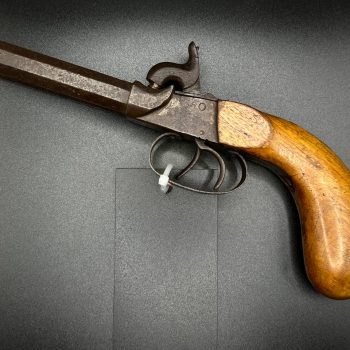
Scarce And Unusual Georgian Silver Mounted Officer’s Pistol With Brass Barrel And Lock Circa 1775 (Lot: 459)
$ 4,950 fee: 22.5%A Scarce And Unusual Georgian Silver Mounted Officer’s Pistol With Brass Barrel And Lock Signed “Abney & Co” Circa 1775.
8 and 1/8 inch slightly swamped round barrel with top flat marked “London”. 62 caliber. Barrel with gunmakers’ proofs and further stamped “WG”. Sparse engraving at breech. The rounded lock well engraved with foliage and “Abney & Co” in a riband. Gooseneck hammer engraved (wear). Full silver mounts comprising engraved triggerguard, openwork engraved sideplate, silver thumb piece, thimbles, and fine cast and chased grotesque mask buttcap.
Figured molded walnut full stock with raised shell carving at breech tang. Brass tipped ramrod. Brass barrel with minor marks but crisp engraving. Engraved lock in good condition. Silver mounts rate fine throughout. Beautiful figured walnut stock rates excellent with almost no wear or marks. Action is strong on both full and half cock. Bore is fine.
This is a extremely showy and attractive Revolutionary War period pistol that would have been carried by a wealthy officer.
-
Wehrmacht Long Service Award – 4 Years. (Lot: 112)
$ 135 fee: 12.5%Original Wehrmacht long service award for 4 years of service.
Designed in the shape of a silver cross with black enamel and featuring the national eagle with a wreath. The reverse shows the number “4” at the center. Comes with the original blue silk ribbon.

![German Sword, pre-1918 Cavalry. Lion head [M. Neumann Berlin] Family Coat of Arms. Damascus steel, etching, gilding.](https://alexmp.com/wp-content/uploads/2026/08/1786327259162-s0zmv22ljzb-400x400.jpeg)


![Honor Presentation Saber for Outstanding Marksmanship of the Oberkommando der Wehrmacht (OKW) 1930. [WKC].](https://alexmp.com/wp-content/uploads/2026/08/1786327324223-5t9w0mpjwk5-400x400.jpeg)

![Luftwaffe Dagger, Model 1935 (nickel-silver fittings). [Stöcker & Co. SMF]. Stamp – SMF.](https://alexmp.com/wp-content/uploads/2026/08/1786375507903-sde70nlaeh-400x400.jpeg)