ALEX MARKETPLACE - Shop

Showing 1–16 of 640 results

Filters
  • Demjansk Shield 1942, Heer Version, on Field-Grey Backing

    Demjansk Shield 1942, Heer Version, on Field-Grey Backing (Lot: 1429)

    Demjansk arm shield in silver-finish metal on original field-grey wool backing, secured with four copper rivets. Obverse: DEMJANSK inscription, date 1942, crossed swords with aircraft, eagle with swastika wreath at top. Reverse shows typical four-rivet attachment to backing pad. One of the rarest and most coveted German campaign shields — awarded to participants in the Demjansk Pocket encirclement battle.

    $ 1,245 fee: 22.5%
  • Krim Shield 1941–1942, Heer Version, on Field-Grey Backing

    Krim Shield 1941–1942, Heer Version, on Field-Grey Backing (Lot: 1428)

    Second Krimschild on original Heer field-grey wool backing. Same bronze shield design — eagle, dates 1941–1942, Crimea map, “KRIM.” Reverse with original fabric backing. Field-grey wool confirms Army attribution. Good overall condition.

    $ 525 fee: 22.5%
  • Krim Shield 1941–1942, Luftwaffe Version, on Blue-Grey Backing

    Krim Shield 1941–1942, Luftwaffe Version, on Blue-Grey Backing (Lot: 1427)

    Krimschild campaign arm shield on original Luftwaffe blue-grey wool backing. Bronze-finish metal shield with eagle, dates 1941–1942, and map of Crimea with inscription “KRIM.” Service-worn patina. Blue-grey backing confirms Luftwaffe attribution.

    $ 575 fee: 22.5%
  • Narvik Shield 1940, Kriegsmarine Version, on Black Backing

    Narvik Shield 1940, Kriegsmarine Version, on Black Backing (Lot: 1426)

    Narvik shield in gilt metal mounted on original black navy wool backing. Obverse: NARVIK inscription, date 1940, eagle with swastika wreath, crossed anchor, sword and edelweiss. Black backing confirms Kriegsmarine attribution. Highly desirable campaign shield — one of the rarest of the five authorized German arm shields.

    $ 1,495 fee: 22.5%
  • Mine Rescue Service Medal, Silver, Prussia — Preuss. Staats-Münze (Berlin Mint)

    Mine Rescue Service Medal, Silver, Prussia — Preuss. Staats-Münze (Berlin Mint) (Lot: 1425)

    Large circular silver-tone badge/medal for merit in mine rescue service (Grubenwehr). Obverse: crossed mining hammers on star cross, party eagle at bottom, inscription “Für Verdienste um de Gruben-Rettungs-Wesen.” Reverse stamped PREUSS. STAATS-MÜNZE — the Prussian State Mint, Berlin. Horizontal pin fitting. High-quality official issue.

    $ 850 fee: 22.5%
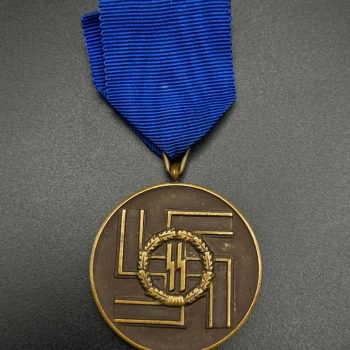
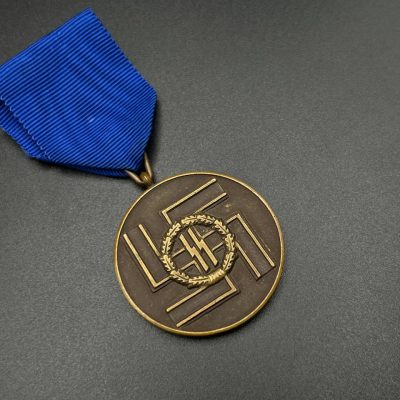
  • NSDAP Long Service Cross (10 Years), Bronze, in box, with Ribbon.

    NSDAP Long Service Cross (10 Years), Bronze, in box, with Ribbon. (Lot: 1424)

    NSDAP Dienstauszeichnung in Bronze for 10 years of party service. Sunburst cross with central medallion bearing the party eagle and swastika on obverse; reverse inscribed “Treue für Führer und Volk.” Original brown-and-white ribbon present. With box. Excellent relief, good overall condition.

    $ 545 fee: 22.5%
  • Iron Cross 2nd Class 1939, with Ribbon. Rare round 3 type

    Iron Cross 2nd Class 1939, with Ribbon. Rare round 3 type (Lot: 1423)

    Rare round 3 type.

    1939 Iron Cross 2nd Class, so called round 3. Most probalby made by Deschler & Sohn, Munich. Unmarked. Three part construction with magnetic iron core with original factory paint. With original ribbon. The cross is in excellent condition with very little patina. No damage, no repairs.

    $ 695 fee: 22.5%
  • Memel Medal 1939, with Ribbon

    Memel Medal 1939, with Ribbon (Lot: 1422)

    Commemorative medal for the annexation of the Memelland, March 1939. Obverse: two figures with flags above party eagle. Reverse inscribed with dedication text and date 1939. Original tricolor ribbon (green-white-red with black center stripe). Ribbon shows wear, medal in good condition.

    $ 760 fee: 22.5%
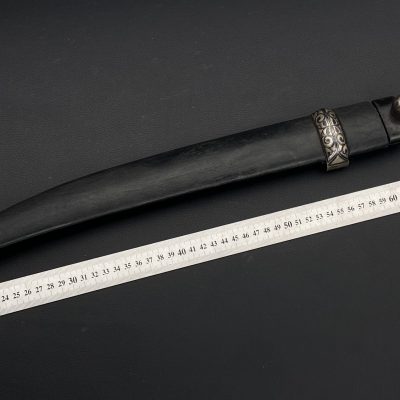
  • Puma combat knife [Puma]. Stamp – Puma.

    Puma combat knife [Puma]. Stamp – Puma. (Lot: 1420)

    Puma combat knives are among the most recognizable examples of German edged weapons from the World War II period. They were typically fitted with handles featuring red Bakelite scales, while variants with wooden or horn scales are considerably rarer. Archaeological finds convincingly confirm the use of these knives directly in combat conditions. They have been discovered on multiple occasions during excavations at battle sites: at positions of Jäger units of Army Group North in the Murmansk region, in the territory of East Prussia (present-day Kaliningrad Oblast), and in Belgium at sites of the Battle of the Bulge. Such finds directly at the front lines indicate that Puma knives were not merely commercial products but were actually used by German military personnel during combat operations.

    The firm PUMA-Werk Lauterjung & Sohn, founded in 1769, is one of the oldest manufacturers of edged weapons and knives in Solingen. During World War II, the company produced combat knives distinguished by high manufacturing quality and represented by several variants of proprietary markings. The present example bears the “Puma” marking. During production, the knife design underwent minor modifications; in particular, examples are encountered with both steel crossguards and crossguards made of zinc alloy, which is associated with production characteristics during different periods of the war.

    $ 1,295 fee: 22.5%
  • SS Dagger, Model 1933. (with a dedication from Heinrich Himmler). [Carl Eickhorn].

    SS Dagger, Model 1933. (with a dedication from Heinrich Himmler). [Carl Eickhorn]. (Lot: 1419)

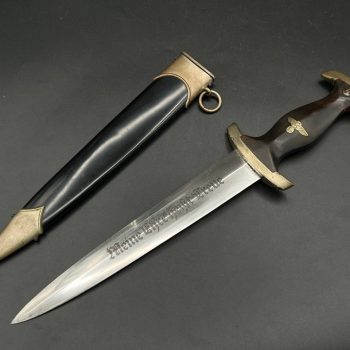
    The SS dagger model 1933 became the first official edged weapon of the Schutzstaffel. The design of this weapon traces back to 16th-century Swiss daggers known as Holbein daggers, and its appearance largely resembled the SA dagger, which was introduced at virtually the same time. The blade bears the motto “Meine Ehre heißt Treue” (“My Honour is Loyalty”), which became one of the organization’s principal symbols. In the early years of the SS, the dagger was regarded not only as an element of uniform and a symbol of unit membership, but also as a personal edged weapon that the owner could use if necessary.

    The reverse side of the blade carries the dedication “In herzlicher Kameradschaft, H. Himmler” (“In heartfelt comradeship, H. Himmler”). The history of these daggers is directly connected to the events of summer 1934, known historically as the “Night of the Long Knives.” Between 30 June and 2 July 1934, the Nazi leadership conducted a bloody purge of the SA leadership and various other political opponents; SS units played a significant role in these events, substantially strengthening the organization’s position. On 3 July 1934, 200 specially selected SS members and leaders who had participated in the “Night of the Long Knives” were presented with model 1933 daggers bearing Heinrich Himmler’s personal dedication. Thus, the present example is not an ordinary SS service dagger, but a special presentation variant directly linked to one of the key events in the organization’s formative history. The limited number of examples presented, Himmler’s personal dedication, and the clear historical connection to the events of 1934 make such daggers one of the rarest and most historically significant varieties of early SS edged weapons.

    The dagger was manufactured by Carl Eickhorn, a company founded in Solingen in 1865 that became one of the largest edged weapons manufacturers in Germany. The company’s trademark depicting a squirrel (Eichhörnchen) served as a guarantee of the highest quality products. During the Third Reich period, the firm produced a wide range of regulation edged weapons: dirks for all branches of the armed forces, SA, SS, NPEA, NSFK, and TeNo daggers, as well as dress dirks, sabres, and swords. Carl Eickhorn products are distinguished by superior steel quality and meticulous finishing, and are highly valued by modern collectors.

    $ 14,695 fee: 22.5%
  • SS Dagger, Model 1933. (Early type). [Jacobs & Co].

    SS Dagger, Model 1933. (Early type). [Jacobs & Co]. (Lot: 1418)

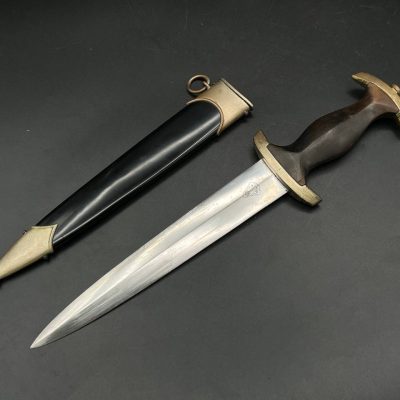
    The official edged weapon of the Schutzstaffel, established in 1933, became the first dagger officially adopted by this organization. The blade design traces back to 16th-century Swiss daggers known as Holbein daggers, and in appearance largely resembles the SA dagger, which was introduced at virtually the same time. The blade bore the motto “Meine Ehre heißt Treue” (“My Honor is Loyalty”), which became one of the principal symbols of the SS. In the early years of the organization, the dagger was regarded not merely as a uniform element and symbol of SS membership, but also as a personal edged weapon that its owner could employ if necessary.

    The firm Jacobs & Co., Solingen-Gräfrath ranks among the rarest manufacturers of early SS daggers of the 1933 pattern and is encountered considerably less frequently than most major producers. Of particular interest are early-type examples bearing the Jacobs & Co. maker’s mark, preserved in their original configuration prior to 1936, and without an issue depot stamp on the crossguard. Due to the high value and scarcity of such daggers, the markings and blades of this manufacturer are also subject to forgery today; therefore, the authenticity of all stampings and the correspondence of every detail to this specific maker require especially thorough verification.

    $ 12,995 fee: 22.5%
  • SS Dagger, Model 1933. (Early type). [Gottlieb Hammesfahr]. Stamp – III.

    SS Dagger, Model 1933. (Early type). [Gottlieb Hammesfahr]. Stamp – III. (Lot: 1417)

    The first official edged weapon of the Schutzstaffel, introduced in 1933 and designed after 16th-century Swiss daggers known as Holbein daggers. In appearance, it closely resembled the SA dagger, which was adopted at nearly the same time. The blade bears the motto “Meine Ehre heißt Treue” (“My Honour is Loyalty”), which became one of the principal symbols of the SS. In the early years of the organization, the dagger was regarded not only as a uniform accessory and symbol of SS membership, but also as a personal edged weapon that its owner could use if necessary.

    The early variant of the SS dagger Model 1933, produced before 1936, features nickel silver fittings on the grip and scabbard, high manufacturing quality, and careful fitting of components. Scabbards typically had an anodized finish, although original painted variants are also encountered. Blades most commonly bear a maker’s mark with the manufacturer’s name; early RZM marks are occasionally found. From 1936 onward, the construction was gradually simplified: zinc, aluminum, steel scabbard fittings, and painted scabbards came into use. Transitional marks appeared, featuring both the manufacturer’s logo and RZM code, later replaced by RZM markings alone. Early daggers were produced in smaller quantities and typically saw longer periods of wear; consequently, examples in mint or near-mint condition are extremely rare. Minor grip chips and signs of use are considered normal for these pieces. Particular attention should be paid to restorations and later-period components; if such interventions are present, they are specifically noted in the item description.

    Gottlieb Hammesfahr, Solingen-Foche, is a renowned Solingen firm with a history dating back to the 19th century. The company was engaged in edged weapon production for many years, and during the Third Reich period became one of the manufacturers of early SS daggers Model 1933. Early Hammesfahr examples feature the maker’s mark on the blade, nickel silver fittings, and typically anodized scabbards.

    The “III” mark on the lower crossguard refers to the SS distribution and inspection center in Berlin. Like the I and II markings, it is a characteristic feature of the early period of SS dagger production and distribution.

    $ 6,495 fee: 22.5%
  • Officer sword of Third Reich [Robert Klaas].

    Officer sword of Third Reich [Robert Klaas]. (Lot: 1416)

    Ceremonial edged weapon for officer personnel, introduced following the restoration of German armed forces and continuing the traditions of the Imperial Army and Reichswehr. Unlike the army dagger model 1935, officer sabres were produced in numerous design variations by various Solingen manufacturers. In May 1943, sabre production was discontinued due to wartime industrial demands; however, examples already in service continued to be worn with dress uniform. In late 1944, the wearing of ceremonial edged weapons was abolished, and officers were required to carry a pistol instead of a sabre or dagger.

    The manufacturer of this example is Robert Klaas, a renowned German edged weapons company founded in 1834 in Solingen. The firm specialised in producing high quality army daggers and sabres for the Wehrmacht, distinguished by superior finishing of blades and hilts.

    $ 845 fee: 22.5%
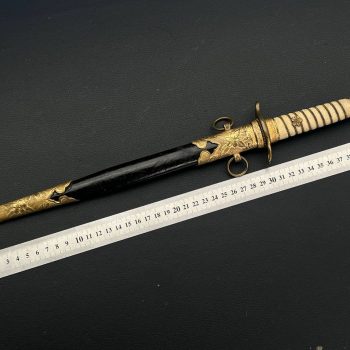
  • Police NCO Sword (Polizei-Unterführer-Degen) [Paul Weyersberg].

    Police NCO Sword (Polizei-Unterführer-Degen) [Paul Weyersberg]. (Lot: 1415)

    A regulation dress and service edged weapon of the German police from the Third Reich period, intended for non-commissioned officer ranks. This sword differed from the officer model in the different construction of the scabbard tip and the absence of wire wrapping on the wooden grip. As an integral part of the dress uniform, it served as a symbol of the police officer’s official position and emphasized his status within the hierarchy of police ranks.

    Manufactured by Paul Weyersberg & Co., founded in Solingen in 1899. The company established itself as one of the renowned producers of edged weapons, and during the Third Reich period produced a wide range of dirks, daggers, bayonets, police swords, and other dress weapons for military and state organizations. The production facilities of Paul Weyersberg were located in the industrial zone of Solingen, which was subjected to massive Allied bombing raids on November 4 and 5, 1944; as a result of these raids, many of the city’s blade manufacturing enterprises were destroyed or seriously damaged.

    $ 675 fee: 22.5%
  • Luftwaffe Officer’s Sword (Offizierschwert / Fliegerschwert) (nickel-silver fittings). [E. & F. Horster]. Stamp – “5”. Personalised.

    Luftwaffe Officer’s Sword (Offizierschwert / Fliegerschwert) (nickel-silver fittings). [E. & F. Horster]. Stamp – “5”. Personalised. (Lot: 1414)

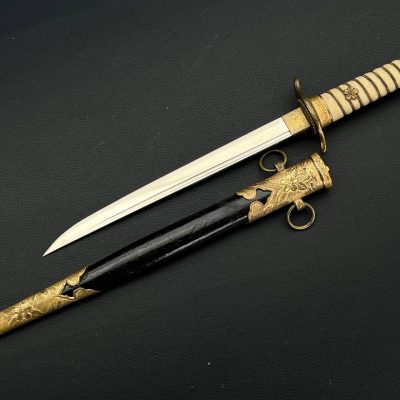
    The sword remains in completely original factory condition. The early nickel silver fittings retain their original natural patina and show only minor signs of honest age and use. Matching “12” assembly marks are present on both the crossguard and the scabbard, confirming that they have remained together as an original factory-matched set. Horster swords are encountered less frequently than those of many other manufacturers, making this example particularly desirable for collectors.

    A historically significant example of Luftwaffe officer’s edged weapon, introduced in 1934 as an honorary sword (Ehrenschwert), established by Hermann Göring for a select circle of “Fliegerschaft” members personally chosen by him. Following the official proclamation of the Luftwaffe in March 1935, the sword became standard officer’s equipment under the designation Offizierschwert, although it was more commonly referred to as Fliegerschwert. The sword was mandatory for officers and senior non-commissioned officers when wearing service, parade, and walking-out uniforms.

    The nickel silver (German silver) fittings are characteristic of early examples, generally produced prior to 1936. Due to limited production runs, high manufacturing quality, and distinguished appearance, such pieces are traditionally valued by collectors more highly than later variants. This particular specimen derives additional appeal from its personalization, indicating a custom order and enhancing its collectible value.

    The sword was manufactured by E. & F. Hörster, a German arms manufactory from Solingen, founded in 1850, which became one of the largest producers of edged weapons for the armed forces of the Third Reich. The company produced daggers and dirks for the DLV, NSFK, and Luftwaffe, as well as for combat, political, and paramilitary organizations.

    The stamp bearing the numeral “5” present on the piece is a military acceptance inspection mark. It was applied following examination of the item and confirmed its compliance with established quality requirements. The presence of the “5” stamp is a characteristic feature of a number of original early period Luftwaffe items and serves as one of the additional indicators of authenticity during comprehensive evaluation of the piece.

    $ 1,575 fee: 22.5%
  • Luftwaffe Officer’s Sword (Offizierschwert / Fliegerschwert) (nickel-silver fittings). [SMF Stöcker & Co.]. Stamp – “5”.

    Luftwaffe Officer’s Sword (Offizierschwert / Fliegerschwert) (nickel-silver fittings). [SMF Stöcker & Co.]. Stamp – “5”. (Lot: 1413)

    The sword remains in completely original factory condition. The leather on the grip, scabbard, and hanger is entirely original and has never been replaced. All metal fittings retain their original natural patina. The early nickel silver mounts are preserved in exceptional collector’s condition for their age, showing only minor signs of honest use. The piece is free from hidden restorations, replaced parts, or other issues that could affect its authenticity or collector value.

    Honorary weapon, introduced in 1934 personally by Hermann Göring for a select circle of “Fliegerschaft” members, originally held the status of Ehrenschwert. Following the official proclamation of the Luftwaffe in March 1935, the sword acquired the status of a standard officer’s weapon under the designation Offizierschwert, although in common usage it was more frequently referred to as Fliegerschwert. Wearing this sword was mandatory for officers and senior non-commissioned officers with service, parade, and walking-out uniforms.

    The fittings made of nickel silver (German silver) are characteristic of early examples, typically manufactured prior to 1936. Due to limited production runs, high manufacturing quality, and distinguished appearance, such specimens are traditionally valued by collectors considerably higher than their later counterparts.

    The manufacturer of this example is Stöcker & Co. SMF, a German metalworking company from Solingen that specialized in the production of edged weapons for aviation organizations of the Third Reich. The enterprise manufactured daggers for the DLV, NSFK, and Luftwaffe, distinguished by the high quality of their blades and fittings. The company’s products were marked with the “SMF” stamp.

    The stamp bearing the numeral “5” present on this item represents a military acceptance inspection mark. It was applied following examination of the piece and confirmed its compliance with established quality requirements. The presence of this mark is a characteristic feature of a number of original early period Luftwaffe items and serves as one of the additional indicators of authenticity during comprehensive evaluation of a piece.

    $ 1,495 fee: 22.5%

Sold at Blitz price

  • Mauser rifle bayonet (1934-1945). Non-matching numbers.

    Mauser rifle bayonet (1934-1945). Non-matching numbers. (Lot: 1383)

    Model 1884/98 bayonet for the Mauser 98k rifle, complete with metal scabbard. The grip is fitted with walnut wood scales, secured by two screws. The blade ricasso bears the manufacturer’s mark “crs” (E. & F. Hörster, Solingen). The pommel is stamped with the acceptance mark “25u”. The scabbard is engraved with the regimental marking “J.R.14” (14th Infantry Regiment), indicating the bayonet’s assignment to a specific Wehrmacht military unit. The single-edged blade features a characteristic fuller and retains its original polish.

    Auction Ended
    Product sold for blitz price: $ 195
  • Mauser rifle bayonet (1934-1945). 1935 – S/155G. [E.u.F Hörster]. Unsharpened blade. Matching numbers.

    Mauser rifle bayonet (1934-1945). 1935 – S/155G. [E.u.F Hörster]. Unsharpened blade. Matching numbers. (Lot: 1390)

    The S84/98 bayonet is one of the most recognizable symbols of the German soldier during the Second World War. Representing a further development of the earlier S84/98 model, it was adopted as the standard bayonet for the Mauser Karabiner 98k carbine and was mass-produced by the German arms industry. Due to its widespread use, this bayonet remained in service with the Wehrmacht throughout the Second World War and is today one of the most popular areas of German edged weapons collecting.

    The S/155G marking on the present example indicates the manufacturer, the firm E.u.F Hörster of Solingen, one of Germany’s leading edged weapons manufacturers. The production year of 1935 corresponds to the early period of Wehrmacht rearmament, when mass production of the SG 84/98 model bayonets for Mauser K98k rifles commenced.

    The E.u.F Hörster company was founded in Solingen in 1850. The firm specialized in the production of edged weapons and bayonets for the German army, supplying products during both the First and Second World Wars.

    The blade of this example has never been sharpened, which is of particular value to collectors. Such condition indicates minimal combat use or warehouse storage of the item. The absence of resharpening marks preserves the original blade geometry, which substantially increases the collectible value of the specimen.

    Matching serial numbers on the blade and scabbard confirm their original pairing from the time of manufacture. Such examples are encountered considerably less frequently due to combat losses and post-war reassembly, and therefore command higher collectible value.

    Original bluing and frog. Very good condition.

    Auction Ended
    Product sold for blitz price: $ 595
  • U.S. Navy Bureau of Navigation Mark II Sextant — David White Co., Milwaukee — Serial No. 647-1939 — With Original U.S. Naval Observatory Certificate of Inspection, dated August 15, 1941

    U.S. Navy Bureau of Navigation Mark II Sextant — David White Co., Milwaukee — Serial No. 647-1939 — With Original U.S. Naval Observatory Certificate of Inspection, dated August 15, 1941 (Lot: 1114)

    The Navy Mark II sextant by David White Company of Milwaukee was one of the principal instruments of U.S. Navy navigation throughout World War II. This example, serial number 647-1939, was inspected and certified by the U.S. Naval Observatory in Washington on August 15, 1941 — just four months before Pearl Harbor — making it a genuine pre-war/early-war service instrument. The limb reads to single degrees with drum micrometer to 1 minute, and vernier to 6 seconds of arc. Original mahogany dovetailed case with brass hardware and David White Company nameplate. Original inspection certificate with handwritten eccentricity corrections and inspector’s signature survives intact. Telescope present.

    Auction Ended
    Product sold for blitz price: $ 665